








Selecting pre-filtration media for high-sediment surface water
Surface water can change rapidly between clear conditions and severe turbidity. A river intake may receive fine clay after rain, organic debris during floods, or heavier mineral sediment during a high-flow event. Choosing pre-filtration media therefore requires more than selecting a vessel size or quoting a nominal micron rating.
For Australian operators, the challenge is often seasonal. Catchments feeding the Murray–Darling Basin may experience long dry periods followed by intense runoff, while tropical Queensland and the Northern Territory can see sudden sediment surges during the wet season. A suitable pre-treatment train must protect downstream membranes, ultraviolet systems, pumps and final drinking-water barriers under these changing conditions.
The best solution usually combines source assessment, staged solids removal, hydraulic design and practical maintenance planning. Media should be selected according to particle size, density, organic content, backwash water availability and the performance required from the complete treatment system.
Why surface water needs staged protection
High-sediment water contains a mixture of materials rather than a single contaminant. Coarse sand and grit settle quickly, while silt and colloidal clay can remain suspended for long periods. Algae, decaying vegetation and microbial flocs may also contribute to filter loading and create biological fouling.
A single pressure filter filled with one grade of sand can remove some suspended solids, but it may block quickly when exposed to a heavy sediment pulse. Staged treatment is generally more resilient. Screens or intake strainers protect pumps first, followed by settling, hydrocyclonic separation where appropriate, and depth filtration for finer particles.
Pre-filtration does not replace disinfection or contaminant-specific treatment. Dissolved substances such as arsenic, pesticides, manganese or uranium require suitable downstream processes. Where uranium is present in the source, operators can review uranium removal guidance alongside the solids-removal design.
Start with a raw-water profile
Media selection should begin with measurements taken across different seasons, not a single clear-water sample. Useful data includes turbidity, total suspended solids, particle-size distribution, colour, temperature, pH, conductivity and the frequency of storm-related spikes. A jar test can show how quickly solids settle and whether natural flocculation occurs without chemical dosing.
The source intake also matters. Water drawn from near a riverbank may contain more organic matter and fine sediment than water collected from the centre of a deeper channel. A shallow farm dam can develop algae and wind-blown clay, while a reservoir outlet may deliver comparatively stable water but still release concentrated sediment after turnover or heavy inflow.
Australian projects should reference the Australian Drinking Water Guidelines when defining treated-water objectives, while recognising that each site needs its own risk assessment. For a remote station or livestock operation, daily testing may be less frequent than at a municipal plant, so the system should tolerate variability and provide clear alarms for rising differential pressure.
Match media to the particle load
Granular media filters work by a combination of straining, interception, sedimentation within the bed and attachment to media surfaces. Coarse anthracite is often used as the upper layer in a multimedia filter because its lower density allows it to sit above denser sand after backwashing. It provides capacity for larger particles before finer media take over.
Sand remains a practical choice for suspended solids, particularly when the source contains a broad particle-size range. Garnet or other dense fine media can form a lower layer that captures smaller particles while maintaining an appropriate depth profile. The exact combination depends on bed depth, filtration rate, media effective size and the desired terminal turbidity.
Glass media may offer a useful alternative where operators want a manufactured granular product with consistent grading and a smooth surface. It still needs correct hydraulic design and regular backwashing; no media eliminates the need to control loading. Activated carbon should be selected for taste, odour or organic-compound reduction rather than used as a general sediment medium, because high solids can rapidly consume its working capacity.
Control fine clay and colloids
Fine clay is one of the most difficult loads for conventional pre-filtration. These particles may be small enough to pass through coarse media while still causing cloudy water and rapid pressure loss. If testing shows a large colloidal fraction, a settling tank, dissolved air flotation system or carefully controlled coagulation stage may be more suitable than simply installing finer filter media.
Where chemical-free treatment is a priority, operators can investigate physical separation, optimised multimedia filtration and membrane protection strategies. However, “chemical-free” does not mean maintenance-free. Sediment still has to be removed through backwashing, draining, sludge handling or periodic media cleaning.
A useful design approach is to protect the main filter from sudden loading. A coarse screen, wedge-wire unit, self-cleaning strainer or low-maintenance pre-filter can capture leaves, insects and larger grit. This is particularly important at open river intakes and in rural Australia, where debris after storms may include branches, grass and other organic material.
Design for backwashing and hydraulics
The filter bed must be sized for both service flow and backwash expansion. A media layer that is too shallow may have insufficient solids-holding capacity, while a bed that is too deep can create excessive pressure loss and require substantial wash-water volumes. Manufacturers’ data for media density, effective size, uniformity coefficient and expansion should be checked at the site’s water temperature.
Backwash water must be available at the correct flow and pressure to fluidise the bed without washing valuable media out of the vessel. Air scour can improve cleaning in some systems, but it needs suitable distribution equipment and controls. Backwash discharge also requires a lawful management pathway, especially where concentrated sediment or contaminants could affect waterways.
Avoid designing solely around average turbidity. A plant in regional New South Wales may operate efficiently for months and then receive a major sediment pulse after a storm. Automated differential-pressure monitoring, turbidity alarms and a controlled shutdown sequence can prevent overloaded filters from sending solids to downstream equipment.
Plan for Australian operating conditions
Climate and access have a direct influence on media choice. In northern Australia, high temperatures can increase biological activity and make algae a recurring concern. Cyclonic rainfall can overwhelm intakes and produce sharp turbidity peaks, so bypass protection and robust screens are valuable. In inland communities, limited water supplies may make frequent backwash cycles impractical.
Remote sites also need simple inspection routines, locally available replacement parts and controls that can be understood by operators who do not specialise in water treatment. A compact system for a mining camp or Aboriginal community may benefit from automatic backwash and remote monitoring, while a larger municipal plant can support laboratory testing and dedicated maintenance staff.
For factories, food processors and other industrial users, pre-filtration must be integrated with the wider process-water requirement. Guidance on industrial water treatment can help place sediment removal alongside reuse, membrane protection and contaminant control rather than treating it as an isolated filter purchase.
Compare media by performance and upkeep
The right media is the one that performs consistently under the real raw-water profile and can be maintained with the resources available. A low-cost filter that blocks every few days may have a higher whole-of-life cost than a staged system with a larger initial footprint. Consider media replacement intervals, backwash energy, water losses, operator time, disposal requirements and the consequences of untreated water reaching downstream equipment.
Pilot testing is especially valuable when turbidity is highly variable. A small column can compare sand, multimedia and glass configurations under controlled loading. Measurements should include filtrate turbidity, head loss, run time, backwash recovery and the quality of water immediately after backwashing.
| Media or stage | Best use | Main strength | Key limitation |
|---|---|---|---|
| Intake screen or strainer | Leaves, sticks, insects and coarse grit | Protects pumps and downstream equipment | Does not remove fine silt |
| Settling or equalisation tank | Heavy sand and settleable solids | Reduces loading on granular filters | Requires space and sludge management |
| Sand media | Mixed suspended solids and silt | Proven, widely available and adaptable | Can clog quickly with colloidal clay |
| Multimedia bed | Broad particle-size distribution | Uses layered media for greater depth filtration | Needs careful loading and backwash design |
| Glass media | Fine suspended solids in pressure or open filters | Consistent manufactured grading | Still requires correct hydraulics and cleaning |
| Cartridge or bag filter | Final polishing before sensitive equipment | Predictable fine-particle removal | Consumable replacement can be frequent |
A chemical-free maintenance approach may reduce dosing equipment and chemical storage, but it should be paired with reliable solids handling. Practical measures include automatic backwash, accessible drain points, media level checks and trend records for turbidity and differential pressure. Operators can also review a chemical-free maintenance approach when assessing how pre-treatment affects plant reliability.
Selecting pre-filtration media for a high-sediment surface-water source is ultimately a site-engineering decision. Begin with seasonal sampling, define the particle load, add protection in stages and confirm the design through pilot work or documented comparable installations. Swiss Cleanwater Group can help assess filtration requirements and develop a treatment configuration suited to municipal, agricultural, industrial, livestock or mobile applications. Contact the team with raw-water results, flow requirements and operating conditions to move from media selection to a dependable treatment system.
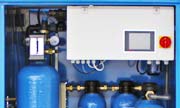
SCM 24
|
|
Cleans 24.000 liters per day
|
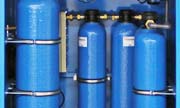
SCM 60
|
|
Cleans 60.000 liters per day
|
Video: How it works
The SCG Advantage
Our market-leading, water cleaning solutions have many advantages. To read more click the items below:
No Chemicals
Our machines and technology does not use any chemicals, at all.
Read more...
No Waste Water
Our machines do not waste any water. Yield = 100%.
Read more...
Low energy use
Uses 50 times less energy than a Reverse Osmosis Machine.
Read more...
Low ownership cost
Lower maintenance and operation costs due to our technology.
Read more...
Easy to install
Simple "plug and play" installation makes for easy deployment.
Read more...
Extremely compact
A compact system, contained in an easy to transport cabinet.
Read more...
Outperforms R.O.
SCG technologies outperform Reverse Osmosis systems.
Read more...
Faster ROI
Get a faster Return on Investment with our systems.
Read more...
Latest News
Latest Blog Posts
| Chemicals in water treatment? |
| Water storage - Whats best for keeping water clean and drinkable? |
| Case: Disaster Management Water Treatment |
Contact SCG
891 Showroom Place
Suite 101
Chula Vista, CA, 91914
Phone: +1 619-878-2730
Contact us by email