


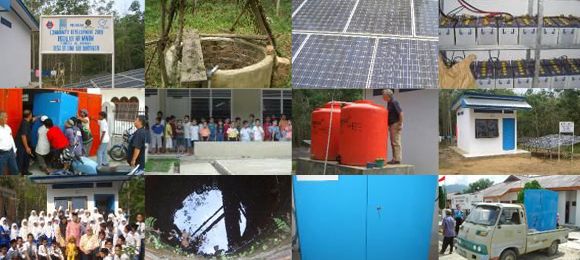







Reducing Water Plant Maintenance Without Chemical Feeders
Water treatment plants often depend on chemical dosing to control bacteria, oxidize metals, adjust pH, or protect downstream equipment. While chemical feeders can be effective, they also create a steady stream of maintenance tasks: calibration, cleaning, replenishment, leak inspection, storage management, and compliance checks.
A treatment strategy based on physical filtration and carefully selected media can remove many contaminants without continuous chemical injection. This approach can simplify daily operations, reduce handling risks, and make clean water production more practical for municipalities, farms, industrial sites, buildings, and remote installations.
Eliminating chemical feeders does not mean eliminating process control. It means shifting attention from chemical inventory and dosing accuracy to hydraulic performance, filter condition, flow rates, and contaminant-specific treatment design. The result can be a more predictable system with fewer consumable inputs and less routine intervention.
Why Feeders Become Maintenance Bottlenecks
Every chemical dosing system adds equipment that must remain operational. Pumps, injection lines, valves, tanks, mixers, sensors, and control panels all require inspection. A blocked dosing line or failed pump can affect the treatment process quickly, particularly when there is no trained operator on site.
Chemical storage creates another layer of responsibility. Operators must monitor stock levels, rotate products, respond to spills, and maintain safe separation between incompatible substances. In cold or hot environments, chemical viscosity and storage conditions can also affect dosing accuracy. Remote facilities may face delays when replacement parts or new supplies are difficult to obtain.
The cost of chemical treatment extends beyond the product itself. Plants may need protective equipment, secondary containment, ventilation, staff training, and specialized waste handling. A design that removes unnecessary chemical stages can reduce these dependencies and make preventive maintenance easier to organize.
Treatment Without Routine Chemical Dosing
Chemical-free treatment commonly relies on filtration media, adsorption, membrane processes, ultraviolet systems, aeration, or combinations of these technologies. The correct solution depends on the raw water profile. Manganese, arsenic, uranium, pesticides, suspended solids, and microorganisms each require a suitable removal mechanism and adequate contact time.
Media filtration can capture or bind target contaminants as water passes through a pressure vessel or open filter. Some media promote oxidation through contact with air, while others adsorb dissolved substances onto a highly active surface. When the system is correctly sized, backwashing can restore hydraulic capacity without adding a chemical cleaning step during normal operation.
For microbial risks, treatment may involve fine filtration, ultraviolet disinfection, or specialized biological and physical barriers. In locations without dependable grid power, a properly designed gravity-fed or low-energy process can be valuable. Guidance on chemical-free well disinfection illustrates why water source conditions and operating context must shape the system design.
Compare the Maintenance Profile
The most useful comparison is not simply chemical versus chemical-free. It is the total operating burden over the system’s service life. A chemical feeder may have a modest purchase price but generate recurring costs through dosing chemicals, replacement parts, operator attention, and safety procedures.
A media-based plant still needs monitoring and servicing. Filters require backwashing, valves need inspection, and media eventually may need replenishment or replacement. However, these tasks are generally tied to measurable water flow and filter performance rather than daily chemical consumption. Automation can also provide alarms for pressure loss, flow variation, or abnormal operating conditions.
| Maintenance factor | Chemical dosing system | Chemical-free filtration system |
|---|---|---|
| Main consumable | Treatment chemicals | Filter media, cartridges, or lamp components |
| Routine checks | Pump output, injection point, tank level, chemical strength | Flow, pressure differential, backwash cycle, media condition |
| Safety requirements | Chemical storage, handling, spill control, protective equipment | Mechanical and electrical safety, backwash discharge management |
| Failure risks | Empty tank, blocked line, failed pump, incorrect dose | Fouled media, inadequate backwash, valve or sensor failure |
| Remote operation | Regular resupply may be required | Longer intervals may be possible with suitable sizing |
| Waste considerations | Chemical containers and treatment residuals | Backwash water and spent media |
| Energy demand | Dosing pumps and possible mixing equipment | Valves, pumps, ultraviolet units, or gravity flow depending on design |
The comparison changes from site to site. A chemical-free system may need more initial engineering or a larger filtration footprint, but it can provide a simpler operating routine. Engineers should assess the full lifecycle cost rather than comparing equipment prices alone.
Design the Plant Around Reliable Filtration
The first design step is a complete raw water analysis. Important parameters include contaminant concentration, pH, turbidity, hardness, temperature, flow variation, and seasonal changes. A treatment process that works for one well or river intake may perform poorly at another location because competing minerals or organic matter can reduce media capacity.
Pre-treatment often determines the reliability of the main filter. Screens, sediment filters, aeration, or clarification may protect downstream media from excessive solids and prevent premature clogging. Correct vessel sizing is equally important. If water moves too quickly through the bed, contact time falls and removal efficiency may decline.
Maintenance reduction should be included in the layout from the beginning. Install accessible isolation valves, clear pressure indicators, sampling points before and after each treatment stage, and a practical backwash route. Automatic controls can reduce manual work, but they should remain simple enough for local operators to understand and override when necessary.
Useful planning priorities include:
- Test raw and treated water under normal and peak-flow conditions.
- Choose media according to the specific contaminant and water chemistry.
- Provide enough space for media loading, inspection, and replacement.
- Size backwash capacity so the filter can recover without excessive water use.
- Set monitoring points that reveal performance loss before water quality is affected.
Match the Approach to Water Source
Municipal supplies may require high flow rates, continuous operation, and documented treatment performance. Uranium removal, for example, requires attention to concentration, competing ions, media capacity, and the management of spent material. A focused resource on cost-effective uranium removal can help decision-makers evaluate practical options for public water systems.
Mining regions and industrial sites often face unusual combinations of dissolved metals, variable pH, and large changes in production flow. Selecting filtration media based on the target contaminant alone may be insufficient. The media must also tolerate the raw water chemistry and the expected loading rate. This overview of uranium filtration media highlights why application-specific selection matters.
Farms, livestock operations, and remote buildings may value low energy use and long service intervals more than compact equipment. A gravity-assisted arrangement, robust pressure vessel, or modular skid can reduce operator involvement when paired with dependable source water monitoring. Mobile and military applications add requirements for transportability, rapid setup, and operation under limited infrastructure.
Swimming pools and industrial processes may still require specialized disinfection or conditioning stages. The goal is not to remove every possible chemical from every facility, but to eliminate chemical feeders where a safer and more reliable physical treatment method can meet the required water quality.
Move From Chemical Handling to Process Control
When chemical dosing is removed, operators gain a clearer relationship between plant performance and measurable operating conditions. Pressure drop indicates loading, flow readings show hydraulic behavior, and water sampling confirms contaminant removal. These signals support planned maintenance instead of repeated responses to empty tanks, inconsistent dosing, or chemical pump failures.
A strong operating program should define backwash triggers, sampling frequency, alarm limits, media inspection intervals, and procedures for unusual raw water events. Staff should know how to isolate a vessel, verify a valve position, collect a representative sample, and identify a change in pressure or flow. These straightforward controls can protect treatment performance without requiring advanced chemical expertise.
For plant owners, the transition should be evaluated as a lifecycle project. Compare chemical purchase and delivery costs with media replacement, backwash water, electricity, laboratory testing, and equipment servicing. Include the value of reduced storage risk and fewer emergency callouts. A system that consumes less energy and produces less waste may also support sustainability goals and simplify operation in areas with limited infrastructure.
Swiss Cleanwater Group can help organizations assess contaminant risks, select appropriate purification technologies, and develop systems for municipal, agricultural, industrial, building, and mobile applications. Begin with a raw water analysis and a clear maintenance target, then design the treatment train around dependable filtration, accessible controls, and realistic operating conditions. Contact the company to explore a chemical-reduced or chemical-free water treatment system suited to your site.
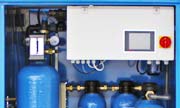
SCM 24
|
|
Cleans 24.000 liters per day
|
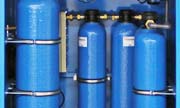
SCM 60
|
|
Cleans 60.000 liters per day
|
Video: How it works
The SCG Advantage
Our market-leading, water cleaning solutions have many advantages. To read more click the items below:
No Chemicals
Our machines and technology does not use any chemicals, at all.
Read more...
No Waste Water
Our machines do not waste any water. Yield = 100%.
Read more...
Low energy use
Uses 50 times less energy than a Reverse Osmosis Machine.
Read more...
Low ownership cost
Lower maintenance and operation costs due to our technology.
Read more...
Easy to install
Simple "plug and play" installation makes for easy deployment.
Read more...
Extremely compact
A compact system, contained in an easy to transport cabinet.
Read more...
Outperforms R.O.
SCG technologies outperform Reverse Osmosis systems.
Read more...
Faster ROI
Get a faster Return on Investment with our systems.
Read more...
Latest News
Latest Blog Posts
| Chemicals in water treatment? |
| Water storage - Whats best for keeping water clean and drinkable? |
| Case: Disaster Management Water Treatment |
Contact SCG
891 Showroom Place
Suite 101
Chula Vista, CA, 91914
Phone: +1 619-878-2730
Contact us by email