









Cost-Effective Uranium Removal From Municipal Water Supplies
Uranium in drinking water is a naturally occurring contaminant associated with certain rock formations, groundwater conditions, mining areas, and industrial activity. Although it is usually present as a dissolved compound rather than visible particles, long-term exposure can affect kidney health. Municipal utilities therefore need a treatment strategy that meets regulatory limits while controlling capital, operating, energy, and disposal costs.
The most economical solution depends on uranium concentration, water chemistry, flow rate, seasonal variation, and the existing treatment plant. A system designed for a small rural network may be unsuitable for a large city, while a high-pressure process can be wasteful when a selective adsorption medium would provide reliable removal.
Cost-effective uranium removal begins with accurate testing, continues with a well-matched treatment process, and ends with disciplined monitoring. Utilities that evaluate the entire water-treatment cycle can avoid unnecessary chemicals, oversizing, premature media replacement, and expensive emergency upgrades.
Confirm The Contamination Before Selecting Equipment
Laboratory testing should establish total uranium concentration and, where possible, the chemical form of uranium in the source water. Uranium removal performance is strongly influenced by pH, alkalinity, dissolved solids, sulfate, carbonate, hardness, iron, manganese, and competing ions. A single result is rarely enough to define a municipal design.
Sampling should cover each active well or intake and account for seasonal changes. Groundwater chemistry can shift after heavy rainfall, drought, changes in pumping rates, or blending with another source. Utilities should also test for related contaminants such as arsenic, radium, nitrate, pesticides, and microbial indicators because a uranium solution may need to serve several treatment objectives.
A treatment pilot or validated media test can reveal breakthrough behavior and actual operating costs. The most useful result is not simply a removal percentage; it is the volume of water treated before the media requires regeneration, replacement, or disposal.
Compare Treatment Methods By Total Cost
Several technologies can reduce uranium in municipal water, but they differ significantly in energy use, waste generation, maintenance, and sensitivity to water chemistry. Ion exchange can achieve strong removal and compact plant layouts, yet resin regeneration introduces a concentrated waste stream and may require chemical handling. Reverse osmosis is versatile and can remove many dissolved contaminants, but it consumes more energy and produces reject water that must be managed.
Adsorptive media can be attractive for groundwater systems with moderate flow and stable chemistry. Depending on the water profile, options may include activated alumina, titanium-based media, iron-based media, or other specialized uranium adsorbents. These systems typically operate at lower pressure than reverse osmosis and can be installed in pressure vessels or gravity-flow configurations.
| Treatment approach | Main advantages | Main cost considerations | Suitable application |
|---|---|---|---|
| Adsorptive media | Low energy demand, simple operation, modular expansion | Media replacement and disposal; performance depends on pH and competing ions | Groundwater with predictable uranium levels |
| Ion exchange | High removal potential and compact footprint | Resin replacement or regeneration, brine management, chemical handling | Consistent flows requiring high treatment reliability |
| Reverse osmosis | Broad contaminant removal and strong barrier performance | Electricity, membranes, pretreatment, concentrate disposal | Multiple dissolved contaminants or difficult water chemistry |
| Blending | Can reduce uranium concentration without a dedicated full-flow process | Requires a dependable low-uranium source and careful monitoring | Sources with variable quality and available capacity |
| Coagulation and filtration | May fit an existing conventional plant | Often limited for dissolved uranium without chemical conditioning | Facilities already using chemical treatment for other contaminants |
The lowest purchase price does not necessarily produce the lowest water cost. A useful comparison includes pumps, power, chemicals, operator time, backwashing, media or membrane replacement, concentrate disposal, laboratory testing, and downtime. For many municipalities, a lower-pressure adsorption system becomes especially attractive when uranium is the main target contaminant.
Match The Process To Existing Infrastructure
Retrofitting existing tanks, pipework, pumps, controls, and buildings can reduce project costs. A utility may be able to add media vessels after prefiltration, use existing flow meters, or integrate uranium treatment with a current manganese or arsenic removal stage. This approach avoids paying for duplicate pumping and civil construction.
Pretreatment is important because suspended solids, iron, manganese, and biological growth can block media surfaces or increase head loss. Removing turbidity and oxidized metals before an adsorption stage may extend media life. However, unnecessary pretreatment adds cost and complexity, so each step should be justified by water analysis and pilot results.
Modular treatment trains allow a municipality to begin with the most urgent source or a portion of the flow. Additional vessels can then be installed as demand increases. This staged approach can be useful for smaller communities with limited capital budgets, provided the initial layout includes space, hydraulic capacity, and control provisions for expansion.
Reduce Waste And Energy Use
A practical uranium treatment system should account for the residual stream from the beginning. Spent adsorption media, ion exchange resin, backwash water, and reverse osmosis concentrate may contain elevated uranium and require controlled handling under local regulations. Disposal costs can change the economics of a process that initially appears inexpensive.
Adsorption and ion exchange generally use less electricity than high-pressure membrane systems, although their environmental performance depends on media lifespan and disposal requirements. Reverse osmosis may still be the better choice when the same process must remove salts, nitrate, arsenic, or a broad range of dissolved contaminants. The correct decision comes from comparing the complete treatment train rather than focusing on one contaminant in isolation.
Source protection can reduce the amount of treatment required. Wellhead protection, controlling contamination pathways, managing blending, and tracking changes in aquifer chemistry may prevent a gradual increase in uranium levels. Where pesticides are also present, utilities can review media options for pesticides while designing a coordinated treatment strategy.
Build Reliable Monitoring Into Operations
Online flow, pressure, turbidity, pH, conductivity, and oxidation-reduction potential measurements can help operators identify changing conditions before uranium removal deteriorates. These instruments do not replace laboratory uranium analysis, but they provide early warnings of media fouling, unusual source-water chemistry, or process imbalance.
A sampling schedule should include raw water, treated water, and, where relevant, intermediate stages. Results should be compared with treatment capacity, media age, flow volume, and operating conditions. Tracking treated volume per vessel and uranium concentration over time makes it easier to predict breakthrough and schedule replacement before compliance is threatened.
Automation can lower labor requirements, particularly for remote wells and small municipal plants. Automatic valve sequencing, alarm notifications, flow pacing, and remote data access help standardize operation. The control system should still include manual procedures, backup power planning, and clear responses for an out-of-specification result.
Plan For Changing Demand And Emergencies
Municipalities should calculate average, peak-day, and fire-flow requirements separately. Treating every possible peak through an oversized uranium system may tie up capital and reduce media utilization. Equalization tanks, parallel vessels, or a smaller dedicated treatment stream can sometimes meet demand more efficiently.
Temporary or mobile equipment can provide flexibility during well maintenance, contamination events, construction, or disaster response. A carefully specified mobile water treatment trailer may support emergency supply operations, pilot testing, or short-term treatment while a permanent plant is upgraded. Its suitability depends on flow, source chemistry, electrical supply, residual management, and the required level of automation.
Procurement documents should require performance guarantees under defined water conditions. They should also specify media loading, expected service life, spare parts, operator training, warranty coverage, sampling points, and disposal responsibilities. Clear requirements help utilities compare bids on reliable treated-water cost instead of equipment price alone.
Recommendations For A Lower-Cost Project
- Test each source repeatedly for uranium, pH, alkalinity, competing ions, and related contaminants.
- Pilot the preferred adsorption, ion exchange, or membrane process using representative seasonal water.
- Compare lifecycle costs, including energy, chemicals, residuals, replacement media, labor, and disposal.
- Reuse existing tanks, pumps, controls, and pretreatment equipment where performance allows.
- Install modular vessels and monitoring points so capacity can expand without rebuilding the plant.
Move From Compliance Pressure To Planned Treatment
Municipal water providers can remove uranium economically when they treat water chemistry, infrastructure, residuals, and future demand as one design problem. Selective adsorption may offer a low-energy route for suitable groundwater, while ion exchange, reverse osmosis, blending, or combined treatment can be justified where water quality is more complex.
Swiss Cleanwater Group provides water-treatment technologies and project support for municipal, industrial, agricultural, building, and mobile applications. Utilities evaluating uranium removal can review Swiss Cleanwater Group solutions and develop a treatment concept based on measured water quality, required flow, operating resources, and long-term cost control.
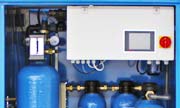
SCM 24
|
|
Cleans 24.000 liters per day
|
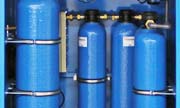
SCM 60
|
|
Cleans 60.000 liters per day
|
Video: How it works
The SCG Advantage
Our market-leading, water cleaning solutions have many advantages. To read more click the items below:
No Chemicals
Our machines and technology does not use any chemicals, at all.
Read more...
No Waste Water
Our machines do not waste any water. Yield = 100%.
Read more...
Low energy use
Uses 50 times less energy than a Reverse Osmosis Machine.
Read more...
Low ownership cost
Lower maintenance and operation costs due to our technology.
Read more...
Easy to install
Simple "plug and play" installation makes for easy deployment.
Read more...
Extremely compact
A compact system, contained in an easy to transport cabinet.
Read more...
Outperforms R.O.
SCG technologies outperform Reverse Osmosis systems.
Read more...
Faster ROI
Get a faster Return on Investment with our systems.
Read more...
Latest News
Latest Blog Posts
| Chemicals in water treatment? |
| Water storage - Whats best for keeping water clean and drinkable? |
| Case: Disaster Management Water Treatment |
Contact SCG
891 Showroom Place
Suite 101
Chula Vista, CA, 91914
Phone: +1 619-878-2730
Contact us by email