







How to Select Catalytic Media for High-Manganese Groundwater
High manganese in groundwater can create black staining, metallic taste, turbidity, and deposits in pipes, tanks, and appliances. At elevated concentrations, it can also affect drinking-water quality and complicate treatment for homes, farms, municipalities, and industrial facilities. Selecting the right catalytic media requires more than choosing a filter with a high manganese-removal claim.
The most reliable choice depends on water chemistry, manganese concentration, flow rate, temperature, oxygen availability, and the desired operating pattern. A media that performs well in cool, oxygen-rich groundwater may struggle when the water is acidic, contains dissolved iron, or enters the filter at a high hydraulic loading rate.
Catalytic filtration works by providing a reactive surface that accelerates manganese oxidation. The resulting manganese oxides are retained in the filter bed and removed during backwashing. Correct media selection therefore has to account for the entire treatment cycle, from oxidation and contact time to solids storage and bed cleaning.
Start With A Complete Water Analysis
The laboratory report should include total manganese and dissolved manganese, because the two values help distinguish dissolved contamination from particles already present in the raw water. Test results should also identify iron, arsenic, ammonia, hydrogen sulfide, turbidity, alkalinity, hardness, pH, dissolved oxygen, conductivity, and organic matter.
Manganese removal is strongly influenced by pH. Many catalytic media operate more effectively as pH rises, while low-pH water can slow oxidation and reduce the available treatment capacity. A system may therefore need aeration, pH adjustment, or another pretreatment step before the catalytic vessel.
Iron is another important factor. Iron and manganese can precipitate together, sometimes improving overall removal, but heavy iron loading can consume bed capacity and increase backwash frequency. Arsenic, pesticides, bacteria, and uranium require different treatment mechanisms, so a manganese filter should not be expected to address every contaminant without verification. A broader review of clean water solutions can help place manganese treatment within a complete treatment train.
Understand The Main Media Categories
Manganese dioxide-based media are commonly selected for groundwater with persistent manganese contamination. Their catalytic coating or naturally active surface promotes oxidation and adsorption, allowing dissolved manganese to become a filterable oxide. The amount and activity of manganese dioxide, the supporting mineral, grain size, and bulk density all affect performance.
Some media are designed to operate without continuous chemical regeneration, provided the raw water has suitable pH and oxygen conditions. Others depend on periodic regeneration with an oxidant or require a specific operating chemistry. Regenerable products may be useful for difficult water, but they introduce chemical handling, storage, dosing control, and wastewater considerations.
Engineered catalytic media can offer lower pressure loss or improved hydraulic behavior compared with dense mineral products. However, a lightweight bed may require different backwash rates and vessel dimensions. Natural manganese dioxide products can have high catalytic activity, yet their density may demand stronger backwash equipment. Product names alone are not enough; the supplier should provide operating limits and test data for the actual water.
Match Media Properties To Operating Conditions
The media must be sized for the real service flow, not merely the average daily demand. Peak flow determines contact time and hydraulic loading, while the vessel diameter controls bed depth and backwash distribution. Short contact time can allow manganese to pass through even when the selected media has strong catalytic activity.
Temperature also matters. Cold groundwater generally slows reaction kinetics, which can reduce manganese oxidation and increase the contact time needed for stable removal. Research and operating guidance for catalytic filtration should consider seasonal conditions; the relationship between water temperature and catalytic performance is also relevant when evaluating temperature effects on filtration.
| Selection factor | Why it matters | What to verify |
|---|---|---|
| pH and alkalinity | Influence oxidation speed and media activity | Minimum operating pH and need for correction |
| Dissolved oxygen | Supports conversion of dissolved manganese into oxides | Raw-water oxygen level and aeration options |
| Manganese concentration | Determines loading, capacity, and breakthrough risk | Average and peak concentrations |
| Iron and turbidity | Add solids and can block the bed | Pretreatment and backwash frequency |
| Temperature | Changes reaction kinetics and contact-time needs | Winter or lowest expected temperature |
| Flow rate | Controls empty-bed contact time and pressure loss | Peak flow, vessel size, and bed depth |
| Backwash water | Removes retained manganese oxides | Required rate, duration, and disposal route |
A media supplier should calculate empty-bed contact time, filtration velocity, bed expansion, and pressure drop. These values should be based on the lowest water temperature and highest expected contaminant load, rather than ideal laboratory conditions. If the water chemistry changes throughout the year, seasonal sampling can prevent an undersized design.
Check Backwashing And Waste Handling
Catalytic media gradually collect manganese oxides, iron solids, and suspended particles. Backwashing lifts and separates the grains so the retained material can leave the vessel. If the backwash rate is too low, deposits remain in the bed and cause channeling, high pressure loss, or uneven treatment. If it is too high, valuable media may be lost.
Water temperature affects expansion, so backwash calculations should reflect the actual density and viscosity of the operating water. The vessel also needs enough freeboard to allow the bed to expand without carrying media into the drain. Automatic valves and flow controls can make the cycle consistent, but they cannot correct an unsuitable vessel design.
Backwash water needs a practical disposal route. The discharge may contain concentrated manganese and iron solids, and local regulations may govern sewer discharge, infiltration, or release to surface water. A system that removes contaminants effectively but lacks a responsible waste-management plan is incomplete.
For installations serving farms and animal facilities, water quality must be considered alongside reliability and access to maintenance. Clean drinking water supports animal health and equipment performance, while a properly designed treatment system avoids creating unnecessary operating work. Guidance on water for livestock is especially relevant when groundwater serves troughs, dairies, or agricultural buildings.
Use Pilot Testing Before Full-Scale Installation
A pilot test is valuable when manganese levels are high, water chemistry is unusual, or several media products appear suitable. The test should use representative raw water and include the intended pretreatment, media depth, service flow, backwash procedure, and operating temperature. Testing only a small, freshly prepared sample may produce results that do not reflect field conditions.
Track influent and effluent manganese, iron, turbidity, pH, dissolved oxygen, pressure loss, and breakthrough over time. The test should continue long enough to reveal whether removal remains stable after the media begins accumulating solids. If possible, compare performance at different flow rates and after realistic backwash cycles.
A successful pilot should answer practical questions: What is the required contact time? How often must the bed be backwashed? Does the media need chemical regeneration? How much backwash water is produced? Does the water require aeration or pH correction? These answers are more useful than a single removal percentage.
Evaluate Total Ownership Requirements
Purchase price is only one part of media selection. Consider vessel size, pumps, valves, controls, backwash water, power use, replacement media, chemical storage, laboratory testing, and operator time. Dense media may require more pumping energy, while lightweight media may reduce hydraulic demand but need precise backwash control.
The system should also include a monitoring plan. A simple installation may need routine manganese tests and pressure readings, while a larger municipal or industrial plant may benefit from online turbidity, flow, pressure, and oxidation-reduction monitoring. Sampling ports before and after the filter make troubleshooting faster and help verify compliance.
Choose a supplier that can explain the media’s active mechanism, recommended loading limits, compatibility with pretreatment, and expected service life. Ask for references involving similar manganese concentrations and groundwater conditions. Transparent design assumptions are a stronger basis for investment than a generic guarantee.
Practical Selection Priorities
The following priorities help narrow the options before requesting a final design:
- Confirm manganese, iron, pH, alkalinity, dissolved oxygen, turbidity, and temperature through representative laboratory testing.
- Select media and vessel dimensions for peak flow and the lowest expected water temperature.
- Determine whether aeration, pH correction, sediment removal, or iron pretreatment is required.
- Compare chemical-free operation with regenerable media, including waste, maintenance, and safety requirements.
- Pilot-test shortlisted media when contaminant levels, seasonal conditions, or treatment goals are demanding.
A well-selected catalytic bed should deliver consistent manganese reduction without excessive pressure loss or unmanageable backwash demand. It should also fit the wider water-treatment system, whether the application is a private building, livestock operation, production site, municipal supply, or mobile installation.
Swiss Cleanwater Group can help translate laboratory results into a practical treatment concept, including media selection, pretreatment, vessel sizing, and operating controls. Share the raw-water analysis and flow requirements with its technical team to begin evaluating a reliable solution for high-manganese groundwater.
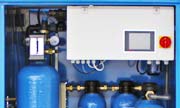
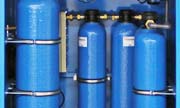
SCM 24
|
|
Cleans 24.000 liters per day
|
SCM 60
|
|
Cleans 60.000 liters per day
|
Video: How it works
The SCG Advantage
Our market-leading, water cleaning solutions have many advantages. To read more click the items below:
No Chemicals
Our machines and technology does not use any chemicals, at all.
Read more...
No Waste Water
Our machines do not waste any water. Yield = 100%.
Read more...
Low energy use
Uses 50 times less energy than a Reverse Osmosis Machine.
Read more...
Low ownership cost
Lower maintenance and operation costs due to our technology.
Read more...
Easy to install
Simple "plug and play" installation makes for easy deployment.
Read more...
Extremely compact
A compact system, contained in an easy to transport cabinet.
Read more...
Outperforms R.O.
SCG technologies outperform Reverse Osmosis systems.
Read more...
Faster ROI
Get a faster Return on Investment with our systems.
Read more...
Latest News
Latest Blog Posts
| Chemicals in water treatment? |
| Water storage - Whats best for keeping water clean and drinkable? |
| Case: Disaster Management Water Treatment |
Contact SCG
891 Showroom Place
Suite 101
Chula Vista, CA, 91914
Phone: +1 619-878-2730
Contact us by email