









Water Temperature And Catalytic Arsenic Filtration
Water temperature is an important, and sometimes overlooked, variable in arsenic treatment. A catalytic filter may perform reliably in a laboratory or warm climate, yet show different contact times, pressure behavior, or removal efficiency when source water becomes cold. Temperature does not act alone, however. Arsenic speciation, pH, dissolved oxygen, competing minerals, media condition, and hydraulic loading all influence the final result.
Catalytic filtration generally uses a reactive surface to promote oxidation and capture. Depending on the technology, the media may support the conversion of arsenite, or As(III), into arsenate, or As(V), while iron- or manganese-based surfaces adsorb arsenic or help form filterable particles. The process can operate without continuous chemical dosing, but it still depends on sound water chemistry and correctly selected equipment.
Understanding the temperature effect helps operators avoid two common mistakes: assuming that warmer water always produces better removal, or treating a colder season as a simple flow-rate problem. A robust design accounts for seasonal source-water conditions and verifies performance through testing.
Why Temperature Influences Arsenic Treatment
Temperature changes the speed of chemical and biological reactions at the filter surface. In general, lower temperatures slow oxidation, adsorption kinetics, and the formation of precipitates. Water also becomes more viscous as it cools, which can affect flow distribution, head loss, and the movement of water through granular catalytic media.
The practical consequence is often a need for longer empty bed contact time during cold conditions. If water passes through the filter too quickly, the media may not have enough opportunity to oxidize arsenite or retain dissolved arsenic. A system that achieves excellent results at 20°C may require a lower service flow at 5°C, especially when the raw water has high arsenic levels or limited dissolved oxygen.
Higher temperatures can accelerate reaction rates, but this does not guarantee proportionally higher removal. Adsorption sites may behave differently as temperature rises, and warm water can contain less dissolved oxygen. Excessive temperature can also encourage biological growth, change fouling patterns, or affect the stability of other contaminants in the source water.
Reaction Kinetics And Arsenic Speciation
The form of arsenic is central to treatment performance. Arsenite is usually more difficult to remove by adsorption than arsenate, so catalytic oxidation can be a critical stage before filtration. Manganese dioxide surfaces, iron-based catalytic media, and naturally occurring oxidants may contribute to this transformation, depending on the system design and water composition.
Temperature affects the rate of this conversion, but the relationship is not universal. A filter with abundant oxygen and a suitable catalytic surface may show a clear improvement in reaction speed as water warms. Another installation may be limited by pH, coating of the media, insufficient oxidation capacity, or competition from ammonia, organic matter, phosphate, and silicate.
Adsorption itself can respond differently to temperature than oxidation. Some adsorption processes become faster in warmer water, while equilibrium capacity may increase or decrease depending on the media and contaminant combination. For this reason, operators should evaluate both arsenic species rather than testing only total arsenic. A low total concentration can conceal incomplete arsenite oxidation if the treated water remains close to its regulatory limit.
Seasonal Operating Conditions
Cold groundwater is often chemically stable, but its low temperature can reduce reaction speed and increase water viscosity. Surface water may experience larger seasonal swings, bringing changes in temperature, turbidity, organic content, microbial activity, and dissolved oxygen. These changes can affect the filter more strongly than temperature by itself.
The relationship between temperature and treatment should therefore be assessed alongside hydraulic loading. The key operating variables include empty bed contact time, flow rate, bed depth, backwash frequency, inlet arsenic concentration, pH, and oxidation-reduction conditions. A modest reduction in flow can compensate for slower cold-water kinetics, while an overloaded bed may produce breakthrough even when the media is otherwise suitable.
| Operating condition | Likely effect on catalytic filtration | Useful control response |
|---|---|---|
| Cold water | Slower oxidation and adsorption kinetics; higher viscosity | Reduce flow, increase contact time, and confirm seasonal test results |
| Moderate temperature | Often stable reaction conditions | Maintain design loading and monitor pressure drop |
| Warm water | Faster kinetics may occur, but dissolved oxygen can fall | Check oxidation capacity, biological activity, and media condition |
| High organic matter | Surface fouling and competing adsorption | Add pretreatment or improve solids and organic-matter control |
| Low pH or unsuitable pH | Weaker arsenic adsorption for some media | Adjust pH only where permitted and supported by testing |
| High phosphate or silicate | Competition for adsorption sites | Select media for the water chemistry and monitor breakthrough |
Temperature data should be collected at the raw-water inlet and, where useful, after pretreatment. Recording only the ambient air temperature can give a misleading picture, especially for deep wells, storage tanks, or buried pipelines. A seasonal operating log that pairs temperature with arsenite, arsenate, total arsenic, pH, dissolved oxygen, flow, and pressure loss provides a much stronger basis for adjustment.
Media Selection And Pretreatment
No catalytic medium is equally effective for every source water. Iron hydroxide media may provide strong affinity for arsenate, while manganese-based materials can support oxidation and capture. Some systems rely on a combination of catalytic action, adsorption, and particulate filtration. The selected media must match the arsenic species and the concentrations of iron, manganese, phosphate, silica, organic carbon, and suspended solids.
Pretreatment can protect temperature-sensitive performance. Removing turbidity prevents particles from blocking the bed, while controlling iron and manganese can reduce unwanted coating or excessive backwash demand. Where dissolved oxygen is low, aeration may improve oxidation conditions. This can be particularly relevant in cold groundwater, where slow kinetics and oxygen deficiency may occur together.
Water reuse projects also demonstrate why treatment should be evaluated as a complete process rather than as an isolated filter. In a laundry reuse case study, the broader value of treatment includes water recovery and operating efficiency. For arsenic applications, the same systems perspective means considering pretreatment, catalytic media, backwashing, monitoring, and the final use of the treated water.
Monitoring Breakthrough And Performance
Temperature should be part of routine process control, not a value checked only during commissioning. A sudden drop in water temperature can signal a need to review flow and contact time before arsenic breakthrough appears. Conversely, warmer conditions may expose oxygen limitations or accelerate fouling that was not visible during colder months.
Sampling should distinguish between raw and treated water and, when possible, between As(III) and As(V). Total arsenic analysis confirms overall compliance, but speciation helps identify whether the oxidation stage or adsorption stage is limiting performance. Measurements of pH, oxidation-reduction potential, dissolved oxygen, iron, manganese, phosphate, and turbidity provide valuable context for interpreting a change.
A useful monitoring program establishes normal ranges rather than relying on one target number. Operators can compare arsenic removal against temperature bands, flow rates, and bed age. If treated-water arsenic rises at the same time as colder water and higher flow, hydraulic adjustment may solve the problem. If it rises during warm conditions with declining oxygen, the response may require aeration, media inspection, or a revised pretreatment step.
Practical Design And Operation Measures
A successful installation should be designed around the coldest expected water temperature, not the annual average. Pilot testing or detailed media testing can show whether the proposed bed depth and empty bed contact time are adequate. The test should use representative water and include the lowest temperature likely to occur during operation.
Temperature also matters for backwashing and equipment protection. Cold water can alter expansion behavior and may require careful adjustment of backwash rates to prevent media loss or inadequate cleaning. Warmer water can increase biological activity and change the frequency of fouling. Automated controls can link flow limits or alarm thresholds to measured temperature, but these settings should be validated against laboratory and field results.
Practical measures include:
- Measure raw-water temperature continuously or at consistent seasonal intervals.
- Test arsenite and arsenate separately when speciation is relevant.
- Size contact time and flow for cold-water conditions.
- Monitor pH, dissolved oxygen, turbidity, phosphate, silica, iron, and manganese.
- Review media life and breakthrough trends before changing operating settings.
Connecting Water Chemistry With Real-World Use
The final application influences how conservative the treatment design must be. Drinking-water systems require dependable compliance and carefully documented validation. Irrigation, livestock, industrial process water, and pool applications may have different quality targets, yet arsenic can still accumulate in soil, equipment, products, or waste streams. Temperature-related changes should be evaluated against the specific use rather than judged by removal percentage alone.
A vineyard, for example, may need protection from contaminants that affect irrigation infrastructure and long-term soil management. A vineyard filtration case study illustrates how chemical-free treatment can support agricultural operations. For arsenic removal, the relevant question is whether the system maintains safe, consistent water quality during seasonal changes in source-water temperature and demand.
Catalytic filtration can be a low-waste, energy-conscious approach when the media, hydraulics, and water chemistry are properly matched. Temperature is one part of that design equation, but it is a valuable indicator of when the process may need closer attention. Seasonal validation, appropriate monitoring, and realistic contact-time assumptions help turn a promising treatment concept into dependable operation.
Swiss Cleanwater Group can assess source-water conditions, contaminant levels, temperature variation, and end-use requirements when developing a treatment approach. Share representative water analyses and seasonal operating data with the company to determine whether catalytic filtration can deliver stable arsenic removal for your application.
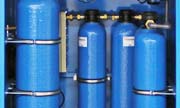
SCM 24

|
|
Cleans 24.000 liters per day
|
SCM 60
|
|
Cleans 60.000 liters per day
|
Video: How it works

The SCG Advantage
Our market-leading, water cleaning solutions have many advantages. To read more click the items below:
No Chemicals
Our machines and technology does not use any chemicals, at all.
Read more...
No Waste Water
Our machines do not waste any water. Yield = 100%.
Read more...
Low energy use
Uses 50 times less energy than a Reverse Osmosis Machine.
Read more...
Low ownership cost
Lower maintenance and operation costs due to our technology.
Read more...
Easy to install
Simple "plug and play" installation makes for easy deployment.
Read more...
Extremely compact
A compact system, contained in an easy to transport cabinet.
Read more...
Outperforms R.O.
SCG technologies outperform Reverse Osmosis systems.
Read more...
Faster ROI
Get a faster Return on Investment with our systems.
Read more...
Latest News
Latest Blog Posts
| Chemicals in water treatment? |
| Water storage - Whats best for keeping water clean and drinkable? |
| Case: Disaster Management Water Treatment |
Contact SCG
891 Showroom Place
Suite 101
Chula Vista, CA, 91914
Phone: +1 619-878-2730
Contact us by email