








Sizing A Chemical-Free Filtration System For A Small Brewery
Water is a core brewing ingredient, cleaning resource and utility stream. Its mineral balance affects mash chemistry, yeast performance, flavour consistency and the useful life of pumps, heat exchangers and filling equipment. A filtration system that is too small may restrict production or allow contaminants through, while an oversized unit can consume unnecessary capital and backwash water.
Sizing should therefore begin with the brewery’s actual water profile and operating pattern, rather than with a catalogue flow rate. For an Australian craft brewery, that means considering council water, rainwater or bore water, seasonal conditions, local discharge rules and the sharp differences between a quiet weekday and a high-volume packaging or taproom day.
Start With Water And Production Data
Obtain a recent laboratory analysis before selecting media or equipment. At minimum, test for pH, turbidity, hardness, alkalinity, iron, manganese, chloride, sulphate, total dissolved solids and microbiological indicators. Depending on the site, arsenic, nitrate, pesticides, uranium and other emerging contaminants may also deserve attention. A bore-fed brewery in regional Victoria or Queensland may face a very different treatment challenge from a city brewery using Sydney or Melbourne mains water.
Record how much water enters each process: mashing, sparging, wort production, yeast handling, cellar rinsing, packaging, keg washing and general cleaning. Brewing water consumption is often several times the packaged beer volume once cleaning and losses are included. A 1,000-litre brew may require considerably more than 1,000 litres of treated water across the full production cycle.
Separate drinking and brewing water from high-demand cleaning services where practical. Water used for a final rinse has a different quality requirement from water used for an initial equipment wash. If all outlets draw through one treatment train, size the system for the maximum simultaneous demand, not simply the average daily consumption.
Translate Brewery Demand Into Flow
Calculate both daily volume and peak instantaneous flow. Daily volume determines how much media capacity and storage may be needed; peak flow determines pipework, vessel diameter, pump capacity and the contact time available for contaminant removal. A brewery producing 20,000 litres per week may still need a system capable of handling a short, intense demand during a brew-day fill or a packaging rinse.
List the flow rate for each significant outlet in litres per minute, then identify which outlets can operate together. Add a sensible design margin, commonly around 10 to 25 per cent, to accommodate production growth, pressure variation and imperfect flow estimates. Avoid simply adding every appliance’s maximum rating if those appliances never operate at the same time, as that can make the filtration plant needlessly large.
Pressure is equally important. Confirm the minimum inlet pressure during peak demand, the pressure needed by downstream equipment and the pressure loss across clean and loaded filters. A booster pump may be required where a high-flow membrane, ultraviolet chamber or fine cartridge filter would otherwise reduce delivery pressure. In many Australian sites, a break tank also helps manage intermittent mains supply or low-pressure bore infrastructure.
Match Contaminants To Treatment Media
The treatment sequence should follow the water analysis. Sediment filtration can protect downstream components from sand, rust and suspended solids. Specialty adsorption or catalytic media may address arsenic, manganese, iron or other dissolved contaminants, while activated carbon can reduce chlorine, tastes, odours and selected organic compounds. The correct media depends on pH, oxidation state, competing minerals, temperature and the manufacturer’s validated operating range.
Chemical-free does not mean that every contaminant can be removed by one filter. Ultraviolet treatment can provide disinfection without chemical dosing, but it does not remove dissolved salts or suspended particles. Membrane processes can reduce many dissolved contaminants, although they produce a concentrate stream and normally require more pressure and energy. A robust design may combine pre-filtration, specialty media, UV and a final hygienic cartridge stage.
For a technical explanation of how specialist media capture dissolved pollutants, review this discussion of contaminant adsorption. It is particularly useful when comparing adsorption capacity with simple micron ratings. A filter that catches particles is not automatically suitable for dissolved arsenic, uranium or pesticides.
Keep brewery quality goals separate from drinking-water compliance. Brewers may want low chlorine, controlled alkalinity and predictable hardness for recipe repeatability, while the site must also meet applicable Australian drinking-water and food-production requirements. The final specification should be checked against the relevant state regulations, council conditions and food safety plan.
Allow For Contact Time Maintenance And Waste
Many media filters require a minimum empty bed contact time, or EBCT, to work effectively. EBCT is calculated by dividing the media volume by the treatment flow. If a vessel contains 100 litres of media and receives 500 litres per hour, its nominal contact time is 0.2 hours, or 12 minutes. Increasing flow through the same vessel reduces contact time and can lower contaminant removal.
A design should also account for backwashing, rinsing and media expansion. The required backwash rate depends on media density, particle size and water temperature. If the site cannot supply enough backwash water, the vessel may not clean properly, causing pressure loss and channeling. In water-stressed areas such as Perth or inland New South Wales, recovery, storage and disposal of backwash water should be assessed at the design stage.
Plan for hygiene and service access. A chemical-free treatment train still needs periodic inspection, media replacement, cartridge changes, UV-lamp replacement and sanitisation procedures compatible with brewery operations. Keep untreated and treated pipework clearly separated, install sampling points before and after critical stages, and provide bypass isolation so maintenance does not compromise the whole facility.
The system should also be protected from stagnation. Low-use branches, long pipe runs and oversized storage tanks can allow treated water to sit for too long. A compact brewery in Brisbane with variable taproom demand may need a recirculation strategy or point-of-use treatment rather than a very large central tank.
Compare Practical System Options
A small brewery usually benefits from comparing three broad arrangements: a central system, a modular train and point-of-use treatment. The right choice depends on contaminant risk, production growth, available floor space, water pressure and whether brewing and cleaning demand occur simultaneously.
| Arrangement | Best suited to | Main sizing focus | Advantages | Watch points |
|---|---|---|---|---|
| Central media and UV system | One site-wide treated-water network | Peak combined flow and backwash rate | Consistent water quality and simple distribution | Higher initial cost and greater consequence if offline |
| Modular treatment train | Growing breweries with changing water quality | Flow through each stage and future expansion | Easy to add carbon, specialty media or UV stages | Requires careful controls and sufficient floor space |
| Point-of-use filtration | Separate brewing, packaging or laboratory outlets | Individual outlet flow and usage frequency | Lower upfront cost and targeted treatment | Several units need separate maintenance |
| Membrane-based system | High dissolved-solids or specific contaminant reduction | Recovery rate, pressure and concentrate volume | Broad dissolved-contaminant reduction | More energy, reject water and operating complexity |
For a new facility, specify the target treated-water flow, minimum pressure, operating hours, expected production increase and acceptable downtime. Ask suppliers to state removal performance under the site’s actual pH, temperature and contaminant concentrations rather than relying on generic claims. The proposal should include test points, automatic shut-off or alarm functions where appropriate, a backwash route and a realistic service schedule.
The most reliable selection is usually the smallest system that meets validated peak demand with an appropriate safety margin and enough contact time. It should have room for an additional vessel, cartridge bank or UV capacity if the brewery expands. Australian operators should also confirm electrical requirements, plumbing standards, local trade support and how wastewater or brine will be handled before installation. A free system demonstration can help connect laboratory results and production data with a practical treatment configuration.
Bring a recent water report, a weekly production forecast and a list of simultaneous water uses to a design review with a qualified treatment specialist. Swiss Cleanwater Group can help assess the contaminant profile, calculate the required flow and identify a chemical-free treatment train suited to the brewery’s site conditions. Make the enquiry before ordering equipment so the final system is sized for safe, consistent brewing water rather than an assumed average.
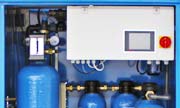
SCM 24
|
|
Cleans 24.000 liters per day
|
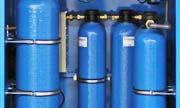
SCM 60
|
|
Cleans 60.000 liters per day
|
Video: How it works
The SCG Advantage
Our market-leading, water cleaning solutions have many advantages. To read more click the items below:
No Chemicals
Our machines and technology does not use any chemicals, at all.
Read more...
No Waste Water
Our machines do not waste any water. Yield = 100%.
Read more...
Low energy use
Uses 50 times less energy than a Reverse Osmosis Machine.
Read more...
Low ownership cost
Lower maintenance and operation costs due to our technology.
Read more...
Easy to install
Simple "plug and play" installation makes for easy deployment.
Read more...
Extremely compact
A compact system, contained in an easy to transport cabinet.
Read more...
Outperforms R.O.
SCG technologies outperform Reverse Osmosis systems.
Read more...
Faster ROI
Get a faster Return on Investment with our systems.
Read more...
Latest News
Latest Blog Posts
| Chemicals in water treatment? |
| Water storage - Whats best for keeping water clean and drinkable? |
| Case: Disaster Management Water Treatment |
Contact SCG
891 Showroom Place
Suite 101
Chula Vista, CA, 91914
Phone: +1 619-878-2730
Contact us by email