







Treating high-TDS water with chemical-free filtration in Australia
Total dissolved solids (TDS) describes the minerals, salts, metals and other dissolved substances that pass through ordinary sediment filters. A high reading can affect taste, scaling, irrigation, industrial processes and the reliability of drinking-water supplies. It is a useful warning signal, although it does not identify which substances are present or whether the water is safe.
For Australian properties, elevated TDS commonly occurs in bore water, drought-affected supplies, recycled water systems and coastal aquifers affected by seawater intrusion. A bore near Perth, a station in the Northern Territory and a household drawing from the Murray–Darling Basin may all record high conductivity for completely different reasons.
Chemical-free treatment means avoiding routine coagulants, chlorine dosing or salt-based softening where the application allows it. It does not mean that every contaminant can be removed by one filter. Dissolved salts require a different process from bacteria, sediment, iron or manganese, so the treatment train must be selected from laboratory results rather than from a TDS number alone.
A practical starting point is to test TDS alongside electrical conductivity, hardness, sodium, chloride, sulfate, alkalinity, pH, iron, manganese, arsenic, nitrate, uranium and microbiological indicators. Australian drinking-water projects should also be checked against the Australian Drinking Water Guidelines and the requirements of the relevant state or territory regulator.
| Treatment approach | Best suited to | Effect on TDS | Chemical use and key consideration |
|---|---|---|---|
| Sediment or multimedia filtration | Sand, silt and suspended particles | Little to none | Usually chemical-free; protects later stages |
| Aeration and catalytic filtration | Iron, manganese and some odour problems | Low | Needs oxygen and correct media design |
| Activated carbon | Taste, odour and selected organic compounds | Low | Media eventually needs replacement |
| Ultrafiltration | Bacteria, colloids and fine particles | Low to moderate | Does not remove most dissolved salts |
| Reverse osmosis | Sodium, chloride, hardness, fluoride and many dissolved ions | High | No chemical dosing, but produces concentrate |
| Electrodialysis or specialised membranes | Selected dissolved ions and brackish water | Moderate to high | Useful where recovery and ion selectivity matter |
What a high TDS reading really tells you
TDS is often estimated from conductivity rather than measured by weighing every dissolved substance. The conversion varies according to the water chemistry, so a handheld meter is valuable for screening but cannot replace a laboratory analysis. Two samples with the same TDS may have very different proportions of calcium, sodium, bicarbonate, chloride or potentially harmful contaminants.
Taste and scale are common symptoms. Sodium and chloride can make water noticeably salty, while calcium and magnesium contribute to hardness and deposits in kettles, hot-water systems, irrigation equipment and boilers. High sulfate may affect taste and digestion, and high nitrate or arsenic presents a different health concern that may not be obvious from taste or appearance.
A rise in TDS can also indicate changing groundwater conditions. In parts of Western Australia, coastal bores may need monitoring for salinity intrusion. Across inland Queensland and New South Wales, prolonged dry periods can concentrate dissolved minerals in shallow supplies. Tracking conductivity over time helps distinguish a temporary event from a worsening source-water problem.
Why ordinary filters cannot solve dissolved salts
Cartridge filters, sand beds and screens are designed mainly for particles. They can remove grit, rust flakes and suspended matter, but dissolved sodium chloride is far smaller than the openings in these media. Replacing a five-micron cartridge with a one-micron cartridge may improve clarity while leaving TDS almost unchanged.
Oxidation and adsorption can still be essential parts of a chemical-free system. By introducing air and using suitable catalytic media, dissolved iron and manganese can be converted into filterable particles. Some media can capture arsenic or other target contaminants under the right pH and oxidation conditions. These steps improve water quality and protect membranes, but they should not be presented as universal desalination.
This distinction prevents an expensive mismatch between the treatment objective and the equipment. If the main issue is muddy bore water with manganese, a pressure filter may be appropriate. If the issue is sodium and chloride, a membrane process is generally required. A complete design may use both.
Membrane treatment without chemical dosing
Reverse osmosis (RO) is the most familiar way to lower TDS without adding treatment chemicals. A pump forces water through a semi-permeable membrane, allowing much of the water to pass while retaining dissolved ions, microorganisms and many other contaminants. The product water has substantially lower conductivity and can be blended with treated source water when a specific mineral balance is preferred.
RO is not a waste-free process by definition. A portion of the feed becomes concentrate, and the recovery rate depends on salinity, temperature, pressure and scaling potential. Responsible Australian installations need a lawful plan for concentrate disposal or reuse, particularly in remote communities, agricultural areas and environmentally sensitive sites. Energy consumption also matters, although modern high-pressure pumps and energy-recovery options can improve efficiency.
Electrodialysis and electrodialysis reversal can be useful alternatives for some brackish supplies. They move ions through selective membranes using an electric field and can offer operational benefits when the target is mainly dissolved salts. The right choice depends on feedwater chemistry, flow rate, desired recovery, electricity availability and the required product-water quality.
Building a chemical-free treatment train
A robust system usually begins with source protection and pre-treatment. A screened intake, settling stage or multimedia filter can reduce suspended solids. Aeration may oxidise iron and manganese, while a catalytic or specialised media bed captures the resulting particles. Removing these loads first reduces fouling and extends the operating life of downstream membranes.
Where organic matter, taste or pesticide residues are present, activated carbon may be included. Carbon is a physical adsorption medium rather than a chemical dosing system, although it must be monitored and replaced before it becomes exhausted. Ultraviolet disinfection can address microorganisms without adding a residual chemical, but it requires low turbidity and does not remove dissolved minerals.
Dissolved oxygen has an important role in oxidation-based treatment, and the relationship between aeration, pH, contact time and filter media should be engineered rather than guessed. The company’s explanation of the role of dissolved oxygen provides useful context for this part of system design.
Matching the system to Australian operating conditions
A domestic bore in regional South Australia may need a compact RO unit for drinking water while retaining a separate filtration line for toilets and gardens. A cattle property in Queensland may require a larger, robust installation with storage tanks and protection from variable bore quality. In both cases, treating every litre to drinking-water quality may waste energy and membrane capacity, so point-of-use or fit-for-purpose distribution can be sensible.
Remote Aboriginal communities and isolated mining or military sites face additional constraints, including limited access to technicians, intermittent power, hot conditions and difficult freight routes. Equipment should therefore include clear alarms, accessible pre-filters, remote monitoring where practical and a maintenance schedule that local operators can follow. A system that works in a laboratory but cannot be serviced during the wet season is not a dependable solution.
For councils and utilities, procurement normally involves performance specifications, operator training, validation and lifecycle costs rather than simply buying a filter skid. In Australia, water authorities may also require approvals for source changes, discharge, recycled-water use or connection to a public supply. Early consultation can prevent a technically sound system from being delayed by an overlooked compliance issue.
Managing scaling, fouling and concentrate
High-TDS water often carries a high scaling risk, particularly when hardness, alkalinity and silica are elevated. RO membranes can foul with suspended solids, organic matter, iron and manganese, while biological growth can develop when stagnant water and nutrients are present. Chemical-free operation reduces dosing requirements but does not remove the need for hydraulics, cleaning strategy and regular inspection.
Pre-treatment should be verified with routine measurements. Conductivity before and after the membrane shows salt rejection, while pressure difference across a filter can reveal fouling. Flow, recovery and product-water quality should be logged so that a gradual decline is detected before supply is interrupted. Where membrane cleaning is unavoidable, the cleaning method and discharge must be managed according to the site and applicable rules.
Concentrate may sometimes be directed to an approved sewer, evaporation system or industrial reuse application, but disposal must never be improvised. On farms, applying concentrated brine to productive soil can damage crops and groundwater. A water balance that accounts for feed, product and reject streams is a core part of responsible design.
Verification, monitoring and safe performance
Treatment performance should be confirmed with independent testing at commissioning and at an interval suited to the risk. TDS and conductivity are convenient operational indicators, but they should be paired with tests for the specific contaminants found in the source. If arsenic, uranium, nitrate or microbial contamination is present, each requires a defined control measure and verification method.
Sensors can provide early warning, while laboratory sampling confirms whether the process is meeting health and operational targets. Operators should know the normal range for pressure, conductivity, flow and turbidity, along with the actions required when readings move outside it. This is particularly important for seasonal bore supplies, where the chemistry can change after heavy rain, flooding or extended drought.
A chemical-free approach works best when “chemical-free” refers to the treatment mechanism, not to a promise of maintenance-free operation. Pumps, membranes, valves, UV lamps and filter media all have service requirements. Clear records and planned replacement of consumables help keep the system reliable for households, councils, livestock operations and industry.
For a project involving brackish bore water, saline groundwater or variable remote supplies, speak with a treatment specialist before selecting equipment. Swiss Cleanwater Group provides information on sustainable water treatment and its vision for cleaner water, which can help frame a solution around resource efficiency, contaminant control and practical operation. If you no longer want email updates, you can also manage newsletter preferences.
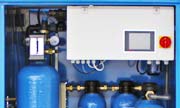
SCM 24
|
|
Cleans 24.000 liters per day
|
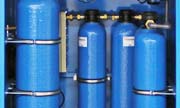
SCM 60
|
|
Cleans 60.000 liters per day
|
Video: How it works
The SCG Advantage
Our market-leading, water cleaning solutions have many advantages. To read more click the items below:
No Chemicals
Our machines and technology does not use any chemicals, at all.
Read more...
No Waste Water
Our machines do not waste any water. Yield = 100%.
Read more...
Low energy use
Uses 50 times less energy than a Reverse Osmosis Machine.
Read more...
Low ownership cost
Lower maintenance and operation costs due to our technology.
Read more...
Easy to install
Simple "plug and play" installation makes for easy deployment.
Read more...
Extremely compact
A compact system, contained in an easy to transport cabinet.
Read more...
Outperforms R.O.
SCG technologies outperform Reverse Osmosis systems.
Read more...
Faster ROI
Get a faster Return on Investment with our systems.
Read more...
Latest News
Latest Blog Posts
| Chemicals in water treatment? |
| Water storage - Whats best for keeping water clean and drinkable? |
| Case: Disaster Management Water Treatment |
Contact SCG
891 Showroom Place
Suite 101
Chula Vista, CA, 91914
Phone: +1 619-878-2730
Contact us by email