









The Role of Dissolved Oxygen in Chemical-Free Water Filtration
Clean water treatment does not always require a constant supply of chemical oxidants. In many applications, dissolved oxygen from air can initiate the reactions needed to transform soluble contaminants into particles that filtration media can capture. This approach supports lower chemical consumption, simpler operation, and reduced environmental impact.
The effectiveness of oxygen-based treatment depends on water chemistry and system design. Oxygen must be available in the correct concentration, contaminants must remain in contact with it for sufficient time, and the filtration stage must be able to retain the resulting solids. When these conditions are balanced, aeration and filtration can work as a coordinated treatment process rather than as separate steps.
For municipalities, farms, industrial facilities, and remote sites, this distinction is important. A chemical-free system still requires engineering, monitoring, and periodic maintenance, but it can avoid reagent storage, chemical dosing equipment, and the by-products associated with some conventional processes.
Why Dissolved Oxygen Matters
Dissolved oxygen is oxygen held in water rather than present as visible air bubbles. It acts as an oxidizing agent, accepting electrons from certain dissolved substances. This changes their chemical form, solubility, and physical behavior. Iron and manganese are the most familiar examples: they may enter a water source in a soluble state, then become insoluble oxides or hydroxides after oxidation.
Once these compounds form particles, a suitable filter can remove them through straining, adsorption, and surface reactions. The oxygen itself does not “catch” the contaminant. Instead, it changes the contaminant into a form that the filtration bed can retain.
Oxygen availability also influences biological treatment. In biofiltration, microorganisms colonize the media and use oxygen while breaking down biodegradable compounds or supporting nitrification. A stable oxygen supply can help maintain an active biological layer, provided the flow rate, temperature, pH, and nutrient conditions are appropriate.
From Aeration To Filtration
A chemical-free process commonly begins by exposing raw water to air. Cascade aerators, spray units, diffusers, venturi injectors, or packed aeration columns increase the contact area between water and atmospheric oxygen. Turbulence and fine bubbles accelerate gas transfer, while a holding or contact zone gives oxidation reactions time to develop.
The water then passes through a filtration medium selected for the target contaminants. In iron and manganese treatment, media may provide physical retention and catalytic surfaces that promote further oxidation. Some systems rely on naturally occurring or intentionally established biological activity. The choice depends on the raw water profile and the required treated-water quality.
The relationship between aeration and filtration must be carefully controlled. If oxidation is incomplete, soluble contaminants may pass through the filter. If excessive precipitate forms before filtration, the system may experience rapid clogging or high head loss. A well-designed installation distributes the load across the process and includes backwashing or another method of removing accumulated solids.
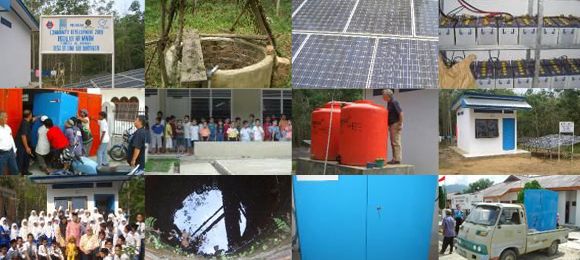
This principle can be seen in practical drinking-water projects. A remote village case study illustrates why robust, low-maintenance treatment can be valuable where chemical deliveries, specialist operators, or grid infrastructure are limited.
Which Contaminants Respond To Oxygen
Iron and manganese generally respond well to oxidation followed by filtration, although their reaction rates can vary considerably. pH is especially important. At an unsuitable pH, manganese oxidation may be slow even when oxygen is present. The system may therefore need additional contact time, specialized media, or a treatment sequence designed around the source water.
Arsenic requires more careful interpretation. Oxygen can help convert arsenite, As(III), into arsenate, As(V), which is often easier to remove by adsorption or co-precipitation with iron. However, dissolved oxygen alone does not guarantee arsenic removal. The process must provide an effective capture mechanism, and arsenic speciation, phosphate levels, pH, and competing substances should be evaluated.
Biological contaminants are different. Oxygen can support aerobic biological processes, but it is not a dependable disinfection barrier by itself. Bacteria may remain viable in oxygen-rich water. Where microbial safety is critical, filtration may be combined with ultrafiltration, ultraviolet treatment, or another validated barrier. The ultrafiltration approach shows how membrane separation can address bacteria directly rather than relying on oxidation.
Pesticides and uranium also require a targeted strategy. Oxygen may influence some chemical reactions, but it is rarely the sole removal mechanism for these contaminants. Activated carbon, ion exchange, membrane processes, or specialized adsorption media may be more appropriate. A chemical-free treatment train can still include several physical and biological processes without assuming that one mechanism solves every water-quality problem.
Key Design Variables
The dissolved oxygen concentration required by a system depends on the oxygen demand of the raw water. Iron, manganese, sulfide, organic matter, and other reduced compounds can consume oxygen before the water reaches the filter. Testing should therefore examine both the incoming DO level and the changes that occur after aeration.
Contact time is equally significant. Oxidation is not instantaneous in every source. A short pipe run may be sufficient for one water chemistry but inadequate for another. Contact tanks, retention chambers, or carefully sized pipework can provide the necessary reaction period without excessive pumping energy.
pH and temperature affect reaction speed, while hydraulic loading determines how long water remains in the media. High flow can reduce treatment performance by shortening contact time and increasing the risk of particle breakthrough. Seasonal changes in groundwater or surface-water quality may also alter oxygen demand and filtration behavior.
Monitoring should include parameters such as dissolved oxygen, oxidation-reduction potential, pH, turbidity, pressure loss, and contaminant concentrations. These measurements help operators identify whether a problem originates in aeration, oxidation, filtration, or backwash performance. They also support preventive maintenance instead of relying only on treated-water failures.
| Treatment objective | Contribution of dissolved oxygen | Main capture mechanism | Important controls |
|---|---|---|---|
| Iron reduction | Converts soluble iron into filterable solids | Media filtration and precipitation | pH, contact time, loading rate |
| Manganese reduction | Supports oxidation, often more slowly than iron | Catalytic or biological media | pH, media condition, temperature |
| Arsenic reduction | Can convert As(III) to a more removable form | Adsorption or co-precipitation | Speciation, phosphate, iron availability |
| Biological treatment | Supports aerobic microorganisms | Biofilm activity and filtration | DO stability, temperature, nutrients |
| Bacteria control | Does not reliably disinfect water | Membrane, UV, or validated barrier | Integrity, turbidity, sanitation |
| Pesticides or uranium | Usually limited or indirect influence | Adsorption, ion exchange, or membranes | Contaminant-specific testing |
Managing Energy And Residuals
Aeration can be designed for modest energy use, particularly when gravity flow, natural pressure differences, or low-energy air injection is available. The goal is to transfer enough oxygen to meet the treatment demand without continuously over-aerating the water. Oversized blowers and poorly controlled pumps can undermine the efficiency benefits of a chemical-free process.
Chemical-free does not mean residual-free. Oxidized iron and manganese accumulate in the filter bed and must be removed through backwashing or media maintenance. Backwash water may contain concentrated solids and should be managed responsibly. In some installations, the volume and composition of this residual stream are substantially easier to handle than spent chemical solutions, but they still require planning.
Media selection also affects resource use. Durable filtration materials with long service lives can reduce replacement frequency. A system that operates at an appropriate filtration rate may consume less water during backwashing and maintain stable performance for longer periods. These operational details are central to sustainability because lifecycle impacts extend beyond the initial installation.
Remote and mobile applications benefit from straightforward controls, accessible components, and clear service procedures. A treatment process that depends on precise chemical dosing may be difficult to operate in isolated locations. Aeration, gravity filtration, and automated monitoring can offer a practical alternative when matched to the local water chemistry.
Building A Reliable Treatment Train
The best design begins with laboratory analysis and, where necessary, pilot testing. A basic assessment should cover iron, manganese, arsenic species, uranium, pesticides, bacteria, turbidity, organic matter, pH, alkalinity, conductivity, and dissolved oxygen. The results indicate whether oxidation is suitable and which additional barriers are needed.
A typical sequence may include screening, aeration, contact time, media filtration, polishing, and disinfection or membrane separation. Not every site needs every stage. The treatment train should be proportionate to the contaminants, flow demand, available space, energy supply, and operator capacity.
Chemical-free filtration is most successful when each stage has a defined purpose. Aeration supplies oxygen and removes some volatile compounds. Contact zones allow reactions to proceed. Filters capture precipitated material and support catalytic or biological activity. Final barriers protect against contaminants that oxygen-based treatment cannot address.
Operators should also establish performance limits before commissioning. These may include minimum DO after aeration, maximum filter pressure loss, acceptable turbidity, and contaminant breakthrough thresholds. Clear limits make it easier to schedule backwashing, inspect equipment, and verify that treated water remains safe.
Practical Recommendations For Oxygen-Based Treatment
- Test raw and aerated water separately to measure oxygen demand and confirm oxidation performance.
- Match pH, contact time, filtration rate, and media type to the specific contaminants present.
- Use a validated microbial barrier when bacteria or viruses are part of the water-safety risk.
- Design backwash storage and residual handling before selecting the filter size.
- Monitor dissolved oxygen, turbidity, pressure loss, and treated-water quality during seasonal changes.
A properly engineered oxygen-assisted system can reduce chemical dependence while preserving dependable contaminant removal. Swiss Cleanwater Group provides water-treatment technologies for drinking-water supplies, agriculture, industry, buildings, livestock operations, pools, and mobile applications. Contact the company to evaluate your raw water, define the right treatment sequence, and develop a sustainable filtration solution built around measurable performance.
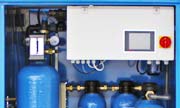
SCM 24
|
|
Cleans 24.000 liters per day
|
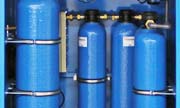
SCM 60
|
|
Cleans 60.000 liters per day
|
Video: How it works
The SCG Advantage
Our market-leading, water cleaning solutions have many advantages. To read more click the items below:
No Chemicals
Our machines and technology does not use any chemicals, at all.
Read more...
No Waste Water
Our machines do not waste any water. Yield = 100%.
Read more...
Low energy use
Uses 50 times less energy than a Reverse Osmosis Machine.
Read more...
Low ownership cost
Lower maintenance and operation costs due to our technology.
Read more...
Easy to install
Simple "plug and play" installation makes for easy deployment.
Read more...
Extremely compact
A compact system, contained in an easy to transport cabinet.
Read more...
Outperforms R.O.
SCG technologies outperform Reverse Osmosis systems.
Read more...
Faster ROI
Get a faster Return on Investment with our systems.
Read more...
Latest News
Latest Blog Posts
| Chemicals in water treatment? |
| Water storage - Whats best for keeping water clean and drinkable? |
| Case: Disaster Management Water Treatment |
Contact SCG
891 Showroom Place
Suite 101
Chula Vista, CA, 91914
Phone: +1 619-878-2730
Contact us by email