









Treating High-Iron Water Without Chemical Oxidizers
Iron is a common groundwater contaminant. It can leave orange stains on laundry and plumbing, create metallic tastes, discolor fixtures, and support deposits inside pipes. At higher concentrations, iron also interferes with irrigation equipment, industrial processes, livestock watering systems, and drinking-water treatment.
Chemical oxidizers such as chlorine, potassium permanganate, and ozone can convert dissolved iron into particles that filters can capture. However, they add chemical handling, residuals, storage requirements, and operating costs. A well-designed chemical-free process can often achieve the same basic separation by using oxygen, biological activity, specialized filtration, or a combination of these methods.
The right solution depends on the form of iron, the water chemistry, the required flow rate, and the intended use. Testing should come before equipment selection, because a system designed for clear-water iron may perform poorly when the source also contains manganese, hydrogen sulfide, organic matter, or fine suspended solids.
Why Iron Appears In Different Forms
Dissolved ferrous iron, commonly written as Fe²⁺, is usually invisible when water comes from a well. It remains soluble while the water is underground and may pass through an ordinary sediment cartridge. Once exposed to air, however, it can oxidize into ferric iron, Fe³⁺. Ferric iron forms reddish-brown particles that can be separated through settling or filtration.
Some sources already contain oxidized iron particles. This is called ferric or particulate iron and may make the water look cloudy or rusty at the outlet. Other sources contain colloidal iron, which consists of extremely small particles that remain suspended and are harder to remove with basic filters.
Iron can also be associated with iron bacteria. These naturally occurring microorganisms may produce slimy deposits, unpleasant odors, and recurring blockages. Their presence changes the treatment strategy because removing dissolved iron alone may not address the biological growth in tanks, wells, or distribution lines.
Test The Water Before Choosing Equipment
A laboratory analysis should distinguish between total iron and dissolved iron. A field sample can lose important information if it is exposed to air before testing, so samples should be collected and preserved according to the laboratory’s instructions. Measuring pH, alkalinity, turbidity, manganese, sulfide, hardness, conductivity, and organic content provides a much more useful treatment profile.
Flow and usage patterns matter as much as concentration. A household may need a compact point-of-entry system, while a municipality, farm, or factory may require continuous treatment at variable flow rates. Peak demand, available pressure, backwashing water, storage capacity, and the quality of the treated water should all be included in the design.
Water intended for drinking requires validated performance and hygienic construction. Irrigation water may prioritize protection against clogged nozzles and emitters. Process water can require tighter control of dissolved metals, while livestock applications need dependable operation and materials suitable for animal watering systems.
Chemical-Free Ways To Remove Iron
Aeration is one of the simplest approaches. Air is introduced into the water through a venturi, diffuser, cascade, spray chamber, or contact tank. Oxygen converts much of the soluble ferrous iron into ferric particles, which can then be retained by a properly selected filter. The contact time and pH must be sufficient for the reaction to proceed consistently.
Another approach uses oxygen-rich contact with a filter bed that supports iron capture. Some media provide catalytic surfaces that accelerate oxidation, while others retain precipitated iron through depth filtration. These systems generally require periodic backwashing to remove accumulated solids and restore flow. Backwash frequency depends on the iron load, turbidity, media depth, and daily water volume.
Biological iron removal can be effective when naturally occurring microorganisms convert dissolved iron under controlled conditions. Biofiltration often uses an aerated environment and a suitable filter bed rather than a chemical dose. Once established, the biological layer can provide stable treatment, although commissioning, temperature, loading rates, and sanitation must be carefully managed.
Membrane filtration, ultrafiltration, and other physical separation methods may be useful when iron has already been converted into particles or when several contaminants must be addressed together. Membranes can offer high-quality water, but they usually need pretreatment to prevent fouling. They may also produce a concentrated reject stream, so water recovery and waste management must be considered.
Comparing Non-Chemical Treatment Options
No single method is ideal for every source. Aeration is attractive where dissolved iron is the main issue and the water has enough alkalinity and suitable pH. Catalytic media can provide a compact solution, while biological treatment may reduce chemical and energy demand over long operating periods. Membranes are powerful when a broader contaminant barrier is required, but they involve greater technical complexity.
The following comparison shows how the main approaches differ. Actual performance should be confirmed through testing or a pilot installation, especially when manganese, sulfide, bacteria, or organic color is present.
| Treatment approach | Best suited to | Main operating needs | Important limitations |
|---|---|---|---|
| Aeration with filtration | Dissolved ferrous iron in groundwater | Air contact, retention time, filter backwashing | Performance can decline at low pH or with high organic content |
| Catalytic or iron-removal media | Moderate iron loads and compact installations | Correct media selection, flow control, periodic backwash | Media life and efficiency depend on water chemistry |
| Biological filtration | Stable sources with suitable temperature and loading | Controlled start-up, oxygen availability, hygienic management | Requires careful commissioning and consistent operation |
| Ultrafiltration or membrane separation | Fine particles and broader water-quality requirements | Pretreatment, pressure, cleaning, concentrate handling | Higher capital and maintenance demands |
| Settling plus filtration | High particulate iron and larger flows | Contact or sedimentation volume, sludge removal | Less effective for iron that remains dissolved |
Build The Process Around The Whole Water Source
A reliable system normally includes more than a single filter vessel. A typical chemical-free sequence may include raw-water screening, aeration, a contact tank, iron-removal filtration, polishing filtration, and a clean-water storage or distribution stage. Automatic controls can regulate flow, monitor pressure loss, and trigger backwashing when the media begins to load.
pH is especially important. Oxidation and precipitation generally become easier as pH rises, while acidic water can keep iron dissolved. Raising pH may be possible through approved treatment steps, but that changes the chemistry of the process and should be evaluated with professional water analysis. Manganese often needs different conditions from iron, so a system designed only for iron may not remove it adequately.
Hydrogen sulfide can consume oxygen and create odor problems. Organic compounds may coat filter media or stabilize colloidal iron. Iron bacteria may require source control, mechanical cleaning, or a specialized sanitation program. These interactions explain why a laboratory report and pilot testing are often more valuable than selecting equipment from the iron concentration alone.
For irrigation and agricultural systems, filtration must protect pumps, valves, sprinklers, and drip emitters across changing demand. Guidance on chemical-free irrigation treatment illustrates why water-quality protection should be considered alongside environmental impact and operating practicality.
Select Equipment For Reliable Operation
A treatment system should be sized for peak flow rather than average daily use. Excessive flow through a filter can carry iron particles through the bed, shorten run times, and increase pressure loss. Insufficient backwash capacity can leave accumulated solids in the media, causing channeling and inconsistent treated-water quality.
Automation can make chemical-free treatment easier to manage. Flow meters, pressure sensors, turbidity monitoring, and iron testing help identify breakthrough before it affects the end user. Backwash water should be directed to a suitable drain, settling area, or recovery process, depending on local requirements and the contaminant load.
Equipment selection should also account for access and maintenance. Operators need safe access to valves, media, pumps, air systems, and sampling points. For remote facilities, farms, emergency systems, and mobile applications, low chemical dependency can simplify logistics, but the system still needs dependable power, spare parts, and a clear service routine.
Swiss Cleanwater Group presents a range of water cleaning products for applications where contaminant removal, resource efficiency, and reduced chemical use are important design goals. Product suitability should be matched to the tested source water and the required treatment capacity.
Practical Design Recommendations
A chemical-free iron-removal project is most successful when performance targets are defined before equipment is purchased. Specify the acceptable iron concentration, turbidity, color, taste, pressure loss, water recovery, and maintenance interval. For drinking water, include applicable regulatory and microbiological requirements in the design brief.
Use these principles when planning the installation:
- Test total and dissolved iron separately, along with pH, manganese, sulfide, turbidity, hardness, and organic matter.
- Determine peak flow, daily volume, seasonal variation, and the water quality required at each point of use.
- Provide enough contact time, filtration capacity, and backwash flow for the expected iron loading.
- Pilot-test aeration, catalytic media, or biological filtration when the source chemistry is complex.
- Include sampling points before and after treatment so operators can verify performance over time.
Chemical oxidizers are not the only route to dependable iron removal. By exposing dissolved iron to oxygen, capturing precipitated particles, and matching the filter technology to the source water, many installations can reduce staining, deposits, and maintenance without routine chemical dosing.
Arrange a water analysis and treatment assessment with Swiss Cleanwater Group to identify the most suitable non-chemical process for your municipality, building, farm, industrial site, or mobile application. A source-specific design can turn high-iron water into a dependable supply while limiting chemical use, waste, and unnecessary energy consumption.
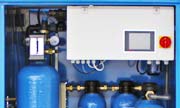
SCM 24
|
|
Cleans 24.000 liters per day
|
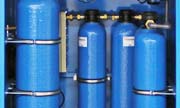
SCM 60
|
|
Cleans 60.000 liters per day
|
Video: How it works
The SCG Advantage
Our market-leading, water cleaning solutions have many advantages. To read more click the items below:
No Chemicals
Our machines and technology does not use any chemicals, at all.
Read more...
No Waste Water
Our machines do not waste any water. Yield = 100%.
Read more...
Low energy use
Uses 50 times less energy than a Reverse Osmosis Machine.
Read more...
Low ownership cost
Lower maintenance and operation costs due to our technology.
Read more...
Easy to install
Simple "plug and play" installation makes for easy deployment.
Read more...
Extremely compact
A compact system, contained in an easy to transport cabinet.
Read more...
Outperforms R.O.
SCG technologies outperform Reverse Osmosis systems.
Read more...
Faster ROI
Get a faster Return on Investment with our systems.
Read more...
Latest News
Latest Blog Posts
| Chemicals in water treatment? |
| Water storage - Whats best for keeping water clean and drinkable? |
| Case: Disaster Management Water Treatment |
Contact SCG
891 Showroom Place
Suite 101
Chula Vista, CA, 91914
Phone: +1 619-878-2730
Contact us by email