








Removing Aluminum From Drinking Water Without Added Chemicals
Aluminium can enter drinking water through natural geology, industrial activity, ageing infrastructure, or the use of aluminium-based coagulants during conventional treatment. At elevated levels, it may create a metallic taste, cloudy water, deposits and operational problems, even when the source appears clear.
A chemical-free approach focuses on understanding the form of aluminium in the water and selecting a treatment barrier that matches it. Physical separation, specialised filtration and carefully managed adsorption can reduce aluminium without routinely dosing the supply with coagulants or creating unnecessary chemical residues.
Why Aluminium Appears In Water
Aluminium is common in Australian soils and mineral deposits, but it is usually present in an insoluble form. It can become more mobile when water has a low or high pH, contains organic matter, or passes through disturbed ground. Mining areas, construction zones and some industrial sites may therefore require closer monitoring.
Aluminium can also be introduced during drinking water treatment. Aluminium sulphate, often called alum, is widely used to help remove suspended particles. If dosing, mixing, settling or filtration is poorly controlled, residual aluminium can remain in the finished water. Changes in raw-water quality can make this more likely.
Water chemistry matters because aluminium may be dissolved, attached to fine particles, or bound to organic compounds. A clear sample does not always mean the contaminant is absent. Testing should distinguish total aluminium from dissolved aluminium and record pH, turbidity, alkalinity and organic content.
Australian Water Quality Considerations
The Australian Drinking Water Guidelines commonly use 0.2 mg/L as an operational or aesthetic reference point for aluminium, although the appropriate target depends on the source, treatment process and local regulatory requirements. Water suppliers, facility operators and private schemes should confirm the current requirement with the relevant state authority or accredited laboratory.
Local conditions vary considerably. Sydney and Melbourne rely on large, carefully managed catchments, while Perth faces groundwater pressure and a growing role for desalination. Brisbane and other Queensland communities may experience sudden changes in turbidity after intense rainfall. These differences affect the way aluminium enters water and how a treatment system should be designed.
Rainwater tanks are common around Australian homes, farms and regional facilities, but roof dust, ash, soil and old plumbing can alter water quality. Remote communities, livestock properties and mining camps may also need compact systems that operate with limited technical support, variable electricity and irregular deliveries of treatment chemicals.
What Chemical-Free Treatment Means
Chemical-free treatment does not mean that water quality is managed without science or maintenance. It means the process does not depend on routine addition of substances such as alum, ferric salts, chlorine or pH-correction chemicals for the specific removal stage. The equipment still needs correct sizing, flow control, monitoring and periodic cleaning.
Depending on the test results, aluminium may be reduced through depth filtration, catalytic or adsorptive media, membrane separation, or a combination of barriers. A filter can capture particulate aluminium, while a suitable medium may interact with dissolved species. Membranes can provide a tighter barrier, but they require pressure, cleaning and responsible management of the concentrate stream.
The best option is not determined by an aluminium result alone. Iron, manganese, arsenic, silica, hardness, salinity and microbial contamination can influence performance. A treatment assessment should consider the complete water profile rather than selecting a cartridge or media based on a single laboratory number.
Filtration For Different Aluminium Forms
Particulate and colloidal aluminium is often addressed with staged filtration. A coarse pre-filter protects finer equipment, followed by a properly selected media bed or polishing filter. Flow velocity, contact time and particle loading are important: a filter that is too small may allow breakthrough or become blocked quickly.
Dissolved aluminium requires a different strategy. Adsorptive media can be effective when its surface chemistry suits the water, but performance depends on pH and competing minerals. Some systems work best within a defined operating range, making online pH and conductivity measurements valuable where water conditions fluctuate.
A chemical-free system may still use backwashing with treated water or air scour to restore filter capacity. The backwash stream must be directed to an approved drain, settling arrangement or waste-management process. Avoiding chemical sludge is useful, but it does not remove the need to manage captured solids responsibly.
Managing High Ph And Related Contaminants
High-pH water can change the charge, solubility and behaviour of aluminium compounds. It can also affect the removal of other contaminants, including arsenic. This is why a process that performs well in a laboratory sample may behave differently at a bore, reservoir or rainwater site.
Understanding the interaction between pH and contaminants is especially important for mixed water sources. Swiss Cleanwater Group explains a related high-pH arsenic approach, illustrating why treatment should be based on water chemistry rather than a generic filter specification.
Where several contaminants occur together, the treatment train may include pre-filtration, a specialised media stage and final disinfection. The sequence matters. Removing turbidity first can protect later stages, while controlling biological growth can preserve flow and extend media life.
Designing Systems For Australian Sites
A municipal plant in Melbourne has different requirements from a bore-fed property near Toowoomba or a mobile unit supporting a remote Northern Territory community. Designers need to account for peak demand, seasonal raw-water changes, available footprint, operator access and the consequences of downtime.
For farms and livestock operations, water demand can rise sharply during hot weather. A system must handle trough filling, wash-down and household use without excessive pressure loss. In commercial buildings, hospitals and food facilities, the design must also protect downstream plumbing and fit within hygiene and compliance procedures.
A useful specification includes raw-water and treated-water sampling points, pressure gauges, flow measurement and a clear maintenance schedule. Remote monitoring can help identify rising differential pressure or declining treatment performance before users notice taste, colour or cloudiness.
Monitoring Performance And Maintenance
Aluminium removal should be verified through accredited laboratory testing at commissioning and during routine operation. Testing frequency depends on source variability, system size and regulatory obligations. Sudden changes in rainfall, bore conditions, construction activity or upstream treatment should trigger additional sampling.
Operators should record pH, flow rate, pressure difference, backwash frequency and media age. These simple measurements help show whether a filter is approaching exhaustion or whether a change in water quality is affecting performance. A treated-water result without operating records provides only part of the picture.
Maintenance may involve replacing cartridges, replenishing media, cleaning membranes or inspecting valves and storage tanks. A chemical-free system still needs a planned service regime. The advantage is that the process can reduce reliance on chemical deliveries, chemical handling and the formation of treatment by-products.
Comparing Treatment Choices
There is no universal aluminium filter. The right solution depends on whether aluminium is dissolved or particulate, the target concentration, the pH range, the flow rate and the presence of other contaminants. The following comparison shows how common approaches differ at a high level.
| Approach | Most Suitable For | Main Benefits | Important Considerations |
|---|---|---|---|
| Depth filtration | Particulate and colloidal aluminium | Simple operation and protection for later stages | Needs correct sizing and backwash or cartridge replacement |
| Adsorptive media | Selected dissolved aluminium conditions | Can operate without routine chemical dosing | Media performance depends on pH, competing substances and capacity |
| Membrane treatment | Tight contaminant control and multiple dissolved pollutants | High separation efficiency when correctly designed | Requires pressure, cleaning and management of concentrate |
| Conventional coagulation | Highly variable suspended solids | Established method for large treatment plants | Uses chemicals and produces sludge requiring handling |
| Combined treatment train | Mixed contaminants and changing source water | Allows each stage to perform a defined task | Requires testing, controls and coordinated maintenance |
For facilities seeking a lower-chemical water strategy, the no-chemicals treatment approach can provide a starting point for evaluating equipment, operating requirements and suitable applications. Any selection should still be confirmed through site-specific water analysis and pilot testing where the chemistry is complex.
A practical next step is to collect representative samples from the raw-water source and existing treated supply, then document daily flow, peak demand and available installation space. Swiss Cleanwater Group can help assess the results and identify a treatment configuration for a home, farm, municipality, industrial site or mobile application. Contact the team to discuss aluminium reduction without routine chemical dosing and develop a system suited to Australian operating conditions.
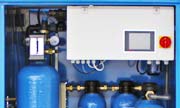
SCM 24
|
|
Cleans 24.000 liters per day
|
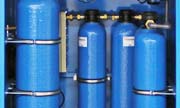
SCM 60
|
|
Cleans 60.000 liters per day
|
Video: How it works
The SCG Advantage
Our market-leading, water cleaning solutions have many advantages. To read more click the items below:
No Chemicals
Our machines and technology does not use any chemicals, at all.
Read more...
No Waste Water
Our machines do not waste any water. Yield = 100%.
Read more...
Low energy use
Uses 50 times less energy than a Reverse Osmosis Machine.
Read more...
Low ownership cost
Lower maintenance and operation costs due to our technology.
Read more...
Easy to install
Simple "plug and play" installation makes for easy deployment.
Read more...
Extremely compact
A compact system, contained in an easy to transport cabinet.
Read more...
Outperforms R.O.
SCG technologies outperform Reverse Osmosis systems.
Read more...
Faster ROI
Get a faster Return on Investment with our systems.
Read more...
Latest News
Latest Blog Posts
| Chemicals in water treatment? |
| Water storage - Whats best for keeping water clean and drinkable? |
| Case: Disaster Management Water Treatment |
Contact SCG
891 Showroom Place
Suite 101
Chula Vista, CA, 91914
Phone: +1 619-878-2730
Contact us by email