








Removing Chromium-6 From Industrial Wastewater Without Chemical Reduction
Chromium-6, or hexavalent chromium, can enter wastewater from metal finishing, electroplating, mining, pigment production, leather processing and some manufacturing activities. It is highly soluble, mobile in water and more difficult to control than trivalent chromium when the treatment process relies on simple settling or conventional filtration. For Australian operators, a reliable solution must protect receiving waters, meet discharge conditions and avoid creating a new hazardous waste stream.
Chemical reduction traditionally converts chromium-6 into chromium-3 before precipitation. That approach can work, but it requires reducing agents, pH adjustment, chemical storage, sludge handling and close process control. A separation-based design offers another pathway: capture or reject dissolved chromate ions without changing their oxidation state. Swiss Cleanwater Group develops sustainable water treatment systems for industrial and municipal applications, including solutions designed to minimise chemical use, waste and unnecessary energy demand.
Why chromium-6 requires a specialised process
Chromium-6 is commonly present as chromate or dichromate, depending on pH and concentration. These species remain dissolved across a broad range of industrial wastewater conditions, so ordinary screens, settling tanks and sand filters generally cannot remove them effectively. Total chromium testing alone may also conceal the difference between chromium-3 and chromium-6, making speciation an important part of the site assessment.
The wastewater matrix determines which non-reductive technology is practical. Sulphate, chloride, nitrate, alkalinity, oils, suspended solids and organic compounds can compete for treatment capacity or foul membranes and adsorbents. Flow variation matters as well: a small electroplating workshop may produce intermittent batches, while a mine site or metal-processing plant may require continuous treatment with fluctuating contaminant loads.
Australian facilities should establish a baseline through representative sampling rather than a single grab sample. Samples taken during production changes, tank cleaning and peak discharge periods can reveal the actual chromium load. In New South Wales, Queensland and Western Australia, the final target may be set by a trade-waste agreement, an environmental licence, a site-specific approval or a discharge-to-sewer condition rather than by drinking-water criteria alone.
Separation technologies that avoid chemical reduction
Reverse osmosis and nanofiltration can reject dissolved chromium-6 by using a semi-permeable membrane. The process does not chemically convert the contaminant; it divides the feed into treated permeate and a concentrated reject stream. Membrane selection depends on pressure, recovery, water chemistry and the presence of other dissolved salts. Pretreatment is essential where wastewater contains oil, scale-forming minerals or high suspended solids.
Ion exchange is another direct separation method. Specialised anion resin can capture chromate and dichromate because they carry a negative charge. Once exhausted, the resin must be regenerated or replaced, and the resulting brine or spent media needs controlled handling. In some facilities, a disposable or regenerable adsorbent may be preferable to a resin system, especially when flow is modest and contaminant concentration is relatively stable.
Adsorption media can provide a compact polishing stage after physical pretreatment or membrane treatment. Performance depends on contact time, pH, competing anions and the media’s selectivity. Activated carbon alone is not automatically a reliable chromium-6 treatment, so claims should be checked against independent testing and site-specific water analysis. A properly designed system may combine filtration, selective adsorption and membrane separation rather than relying on one unit operation.
Comparing non-reductive treatment options
The best choice depends on concentration, flow, recovery requirements and the destination of the treated water. A process that performs well for a small batch discharge may be uneconomical for a large mine-water stream. Pilot testing should measure chromium-6 removal, total chromium, water recovery, pressure loss, media exhaustion and the stability of the treated-water quality.
| Treatment approach | How it handles chromium-6 | Chemical reduction required | Main strengths | Key design consideration |
|---|---|---|---|---|
| Reverse osmosis | Rejects dissolved chromate through a membrane | No | High removal potential and broad contaminant control | Concentrate management and energy demand |
| Nanofiltration | Rejects many charged ions at lower pressure than RO | No | Useful where partial desalination is acceptable | Feed chemistry and membrane fouling |
| Anion exchange | Captures negatively charged chromate species | No | Selective, compact and suitable for polishing | Resin capacity and regeneration brine |
| Selective adsorption | Retains chromium-6 on engineered media | No | Flexible for smaller flows and final polishing | Media life, competing ions and disposal |
| Electrochemical separation | Uses electrically driven ion transport or capture | No chemical reductant | Can be automated and modular | Electricity use, electrode maintenance and by-products |
A practical Australian installation may use cartridge or multimedia filtration first, followed by anion exchange or membrane treatment and a final monitoring stage. For a remote mining camp in Western Australia, containerised equipment can simplify deployment and maintenance. For a facility near Melbourne or Brisbane, connection to existing process-water infrastructure may make a fixed skid more appropriate. The system should include sampling points before and after each critical stage so operators can identify breakthrough early.
Designing for Australian operating conditions
Water scarcity and long transport distances influence wastewater decisions across Australia. A treatment system that produces reusable process water can reduce demand on town supplies, borefields or harvested rainwater. In Perth and other parts of Western Australia, where groundwater management and industrial reuse are closely scrutinised, high recovery may be valuable, provided the concentrate is handled lawfully and does not damage downstream equipment.
Remote and mobile applications require a different design philosophy. Equipment may need to operate with limited operator access, variable generator power, dust exposure and restricted chemical deliveries. A modular system with automatic backwashing, remote alarms, easy-to-change media vessels and conservative maintenance intervals can be more useful than a complex plant that requires frequent specialist attendance. Guidance on mobile treatment design is relevant when chromium-contaminated water must be managed at temporary works, emergency sites or isolated industrial operations.
Australia’s mining and resources sector also needs a clear concentrate strategy. Reverse osmosis reject may contain chromium-6 at a much higher concentration than the original wastewater, while exhausted resin or adsorbent can be classified as regulated waste depending on its composition and jurisdiction. Sending concentrate to an evaporation pond, sewer, reinjection system or off-site facility requires approval and verification. The treatment design is incomplete until this residual stream has a documented destination.
Monitoring, compliance and safe reuse
A non-reductive system should be monitored for both chromium-6 and total chromium. Measuring only total chromium can miss a breakthrough of the more mobile hexavalent form, while measuring only chromium-6 can overlook changes in overall loading or the release of chromium-containing solids. Testing frequency should reflect the risk, discharge volume and variability of the process.
Online flow, conductivity, pressure and oxidation-reduction potential can support process control, although oxidation-reduction potential is not a substitute for laboratory chromium speciation. Periodic laboratory analysis should confirm the sensor data and identify changes in feed chemistry. Alarm settings can be linked to membrane differential pressure, permeate conductivity, treated-water chromium and the operating hours of adsorption or ion-exchange vessels.
Reuse may include equipment washing, cooling applications, dust suppression or other non-potable purposes, but the required quality depends on the end use. Water intended for human consumption is subject to much stricter controls than water reused within a closed industrial process. Operators should consult the applicable state regulator, local water authority and clean water specialists before selecting a treatment train or making a discharge commitment.
A strong verification programme includes mass-balance calculations, routine sampling and documented maintenance. It should demonstrate where chromium enters the plant, how much is removed, how much remains in permeate or effluent, and where the captured contaminant goes. This evidence supports environmental reporting and helps prevent accidental release during membrane cleaning, resin changeover or tank maintenance.
Building a practical treatment train
The first step is a site survey covering production chemistry, wastewater flow, storage capacity, existing filtration, discharge points and available power. Samples should be tested for chromium-6, total chromium, pH, conductivity, alkalinity, sulphate, chloride, suspended solids, oils and other contaminants that may affect separation. A short pilot trial can then compare membrane rejection, resin capacity or adsorbent performance under realistic conditions.
For low or intermittent flows, a batch system with equalisation and selective media may be economical. Continuous operations may require duty-and-standby vessels, automatic valve sequencing and a buffer tank between pretreatment and final polishing. Where water recovery is important, reverse osmosis can produce reusable permeate while a secondary process manages the concentrated reject.
The system should be designed around Australian safety and environmental obligations, including access for sampling, bunding, confined-space controls, electrical requirements and waste transport rules. Operators need clear procedures for chromium breakthrough, power failure, high-pressure shutdown and contaminated media replacement. Training should explain that clear-looking water is not proof of chromium removal.
Removing chromium-6 without chemical reduction is technically achievable when the process is based on the actual water chemistry and the residual stream is managed from the start. For Australian manufacturers, mines, workshops and public-sector projects, a properly verified separation system can reduce chemical handling while supporting water reuse and tighter environmental control. Contact Swiss Cleanwater Group to discuss sampling, pilot testing and a treatment configuration suited to your site, flow and discharge requirements.
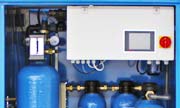
SCM 24
|
|
Cleans 24.000 liters per day
|
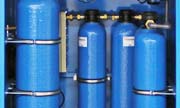
SCM 60
|
|
Cleans 60.000 liters per day
|
Video: How it works
The SCG Advantage
Our market-leading, water cleaning solutions have many advantages. To read more click the items below:
No Chemicals
Our machines and technology does not use any chemicals, at all.
Read more...
No Waste Water
Our machines do not waste any water. Yield = 100%.
Read more...
Low energy use
Uses 50 times less energy than a Reverse Osmosis Machine.
Read more...
Low ownership cost
Lower maintenance and operation costs due to our technology.
Read more...
Easy to install
Simple "plug and play" installation makes for easy deployment.
Read more...
Extremely compact
A compact system, contained in an easy to transport cabinet.
Read more...
Outperforms R.O.
SCG technologies outperform Reverse Osmosis systems.
Read more...
Faster ROI
Get a faster Return on Investment with our systems.
Read more...
Latest News
Latest Blog Posts
| Chemicals in water treatment? |
| Water storage - Whats best for keeping water clean and drinkable? |
| Case: Disaster Management Water Treatment |
Contact SCG
891 Showroom Place
Suite 101
Chula Vista, CA, 91914
Phone: +1 619-878-2730
Contact us by email