








Removing Chromium-6 From Well Water Without Chemical Reduction
Chromium-6, also called hexavalent chromium or Cr(VI), can enter groundwater from metal finishing, leather tanning, pigments, mining, wood treatment, and other industrial activities. In a private well or municipal borehole, it may remain dissolved, colorless, and tasteless even when concentrations exceed a health-based limit.
Traditional treatment often converts soluble Cr(VI) into less mobile trivalent chromium, Cr(III), using chemicals such as ferrous salts, sulfites, or other reducing agents. The resulting solids must then be separated and disposed of. A chemical-free approach takes a different path: it captures, separates, or concentrates chromate ions without changing their oxidation state.
The right system depends on the water chemistry, flow rate, target concentration, and final use. Drinking water requires tighter control than irrigation or process water, while a livestock or industrial installation may need continuous treatment at a much higher flow. Careful analysis prevents the treatment unit from being selected on chromium concentration alone.
Why Chromium-6 Requires Careful Treatment
Cr(VI) usually occurs in groundwater as negatively charged chromate or dichromate ions. Because these species are highly soluble, ordinary sediment filters, sand filters, and basic carbon cartridges generally cannot remove them reliably. Clear water can therefore still contain a significant chromium-6 concentration.
Well water chemistry affects removal performance. pH, alkalinity, sulfate, nitrate, chloride, dissolved organic matter, iron, manganese, and total dissolved solids may compete for treatment sites or change the form of chromium. A sample taken at the wellhead should be tested for both Cr(VI) and total chromium, alongside the major parameters that influence adsorption, ion exchange, and membrane separation.
A treatment objective should also be defined before equipment is sized. The goal may be compliance with a drinking-water standard, reduction below a process specification, or protection of a sensitive population. Testing at the inlet, treated outlet, and any discharge point is essential because a treatment medium can appear to work well until competing ions cause an unexpected breakthrough.
Chemical-Free Ways To Capture Or Separate Cr(VI)
Adsorption is one of the most practical routes for removing hexavalent chromium without chemical reduction. Specially engineered iron-based media, activated alumina, and other selective sorbents can attract chromate ions to their surfaces. The medium remains in a pressure vessel, allowing water to pass through while chromium is retained.
Ion exchange uses a resin with positively charged functional groups that exchange harmless ions for chromate and dichromate. It can achieve a strong reduction in dissolved chromium, although sulfate and other anions may consume capacity. Regeneration can produce a concentrated brine, so the complete water and waste balance must be considered rather than focusing only on the clean-water outlet.
Membrane processes such as nanofiltration and reverse osmosis physically reject dissolved ions. They can provide a high barrier when the feed is suitable, but they create a concentrate stream and may require pretreatment to limit scaling and fouling. Swiss Cleanwater Group describes systems that can outperform reverse osmosis in selected applications, so membrane selection should be based on verified site data instead of assuming that the highest pressure option is automatically best.
Comparing Treatment Routes For Well Water
No single technology is ideal for every chromium-contaminated well. Adsorption can be efficient at moderate flow rates and may use relatively little energy, while ion exchange offers high selectivity when competing anions are controlled. Membranes are useful when several dissolved contaminants must be reduced at the same time, but concentrate management becomes part of the installation.
“Chemical-free” should be defined precisely. A system may avoid chemical dosing during normal operation while still requiring periodic media replacement, resin regeneration, cleaning, or off-site disposal. A genuinely low-impact design documents these requirements and measures water recovery, electricity use, maintenance frequency, and residuals.
| Treatment approach | Main removal mechanism | Strengths | Points to verify |
|---|---|---|---|
| Selective adsorption | Surface capture of chromate ions | Low energy use, simple vessel design, suitable for point-of-entry systems | Media capacity, pH range, competing sulfate, spent-media handling |
| Anion exchange | Exchange of chromate for other anions | High removal potential and compact equipment | Regeneration water, brine disposal, nitrate and sulfate loading |
| Nanofiltration | Pressure-driven ion separation | Lower pressure than RO and useful for selected dissolved contaminants | Rejection of Cr(VI), fouling, concentrate volume, recovery |
| Reverse osmosis | Broad dissolved-solids rejection | Strong barrier for many contaminants | Energy demand, pretreatment, membrane cleaning, reject-water management |
| Integrated chemical-free treatment | Combination of physical separation and selective capture | Can address changing well chemistry and multiple pollutants | Pilot validation, controls, monitoring, lifecycle cost |
Designing A Reliable Treatment Train
A robust installation usually begins with raw-water protection. A coarse prefilter can remove sand and suspended particles, while iron and manganese management may be needed if those contaminants foul the primary chromium barrier. Where organic matter or microbial growth is present, additional pretreatment may be required.
The main Cr(VI) stage can be a fixed-bed adsorber, an ion-exchange vessel, a membrane unit, or a carefully engineered combination. Two vessels in series are often preferable to one: the first performs most of the removal, while the second acts as a polishing barrier and provides warning before breakthrough. Automatic valves and flow controls can make changeover possible without interrupting supply.
The system should be sized using the actual well profile rather than a generic household estimate. Important inputs include peak flow, daily volume, pressure, temperature, water recovery, contaminant variability, and the required treated-water reserve. A pilot test or media-column study can reveal capacity and operating life before full-scale equipment is purchased.
Monitoring Prevents Breakthrough
Chromium treatment is successful only when performance is demonstrated over time. A commissioning sample confirms initial removal, but scheduled testing shows whether the medium is approaching exhaustion or whether the membrane has developed a performance problem. Sampling frequency should reflect the risk, flow, treatment capacity, and regulatory requirements.
Online pressure, flow, conductivity, and, where practical, oxidation-reduction or specific contaminant monitoring can support laboratory analysis. Conductivity is particularly useful for detecting membrane changes, but it cannot prove that Cr(VI) has been removed. Laboratory chromium testing remains necessary because a low total dissolved-solids reading does not guarantee a low chromium concentration.
Operators should keep records of inlet and outlet results, treated volume, pressure changes, maintenance, media replacement, and any unusual well conditions. A sudden increase in sulfate, pH, turbidity, or iron can shorten expected service life. Clear alarm levels and a safe bypass policy help prevent untreated water from reaching drinking-water outlets.
Practical Recommendations For A Lower-Waste System
A treatment project should address the whole lifecycle, from sampling to residual management. The following steps help avoid an undersized or unsuitable installation:
- Test Cr(VI), total chromium, pH, alkalinity, sulfate, nitrate, iron, manganese, turbidity, conductivity, and hardness before choosing a process.
- Define the treated-water use, target concentration, peak demand, daily volume, and acceptable water recovery.
- Compare adsorption, ion exchange, and membrane options through pilot data or validated performance information.
- Use staged vessels, outlet monitoring, and documented changeout limits to control breakthrough risk.
- Plan for spent media, regeneration brine, membrane concentrate, and laboratory verification before commissioning.
- Select equipment with accessible service points, clear alarms, and a maintenance plan suited to local operators.
Applying The Approach Beyond A Single Well
A chromium removal system may be part of a wider water strategy. If the same well contains arsenic, uranium, pesticides, bacteria, manganese, or excessive salinity, treating each contaminant separately may increase cost and waste. A combined assessment can identify whether one physical process addresses several pollutants or whether distinct treatment stages are needed.
Water reuse can further reduce the burden on wells and wastewater systems. In industrial settings, a properly designed treatment train may allow process water to circulate repeatedly instead of being discharged after one use. A factory recycling case study illustrates how chemical-free treatment can support high process-water recovery when the system is matched to the application.
The same design principles apply to farms, livestock operations, public buildings, swimming pools, mobile units, and emergency water supplies. Swiss Cleanwater Group’s project references provide examples of how treatment systems can be adapted to different capacities and operating environments. Each site still requires its own water analysis, because groundwater chemistry and discharge conditions vary significantly.
A chemical-reduction step is not the only way to control hexavalent chromium. Selective adsorption, ion exchange, membrane separation, and integrated physical treatment can remove or isolate Cr(VI) while avoiding routine reducing chemicals. The most dependable solution combines validated removal performance with realistic service intervals, responsible residual handling, and continuous verification.
For a well-water assessment, share the laboratory analysis, flow requirements, intended use, and site constraints with Swiss Cleanwater Group. Its treatment specialists can evaluate a chemical-free configuration designed to protect drinking-water quality while limiting waste, chemical consumption, and unnecessary energy use.
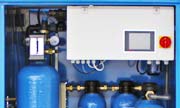
SCM 24
|
|
Cleans 24.000 liters per day
|
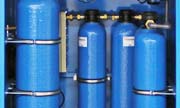
SCM 60
|
|
Cleans 60.000 liters per day
|
Video: How it works
The SCG Advantage
Our market-leading, water cleaning solutions have many advantages. To read more click the items below:
No Chemicals
Our machines and technology does not use any chemicals, at all.
Read more...
No Waste Water
Our machines do not waste any water. Yield = 100%.
Read more...
Low energy use
Uses 50 times less energy than a Reverse Osmosis Machine.
Read more...
Low ownership cost
Lower maintenance and operation costs due to our technology.
Read more...
Easy to install
Simple "plug and play" installation makes for easy deployment.
Read more...
Extremely compact
A compact system, contained in an easy to transport cabinet.
Read more...
Outperforms R.O.
SCG technologies outperform Reverse Osmosis systems.
Read more...
Faster ROI
Get a faster Return on Investment with our systems.
Read more...
Latest News
Latest Blog Posts
| Chemicals in water treatment? |
| Water storage - Whats best for keeping water clean and drinkable? |
| Case: Disaster Management Water Treatment |
Contact SCG
891 Showroom Place
Suite 101
Chula Vista, CA, 91914
Phone: +1 619-878-2730
Contact us by email