







Removing Fluoride From Water Without Chemical Additives
Fluoride occurs naturally in groundwater and can also enter water supplies through industrial activity, mineral dissolution, or certain treatment practices. At low concentrations, it may be intentionally added to public water systems, while elevated levels can create health and operational concerns. The first step in any treatment project is therefore a reliable laboratory analysis that identifies fluoride concentration alongside pH, alkalinity, hardness, arsenic, uranium, and other relevant contaminants.
Removing fluoride without chemical additives requires a treatment process based on adsorption, membranes, or selective ion exchange rather than chemical precipitation. The most suitable option depends on the source water, required flow rate, target concentration, available energy, and how the resulting concentrate or spent filter media will be managed.
A well-designed system should protect drinking-water quality while limiting waste, chemical handling, and unnecessary energy consumption. This makes process selection especially important for municipalities, farms, industrial facilities, buildings, and mobile water-treatment applications.
Why Fluoride Requires Targeted Treatment
Fluoride is a dissolved ion, so ordinary sediment filters, sand filters, and many standard carbon cartridges do not remove it effectively. Water can appear clear and have no unusual taste while still containing fluoride above the desired level. Testing must therefore guide the design rather than relying on visual inspection or general-purpose filtration.
The treatment target may also differ between a private well, a public supply, a livestock operation, and an industrial process. A system designed for drinking water may need a different recovery rate or polishing stage than one supplying process water. Local regulations and the intended use of the treated water should define the final performance requirement.
Fluoride can occur with other difficult contaminants, including arsenic, manganese, nitrate, salinity, and uranium. These substances influence pH, membrane fouling, adsorption capacity, and maintenance intervals. Treating fluoride in isolation can lead to an undersized or inefficient installation if the wider water chemistry is ignored.
How Chemical-Free Fluoride Removal Works
Adsorption media capture fluoride on a solid surface as water passes through a pressure vessel or cartridge. Activated alumina is one of the best-known options, although its performance depends strongly on pH, competing ions, contact time, and the condition of the media. Bone char and certain engineered materials may also be used where their composition and operating requirements are appropriate.
Membrane systems use pressure to separate dissolved substances from water. Reverse osmosis can achieve substantial fluoride reduction because fluoride ions are rejected along with many other dissolved salts. Nanofiltration may be useful in selected water chemistries, but its fluoride performance is more variable. These systems do not dose chemicals into the treated stream, although pretreatment and periodic cleaning may still be necessary.
Electrodialysis and specialized ion-exchange processes can provide another route for dissolved-ion removal. They may be attractive for particular industrial or municipal applications, especially where electrical control and recovery management are already available. Their suitability depends on feed-water conductivity, competing ions, concentrate handling, and the required operating profile.
| Treatment approach | Main strength | Important limitation | Typical sustainability consideration |
|---|---|---|---|
| Activated alumina | Effective adsorption under suitable pH conditions | Media capacity decreases and may require replacement or regeneration | Low-pressure operation, but spent media must be managed |
| Reverse osmosis | Broad dissolved-contaminant reduction | Produces a concentrate stream and uses pressure energy | Energy-efficient design and high recovery are important |
| Nanofiltration | Lower pressure than reverse osmosis in some cases | Fluoride rejection depends on membrane and water chemistry | Can reduce energy demand when the source water is suitable |
| Ion exchange | Selective treatment with compact equipment | Competing ions and regeneration requirements affect performance | Avoids direct dosing during treatment, but brine disposal must be planned |
| Bone char or specialty adsorbents | Passive operation and simple vessel design | Availability, quality, and disposal requirements vary | Useful when locally appropriate and responsibly managed |
Selecting The Right Process
The best fluoride treatment system begins with a complete water analysis. Fluoride concentration, pH, alkalinity, hardness, sulfate, chloride, silica, total dissolved solids, and organic matter can all affect removal. For membrane systems, turbidity, iron, manganese, and microbiological activity are especially important because they may cause fouling or shorten membrane life.
Adsorption is often attractive when the flow is moderate and the water chemistry supports strong fluoride capture. It can use relatively low pressure and may require less electrical infrastructure than membrane treatment. However, the media bed must be sized for the expected loading, and breakthrough monitoring is essential. A filter that performs well at startup may gradually release fluoride as its capacity is consumed.
Reverse osmosis is commonly considered when fluoride is present alongside several dissolved contaminants. It can deliver consistent reduction when operated within the membrane manufacturer’s limits, but it needs pretreatment, pressure, and a plan for reject water. Systems should be evaluated by recovery rate and life-cycle performance rather than by removal percentage alone.
The Swiss Cleanwater Group focuses on sustainable water-treatment systems for applications ranging from drinking-water production to agriculture, industry, and mobile installations. Its broader treatment philosophy is relevant when fluoride removal must be combined with the reduction of other contaminants without excessive chemical use.
Designing A Low-Waste Installation
Pretreatment protects the main fluoride-removal stage. Depending on the source, this may include screening, sediment filtration, iron and manganese removal, softening, activated carbon, or microbiological control. Removing fouling agents before reverse osmosis can reduce cleaning frequency and preserve membrane performance. For adsorption, pretreatment can prevent suspended solids from blocking the media bed.
Flow control is equally important. Adsorption vessels require enough contact time, while membrane systems need stable pressure and controlled recovery. Automatic valves, conductivity monitoring, fluoride testing, pressure gauges, and flow meters help operators identify breakthrough, fouling, leaks, and abnormal operating conditions before water quality deteriorates.
Chemical-free operation should be defined accurately. It generally means that no coagulants, precipitating agents, disinfectant doses, or other treatment chemicals are continuously added to the water. Membranes may still need periodic cleaning, and some adsorption media may require chemical regeneration. A system specification should state these requirements openly so that operators can plan storage, worker protection, wastewater handling, and servicing.
A useful reference for the broader principle of chemical-free filtration is this manganese removal example. Although manganese and fluoride require different removal mechanisms, the example illustrates why contaminant chemistry, media selection, and system configuration must be matched carefully.
Managing Concentrate And Spent Media
Sustainability includes what leaves the treatment unit. Reverse osmosis produces a concentrate containing rejected salts and contaminants. Depending on local rules and water chemistry, it may be discharged to a permitted sewer, evaporated, stored, treated further, or managed through another approved route. Direct disposal to soil or surface water is not automatically acceptable.
Adsorption systems create a different waste stream. Spent activated alumina, bone char, or specialty media may contain accumulated fluoride and other contaminants. The material should be characterized before disposal, recycling, or regeneration. Replacement schedules should be based on measured performance and loading data rather than on a fixed calendar assumption.
Water recovery also deserves attention. A high-recovery membrane system may reduce reject volume but can increase scaling risk if pushed beyond appropriate limits. A lower recovery rate may be more reliable in difficult water, while blending, staged treatment, or concentrate minimization can improve overall resource use. The correct balance comes from pilot testing and operational data.
Practical Recommendations For Reliable Treatment
- Test raw water and treated water through an accredited laboratory before selecting equipment.
- Compare adsorption, reverse osmosis, and other options using the full water chemistry, not fluoride concentration alone.
- Include pretreatment, monitoring, maintenance, and waste management in the original design.
- Confirm whether media regeneration, membrane cleaning, or concentrate disposal is required.
- Use pilot trials or performance data to verify removal across changing flow rates and seasonal conditions.
Operators should also establish a sampling schedule that checks fluoride at the inlet and outlet. Additional measurements such as conductivity, pH, pressure drop, turbidity, and flow can reveal developing problems before a compliance failure occurs. Written procedures for media replacement, membrane cleaning, alarm response, and waste handling make the installation easier to manage over its full service life.
For homes and small facilities, point-of-use reverse osmosis or a properly sized adsorption cartridge may be sufficient when the source is stable. Larger projects need redundancy, automated control, safe access for servicing, and a defined response if one treatment train is offline. The same principles apply to emergency, military, livestock, and remote systems, where reliable operation may matter as much as peak removal efficiency.
Turn Water Data Into A Treatment Plan
Fluoride can be reduced without continuously adding treatment chemicals, but the technology must be selected around the source water and the intended use. Adsorption, reverse osmosis, nanofiltration, and ion exchange each offer advantages under different conditions. Careful testing, realistic waste planning, and routine monitoring are what turn a promising process into dependable drinking-water treatment.
Share a complete water analysis and operating requirement with a qualified treatment specialist to compare removal options, estimate recovery and maintenance needs, and develop a system that delivers safe water with responsible resource use.
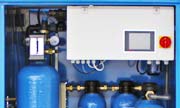
SCM 24
|
|
Cleans 24.000 liters per day
|
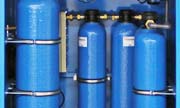
SCM 60
|
|
Cleans 60.000 liters per day
|
Video: How it works
The SCG Advantage
Our market-leading, water cleaning solutions have many advantages. To read more click the items below:
No Chemicals
Our machines and technology does not use any chemicals, at all.
Read more...
No Waste Water
Our machines do not waste any water. Yield = 100%.
Read more...
Low energy use
Uses 50 times less energy than a Reverse Osmosis Machine.
Read more...
Low ownership cost
Lower maintenance and operation costs due to our technology.
Read more...
Easy to install
Simple "plug and play" installation makes for easy deployment.
Read more...
Extremely compact
A compact system, contained in an easy to transport cabinet.
Read more...
Outperforms R.O.
SCG technologies outperform Reverse Osmosis systems.
Read more...
Faster ROI
Get a faster Return on Investment with our systems.
Read more...
Latest News
Latest Blog Posts
| Chemicals in water treatment? |
| Water storage - Whats best for keeping water clean and drinkable? |
| Case: Disaster Management Water Treatment |
Contact SCG
891 Showroom Place
Suite 101
Chula Vista, CA, 91914
Phone: +1 619-878-2730
Contact us by email