








Removing Microplastics from Drinking Water Using Catalytic Filtration Media
Microplastics are now found in rivers, reservoirs, groundwater, rainwater tanks and treated drinking water around the world. These particles can originate from packaging, synthetic clothing, vehicle tyres, industrial materials and the gradual breakdown of larger plastic items. Their size, shape and chemical composition vary widely, which makes reliable removal more complicated than using a single fine filter. Learn more about Our Mission.html.
Removing Microplastics from Drinking Water Using Catalytic Filtration Media requires a treatment train designed around particle capture, contaminant adsorption and dependable flow control. Catalytic filtration media can support this process by providing a reactive, high-surface-area bed that traps particles and helps reduce associated organic compounds. Its performance depends on the media design, particle size distribution, contact time and pre-treatment.
For Australian homes, farms, councils and commercial facilities, the most practical approach is to combine proven filtration stages with regular monitoring. A well-designed system can reduce plastic particles without adding disinfectant chemicals to the water, while also addressing other concerns such as pesticides, manganese, arsenic or unpleasant taste.
Why Microplastics Matter in Australian Water Supplies
Microplastics are generally defined as plastic particles smaller than five millimetres. Some are manufactured at a small size, while others are formed when bottles, food packaging, synthetic fabrics and paint fragments degrade. Nanoplastics are even smaller and can behave differently during treatment, making them particularly difficult to measure and capture.
In Australia, particles may enter source water through urban stormwater, wastewater discharges, agricultural runoff and windborne debris. A household in Melbourne may receive highly treated mains water, while a rural property outside Toowoomba may rely on a rainwater tank or bore. Sydney, Brisbane and Perth also face different source-water conditions, so a treatment solution cannot be selected solely by location.
Microplastics may carry additives or attract hydrophobic pollutants on their surfaces. This does not mean every particle presents the same level of risk, but it does make source protection and effective filtration worthwhile. The Australian Drinking Water Guidelines, developed by the National Health and Medical Research Council with the states and territories, remain an important reference for drinking-water quality. Microplastics are an emerging issue and should be assessed alongside established chemical and microbiological parameters.
How Catalytic Media Supports Particle Removal
Catalytic filtration media are engineered materials with active surfaces that promote adsorption, oxidation or other chemical interactions. In drinking-water treatment, a catalytic bed may be based on modified carbon, mineral media, ceramic structures or blended materials. The exact formulation determines which contaminants it can address and whether it is suitable for potable water.
For microplastic control, the media primarily contributes through depth filtration and surface attachment. Water passes through the bed, while particles are intercepted between grains or held against their surfaces. A catalytic surface can improve the retention of certain organic residues associated with plastic particles, although it should not be presented as a universal solution for every polymer or particle size.
This distinction matters. Activated carbon and catalytic carbon are highly useful for dissolved organic compounds, odour and taste, but a conventional carbon block is not automatically a microplastic filter. The complete system should include a rated sediment or membrane stage where smaller particles require defined removal performance. Laboratory testing should identify the size range captured, pressure drop, flow rate and breakthrough behaviour.
The Swiss Cleanwater mission places emphasis on treatment approaches that reduce chemical use, waste and unnecessary energy demand. That principle is relevant here: filtration should be engineered to solve the measured water-quality problem rather than relying on an oversized or frequently discarded cartridge.
Building a Reliable Treatment Train
A practical system usually starts with source protection and pre-screening. Rainwater tanks should have clean catchment surfaces, leaf guards, first-flush diversion and sealed lids. Bore-water systems may need oxidation or dedicated media for iron and manganese. Surface water often requires more intensive clarification before it reaches a fine filtration stage.
The next stage can include coarse sediment filtration followed by a finer cartridge, ultrafiltration or another validated particle barrier. Catalytic media can then provide additional adsorption and polishing. Where microbial safety is a concern, ultraviolet disinfection or another approved disinfection method may be added after filtration. The order matters because excessive suspended solids can rapidly block expensive media.
Hydraulic design is equally important. A filter that captures particles at laboratory flow rates may perform poorly when a commercial kitchen, livestock shed or apartment building draws water at peak demand. Designers should account for contact time, bed depth, pump capacity, backwashing requirements and pressure loss. Automatic valves and differential-pressure gauges can help operators identify when cleaning or replacement is required.
For remote Australian properties, access to replacement parts and power supply must also be considered. A low-energy gravity-fed arrangement may suit a small building, while a station, defence site or mobile treatment unit may require compact pressure vessels and robust controls. Guidance on off-grid water systems is especially relevant where transport, servicing and reliable electricity cannot be assumed.
Selecting Equipment for Local Applications
Households connected to treated mains water may use a point-of-entry system to protect all internal fixtures or a point-of-use unit beneath the kitchen sink. The best option depends on whether the objective is drinking-water polishing or broader protection for showers, appliances and hot-water systems. A whole-house unit needs greater capacity and careful bypass protection so untreated water cannot accidentally mix with treated water.
Rainwater users should be cautious about assuming that a fine cartridge alone makes tank water safe. Roof debris, bird faeces and plumbing materials can introduce pathogens and chemicals as well as plastic particles. Tank maintenance, pre-filtration and final disinfection are essential. In regional areas, a local water professional can test the source before recommending catalytic media or membrane equipment.
Agriculture and livestock operations may need higher flow rates and more resilient pre-treatment. Irrigation water, stock water and potable water for workers should be assessed separately. Industrial facilities may also need to control process chemicals, oils or suspended solids that would consume filtration capacity before microplastics become the primary concern.
Australian purchasing decisions should include certification and compliance checks. Components in contact with drinking water may need to meet relevant Australian and New Zealand standards, and plumbing installations may be subject to WaterMark requirements depending on the product and application. State and territory health departments, local water authorities and project specifications can impose additional conditions. Performance claims should be supported by independent test data rather than by general statements about “fine filtration”.
Monitoring Performance and Managing Filter Life
A treatment system should have measurable operating limits. Useful records include inlet and outlet pressure, flow rate, turbidity, filter-change dates and any changes in taste or odour. For larger projects, periodic particle analysis can establish whether the selected media is working under real operating conditions. Sampling should use suitable laboratory methods because contamination from bottles, clothing fibres or sample handling can distort results.
Media life depends on the incoming water. Sediment, natural organic matter, oils and disinfectant residues may occupy active sites or block the bed. A pre-filter can extend the life of catalytic media, while scheduled backwashing may restore hydraulic capacity in some systems. Disposable cartridges should be replaced according to measured pressure loss or validated service intervals, not simply when water flow becomes inconvenient.
Water treatment decisions should also account for waste. Spent carbon, cartridges and membranes require responsible disposal, and backwash water must be managed so that captured contaminants are not discharged into sensitive areas. Systems that use fewer consumables and operate at moderate pressure can reduce their environmental footprint, but only if they continue to meet the required water-quality target.
The water treatment information available from Swiss Cleanwater Group can help organisations compare treatment principles and identify where catalytic media fits within a broader purification design. The key is to match the equipment to the source, the intended use and the required verification method.
| Application | Main concern | Suitable treatment approach | Important checks |
|---|---|---|---|
| Urban household | Fine particles and taste | Sediment pre-filter, catalytic media and final polishing | Flow rate, certification and cartridge life |
| Rainwater tank | Microplastics, pathogens and roof debris | First flush, sediment filtration, catalytic media and disinfection | Tank hygiene, microbial testing and UV performance |
| Rural bore | Minerals, metals and particles | Source-specific oxidation or catalytic media with fine filtration | Arsenic, manganese, iron, pH and pressure loss |
| Farm or livestock site | High flow and variable solids | Robust pre-screening, catalytic bed and scalable final barrier | Peak demand, backwash disposal and maintenance access |
| Remote or mobile facility | Limited power and servicing | Compact low-energy treatment train with modular media | Spare parts, storage, operator training and monitoring |
Effective microplastic reduction is best treated as an engineering task rather than a marketing label. Catalytic filtration media can play a valuable role when its particle-retention and adsorption capabilities are demonstrated for the actual water source. Combined with sound pre-treatment, appropriate disinfection and routine monitoring, it can support safer and more sustainable drinking-water production across Australian homes, businesses and remote operations.
Swiss Cleanwater Group can help assess the water source, define treatment objectives and develop a system suited to municipal, agricultural, industrial or off-grid use. Contact the company to discuss laboratory results, filtration capacity and a practical pathway for reducing microplastics and other contaminants in your drinking water.
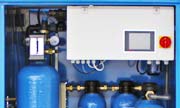
SCM 24
|
|
Cleans 24.000 liters per day
|
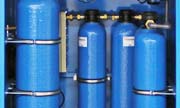
SCM 60
|
|
Cleans 60.000 liters per day
|
Video: How it works
The SCG Advantage
Our market-leading, water cleaning solutions have many advantages. To read more click the items below:
No Chemicals
Our machines and technology does not use any chemicals, at all.
Read more...
No Waste Water
Our machines do not waste any water. Yield = 100%.
Read more...
Low energy use
Uses 50 times less energy than a Reverse Osmosis Machine.
Read more...
Low ownership cost
Lower maintenance and operation costs due to our technology.
Read more...
Easy to install
Simple "plug and play" installation makes for easy deployment.
Read more...
Extremely compact
A compact system, contained in an easy to transport cabinet.
Read more...
Outperforms R.O.
SCG technologies outperform Reverse Osmosis systems.
Read more...
Faster ROI
Get a faster Return on Investment with our systems.
Read more...
Latest News
Latest Blog Posts
| Chemicals in water treatment? |
| Water storage - Whats best for keeping water clean and drinkable? |
| Case: Disaster Management Water Treatment |
Contact SCG
891 Showroom Place
Suite 101
Chula Vista, CA, 91914
Phone: +1 619-878-2730
Contact us by email