







Removing Radium From Groundwater for Community Drinking Water Systems
Groundwater can look clear, taste normal, and still contain naturally occurring radioactive elements. Radium is one of the contaminants that can remain unnoticed until a utility performs a mineral and radiological analysis. For communities that depend on wells, managing this risk requires reliable testing, appropriate treatment, and a plan for the concentrated residuals produced during purification.
Radium most commonly enters aquifers through the natural breakdown of uranium and thorium-bearing minerals. The two isotopes of greatest concern in drinking water are radium-226 and radium-228. Their presence varies with geology, well depth, pH, salinity, alkalinity, and the movement of groundwater through rock formations.
A community water system needs more than a treatment unit selected from a catalogue. It needs a site-specific assessment that connects raw-water chemistry, flow demand, regulatory limits, operating costs, and disposal requirements. This approach supports safe drinking water while avoiding unnecessary chemical use, excessive energy consumption, or poorly managed waste streams.
Why Radium Requires Careful Management
Radium behaves chemically like calcium and other alkaline earth metals. Because it can dissolve into groundwater, ordinary sediment filtration, cartridge filters, and disinfection may leave it largely unchanged. Boiling is also ineffective because it does not destroy or volatilize dissolved radium; evaporation can actually increase its concentration in the remaining water.
Long-term ingestion of elevated radium is associated with increased health risks, including effects on the bones and a higher risk of cancer. The regulatory threshold depends on the country and authority. In the United States, the drinking-water standard for combined radium-226 and radium-228 is commonly expressed as 5 picocuries per litre, although local requirements may differ.
Radium control should be treated as part of a broader groundwater safety programme. Historical changes in wells, land use, pumping patterns, and treatment practices can affect water quality over time. Resources such as the history of water show why communities have continually adapted their methods as scientific knowledge and public-health expectations developed.
Establishing The Radium Problem
The first step is representative sampling. Samples should be collected from each relevant production well and, where practical, from treated water and distribution points. A qualified laboratory should analyse radium-226 and radium-228 separately or as required by the applicable standard. Sampling records should include the well location, pumping conditions, preservation method, and time between collection and analysis.
Other parameters are essential for choosing treatment. A useful groundwater profile may include hardness, calcium, magnesium, iron, manganese, sulphate, chloride, total dissolved solids, alkalinity, pH, turbidity, uranium, and microbial indicators. These factors influence whether an ion-exchange resin will foul, whether an adsorptive medium will perform consistently, and whether reverse osmosis will require pretreatment.
Results should be reviewed as trends rather than as isolated numbers. Seasonal pumping, well blending, drought, and changes in aquifer pressure can alter radium levels. If several wells feed one community system, testing each source separately can reveal whether selective pumping or controlled blending will reduce the treatment burden without compromising supply reliability.
Treatment Methods For Community Supplies
Cation exchange is a common approach for radium removal. In this process, water passes through a resin that exchanges radium and other positively charged ions for sodium or another selected ion. Conventional water softeners can sometimes reduce radium, but their performance depends on resin type, competing ions, contact time, regeneration frequency, and the incoming concentration.
Adsorptive media provide another option. Specially prepared media can capture radium through surface interactions or ion exchange. Performance must be verified under the actual water chemistry because iron, manganese, hardness, sulphate, and organic matter may consume capacity or interfere with removal. Media replacement and handling also need to be included in the operating plan.
Reverse osmosis can remove dissolved radium while also reducing many other dissolved contaminants. It is useful when the water has a wider mineralisation problem, but it requires pressure, pretreatment, membrane cleaning, and management of a reject stream. Lime softening and precipitation processes may be suitable for larger facilities with experienced operators, particularly where hardness reduction is already required.
No single technology is ideal for every groundwater source. A chemical-free or low-chemical design may be attractive, but the complete process still has to account for regeneration water, spent media, brine, concentrate, and maintenance materials. Pilot testing or documented performance data can prevent an apparently simple solution from becoming unreliable at full scale.
Comparing Radium Removal Options
The right choice depends on raw-water composition, daily demand, available space, operator skills, and the community’s approach to residuals. A small rural system may favour a compact treatment train with automatic controls, while a municipal plant may justify multiple vessels, standby capacity, and online monitoring.
| Treatment approach | Main strengths | Important limitations | Residual or operating issue |
|---|---|---|---|
| Cation exchange | Proven process; effective for many dissolved radium sources; scalable | Sensitive to competing ions and resin fouling | Regeneration brine or spent resin requires controlled management |
| Adsorptive media | Can operate at moderate pressure; adaptable to packaged systems | Capacity varies with water chemistry and media type | Spent media may require radiological assessment and approved disposal |
| Reverse osmosis | Broad dissolved-contaminant reduction; useful for high mineral content | Higher energy use; needs pretreatment and skilled maintenance | Concentrated reject water must be contained and disposed of properly |
| Lime softening or precipitation | Can address hardness and several metals together | More complex equipment and sludge handling | Produces sludge and requires process control |
| Source blending or well management | May reduce treatment volume and operating cost | Only suitable when compliant water sources are available | Requires continuous verification and secure source control |
A treatment train may combine methods rather than relying on one barrier. For example, iron and manganese removal can protect downstream media, while softening can reduce competing ions before a radium-selective stage. The final arrangement should be validated with treated-water sampling under peak and changing operating conditions.
Designing A Reliable Treatment System
A community installation should be sized for the actual hydraulic profile, not simply the average daily flow. Designers should consider maximum hourly demand, storage, fire-flow requirements where applicable, well-pump capacity, backwash rates, and future population changes. Parallel treatment vessels can allow one unit to remain in service while another is inspected or regenerated.
Pretreatment is often decisive. Turbidity, iron, manganese, and organic matter can block or foul treatment media. Removing these contaminants first can increase radium-removal capacity and reduce pressure loss. Where disinfectants are used, their compatibility with membranes, resins, and media must be checked before commissioning.
Residual management deserves the same attention as contaminant removal. Backwash water, regeneration brine, membrane concentrate, and spent media can contain elevated radium and should not be discharged casually to a storm drain, unlined pond, or unsuitable wastewater system. Local environmental and radiation authorities may require characterization, records, worker precautions, and an approved disposal route.
Automation can support safe operation by tracking flow, pressure, conductivity, valve position, tank levels, and treatment cycles. However, automation does not replace laboratory verification. A monitoring plan should define sampling frequency, alarm limits, maintenance responsibilities, response procedures, and the conditions that require a well to be isolated or water to be diverted.
Practical Steps For Community Water Managers
A clear project sequence helps prevent expensive changes after construction. Communities can begin with a source investigation, then move through laboratory testing, pilot evaluation, engineering design, permitting, installation, commissioning, and routine verification. Public communication should explain what is being measured, why treatment is needed, and how compliance is maintained.
Useful priorities include:
- Test each groundwater source for radium-226, radium-228, and the chemistry that affects treatment performance.
- Compare ion exchange, adsorptive media, reverse osmosis, precipitation, and source-management options against local operating conditions.
- Include backwash, brine, concentrate, sludge, and spent-media handling in the initial design and budget.
- Provide parallel capacity, bypass protection, alarms, and a documented sampling programme for dependable operation.
- Train operators to recognise changes in pressure, flow, water chemistry, and treatment capacity before compliance is threatened.
The same disciplined approach applies when water quality requirements vary between applications. For example, treatment programmes serving controlled agricultural environments must manage pathogens and dissolved contaminants without damaging the intended use; guidance on chemical-free pathogen control illustrates the importance of matching treatment design to the water’s final purpose.
A community should also review the system after commissioning. Comparing raw-water and finished-water results, tracking media life, recording regeneration or cleaning events, and checking residual volumes will reveal whether the original design assumptions remain valid. These records support regulatory reporting and make future upgrades easier to plan.
Safe groundwater begins with evidence rather than appearance. By identifying the radium isotopes, understanding the surrounding water chemistry, selecting a suitable removal process, and planning residual disposal from the start, community systems can protect public health with a treatment solution that is practical and sustainable.
Swiss Cleanwater Group can help evaluate water-treatment requirements for municipal, rural, industrial, and mobile applications. Contact the company to discuss groundwater analysis, process selection, system specifications, and a treatment concept suited to the community’s flow rate and water chemistry.
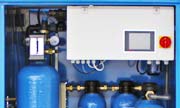
SCM 24
|
|
Cleans 24.000 liters per day
|
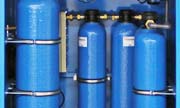
SCM 60
|
|
Cleans 60.000 liters per day
|
Video: How it works
The SCG Advantage
Our market-leading, water cleaning solutions have many advantages. To read more click the items below:
No Chemicals
Our machines and technology does not use any chemicals, at all.
Read more...
No Waste Water
Our machines do not waste any water. Yield = 100%.
Read more...
Low energy use
Uses 50 times less energy than a Reverse Osmosis Machine.
Read more...
Low ownership cost
Lower maintenance and operation costs due to our technology.
Read more...
Easy to install
Simple "plug and play" installation makes for easy deployment.
Read more...
Extremely compact
A compact system, contained in an easy to transport cabinet.
Read more...
Outperforms R.O.
SCG technologies outperform Reverse Osmosis systems.
Read more...
Faster ROI
Get a faster Return on Investment with our systems.
Read more...
Latest News
Latest Blog Posts
| Chemicals in water treatment? |
| Water storage - Whats best for keeping water clean and drinkable? |
| Case: Disaster Management Water Treatment |
Contact SCG
891 Showroom Place
Suite 101
Chula Vista, CA, 91914
Phone: +1 619-878-2730
Contact us by email