









Removing sulfur odors from well water without chemical chlorination
A sulfur smell in well water is usually caused by hydrogen sulfide gas, a dissolved compound associated with the familiar rotten-egg odor. The smell may be strongest in hot water, after a pump has been idle, or when water is poured into an open container and exposed to air.
Although small amounts may be mainly an aesthetic concern, sulfur odors can indicate conditions that affect plumbing, water heaters, filters, and household comfort. The right solution depends on whether the source is the well, the plumbing system, the water heater, or bacterial activity within the water supply.
Chemical chlorination is one possible treatment, but it is not the only route. Air-based oxidation, filtration, activated carbon, ultraviolet protection, and carefully designed treatment trains can reduce odor while limiting chemical handling, residuals, and operating waste.
Why sulfur odors develop in well water
Hydrogen sulfide can enter groundwater through natural geological formations or through the activity of sulfate-reducing bacteria. These microorganisms thrive in oxygen-poor environments and may produce hydrogen sulfide as they break down sulfates. The gas can be present in the raw well water or form inside a water heater.
A sulfur smell does not always mean that the same treatment will work everywhere. Low concentrations may respond well to aeration and carbon filtration, while stronger contamination may require oxidation followed by a dedicated filter. Iron, manganese, turbidity, acidity, and bacterial growth can also change the performance of an odor-control system.
The odor may appear only in hot water when the water heater provides a warm, low-oxygen environment. In some cases, the anode rod contributes to the problem by reacting with sulfates. Testing hot and cold water separately can help identify whether the well supply or the heater is the main source.
What to test before choosing treatment
A water analysis should be the starting point rather than relying on smell alone. Useful measurements include hydrogen sulfide, sulfate, pH, iron, manganese, turbidity, hardness, conductivity, and microbiological indicators. Testing at the wellhead and at indoor taps can reveal where water quality changes occur.
Flow rate and peak demand also matter. A system for a private home has different requirements from one serving a livestock operation, food-processing facility, municipal building, or industrial process. Treatment equipment must have enough contact time and filtration capacity to handle the maximum expected flow, not only the average daily volume.
The Swiss Cleanwater Group provides water-treatment information and solutions for applications ranging from buildings and farms to public infrastructure and mobile systems. A site assessment can help determine whether odor control should be integrated with broader removal of arsenic, manganese, bacteria, pesticides, uranium, or other contaminants.
How chemical-free treatment works
Aeration is one of the simplest approaches for hydrogen sulfide removal without chemical chlorination. Air is introduced into the water, allowing volatile hydrogen sulfide to transfer from the liquid into the air. The treated water then passes through a vented contact tank or filter, while the released gas must be safely managed.
Air injection and cascade aeration can be paired with filtration media that captures oxidized sulfur compounds and other particles. This arrangement is often useful when the water also contains iron or manganese. It avoids the storage and dosing of chlorine, although pumps, blowers, ventilation, and periodic filter maintenance still require energy and attention.
Activated carbon can polish water with mild to moderate odor problems, particularly after aeration. Carbon should be selected and sized according to the contaminant concentration and flow rate. It can become exhausted, so replacement or regeneration is part of the operating plan. Ultraviolet treatment may control microorganisms, but it does not remove dissolved hydrogen sulfide by itself.
| Treatment approach | Best suited to | Main considerations |
|---|---|---|
| Aeration with venting | Low to moderate hydrogen sulfide | Requires safe gas release and adequate contact time |
| Air injection with filtration | Sulfur odor combined with iron or manganese | Needs correctly selected media and backwashing |
| Activated carbon polishing | Mild odor and final taste improvement | Media capacity is limited and must be monitored |
| Ozone oxidation | Higher contaminant loads or complex treatment trains | Uses electrical energy and needs controlled off-gas management |
| Ultraviolet disinfection | Microbial protection after odor treatment | Does not remove hydrogen sulfide or dissolved minerals |
| Source and heater inspection | Odor isolated to hot water or plumbing | May resolve the cause without a full-house treatment system |
Choosing a system for the property
For a small household with a short-term odor problem, inspection of the water heater, aeration, and carbon polishing may be enough. For a deeper well with persistent hydrogen sulfide, an automatic air-injection unit and backwashing filter can provide more consistent treatment. The filter must be installed with sufficient drainage and a control cycle suited to the water chemistry.
Properties with multiple buildings or irregular demand need a broader hydraulic design. A farm may require water for animals, cleaning, irrigation, and domestic use, while an industrial site may need separate treatment for potable water and process water. Treating each stream according to its quality and end use can reduce unnecessary equipment and operating costs.
Where hydrogen sulfide occurs with bacteria, iron, manganese, or other contaminants, a single filter may not be reliable. A staged system can provide aeration first, oxidation or biological treatment next, and fine filtration or carbon polishing afterward. The sequence should be based on laboratory results rather than a generic equipment package.
Practical recommendations for lasting results
Odor control works best when the system is maintained as part of the property’s water management routine. Filters need inspection, backwashing, or replacement; vents must remain unobstructed; and changes in pressure, flow, or smell should be recorded. A sudden return of sulfur odor can signal exhausted media, a blocked vent, bacterial regrowth, or a change in the well.
A chemical-free design still requires responsible operation. Aeration equipment consumes power, filtration creates a captured waste stream, and ozone systems need safeguards if they are used. Selecting efficient pumps, minimizing pressure loss, and treating only the water that requires purification can lower the environmental footprint.
- Test raw, hot, and cold water before selecting equipment.
- Measure peak flow and daily demand for accurate system sizing.
- Use aeration before filtration when hydrogen sulfide is the primary odor source.
- Add carbon polishing only when testing shows that it is useful and manageable.
- Schedule inspections for media condition, vents, pumps, drains, and water quality.
Keeping odor control efficient and sustainable
Removing sulfur odors is often one part of a larger water-quality strategy. The same treatment project may address iron staining, manganese deposits, microbial risks, or water reuse. In commercial and industrial settings, reducing discharge can be as important as improving the incoming supply. Practical ideas for water reuse strategies can complement source-water treatment and help reduce operating costs.
A well-designed system should match treatment intensity to actual contamination. Over-treating every litre can increase energy use, maintenance, and waste without improving safety or comfort. Monitoring gives operators the information needed to adjust aeration, filter cycles, and polishing stages before odor complaints or water-quality failures occur.
For municipalities, government projects, military facilities, and mobile applications, compact and modular equipment can make deployment easier. For farms, livestock sites, swimming pools, and buildings, the priorities may be different, but the principles remain the same: verify the source, select an appropriate treatment sequence, and plan for long-term serviceability.
Begin with a qualified water analysis and a review of the well, heater, plumbing, flow rate, and intended uses. With the right combination of aeration, filtration, and monitoring, sulfur odors can be controlled without relying on chemical chlorination while preserving a practical and sustainable clean-water supply.
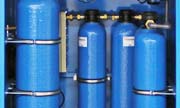
SCM 24

|
|
Cleans 24.000 liters per day
|
SCM 60
|
|
Cleans 60.000 liters per day
|
Video: How it works

The SCG Advantage
Our market-leading, water cleaning solutions have many advantages. To read more click the items below:
No Chemicals
Our machines and technology does not use any chemicals, at all.
Read more...
No Waste Water
Our machines do not waste any water. Yield = 100%.
Read more...
Low energy use
Uses 50 times less energy than a Reverse Osmosis Machine.
Read more...
Low ownership cost
Lower maintenance and operation costs due to our technology.
Read more...
Easy to install
Simple "plug and play" installation makes for easy deployment.
Read more...
Extremely compact
A compact system, contained in an easy to transport cabinet.
Read more...
Outperforms R.O.
SCG technologies outperform Reverse Osmosis systems.
Read more...
Faster ROI
Get a faster Return on Investment with our systems.
Read more...
Latest News
Latest Blog Posts
| Chemicals in water treatment? |
| Water storage - Whats best for keeping water clean and drinkable? |
| Case: Disaster Management Water Treatment |
Contact SCG
891 Showroom Place
Suite 101
Chula Vista, CA, 91914
Phone: +1 619-878-2730
Contact us by email