









The Advantages Of Chemical-Free Filtration For Cooling Towers
Cooling towers are essential to many industrial plants, from food processing and manufacturing to mining, power generation and large commercial facilities. Their performance depends on water quality: suspended solids, scale-forming minerals, metals and biological contaminants can gradually reduce heat transfer, block equipment and increase maintenance demands.
Chemical-free filtration offers a practical way to control much of this load through physical separation and carefully designed water treatment. It can reduce the amount of conditioning chemicals required, limit wastewater and support more efficient water reuse. For Australian operators managing high temperatures, variable source water and pressure on water supplies, that combination is increasingly valuable.
| Consideration | Conventional chemical programme | Chemical-free filtration approach |
|---|---|---|
| Main control method | Biocides, scale inhibitors and corrosion inhibitors | Physical removal, separation and monitored filtration |
| Suspended solids | May remain in circulation | Removed through side-stream or full-flow filtration |
| Blowdown demand | Often increased by chemical concentration limits | Can be reduced when solids and contaminants are controlled |
| Environmental profile | Chemical storage, handling and discharge | Lower chemical use and less treatment-related waste |
| Best application | Systems requiring targeted chemical control | Plants seeking cleaner water management and reduced operating inputs |
| Important limitation | Requires careful dosing and monitoring | Does not remove the need for Legionella risk controls where applicable |
Why Cooling Tower Water Degrades
A cooling tower continually exposes circulating water to air. Evaporation removes relatively pure water, while dissolved minerals remain behind and become more concentrated. Dust, pollen, process particles and airborne pollution can also enter through the tower, particularly at open industrial sites.
As concentration rises, calcium carbonate and other mineral deposits may form on heat-exchange surfaces. These deposits act as insulation, so chillers, condensers and process equipment must work harder to reject heat. Fine sediment can collect in basins and low-flow areas, while corrosion products may circulate through pumps, valves and fill media.
Australia’s operating environment can intensify these effects. A plant in the Pilbara may contend with red dust and high ambient temperatures, while facilities near Brisbane or Newcastle can receive heavy airborne moisture and industrial particulates. Water restrictions in parts of New South Wales, Victoria and Queensland also make excessive blowdown less attractive.
How Chemical-Free Filtration Works
Chemical-free treatment generally uses mechanical filtration, sediment removal, oxidation, adsorption or combinations of these processes. A side-stream filter continuously diverts a controlled portion of tower water, removes particles and returns cleaner water to the basin. Because the entire system is treated progressively, the circulating load can fall without imposing excessive pressure loss on the main cooling loop.
Some systems are designed to target dissolved contaminants as well as suspended solids. Depending on the source water, treatment may address manganese, iron, arsenic, pesticides or other unwanted substances before they affect tower operation. Automatic backwashing or separated solids handling can reduce manual cleaning and prevent captured material from returning to the circuit.
The phrase “chemical-free” should be understood accurately. It usually refers to filtration and treatment that do not rely on routine chemical dosing for the targeted contaminants. It does not mean the water is automatically sterile, nor does it remove the need for engineering controls, inspection and a site-specific biological management plan.
Efficiency Gains Across The Plant
Cleaner tower water improves heat transfer and helps maintain predictable approach temperatures. When fill packs, strainers and condenser surfaces remain less obstructed, cooling equipment can operate closer to its design conditions. This may reduce compressor loading, pump strain and unplanned shutdowns, especially during Australia’s hot summer periods.
Filtration can also reduce basin cleaning and the frequency of manual descaling. Maintenance teams spend less time removing sludge from sumps or replacing fouled components, while production managers gain more consistent cooling performance. For remote assets, including mine sites and agricultural processing facilities, reducing service visits can be a significant operational benefit.
The benefit is strongest when filtration is matched to the actual source of contamination. A dusty open tower requires a different arrangement from a closed-loop system affected mainly by corrosion debris. Sampling, flow assessment and equipment sizing should come before installation rather than relying on a generic filter specification.
Water Savings And Environmental Value
Evaporation is unavoidable in an open cooling tower, but unnecessary blowdown can often be reduced. When suspended matter and other contaminants are controlled, the system may operate at a higher cycles-of-concentration level, subject to conductivity, corrosion and biological limits. That means more water remains in the tower instead of being discharged.
Lower blowdown can reduce the volume of contaminated wastewater requiring disposal. It may also decrease the demand for replacement water, which matters for Australian sites using treated municipal supplies, rainwater storage or bore water. In Western Australia, where many industrial operations face tight water planning requirements, small improvements repeated over a full operating year can have a substantial effect.
Chemical reduction brings additional environmental and workplace advantages. Fewer drums, dosing pumps and chemical deliveries can simplify storage areas and lower exposure risks for operators. Plants seeking sustainability targets may also find it easier to document reductions in chemical consumption, wastewater generation and maintenance-related transport.
Safety, Compliance And Practical Limits
Cooling towers create conditions where microorganisms can multiply, particularly when warm water, nutrients, stagnant zones and poor housekeeping occur together. Legionella control is therefore a central responsibility. Filtration can remove sediment and some organic load, but it should not be presented as a complete substitute for a documented water management programme.
Australian businesses must consider state and territory requirements, workplace health and safety duties, building or facility standards and recommendations from public health authorities. The relevant approach may differ between a factory in Victoria, a hospital in Western Australia and a mining camp in Queensland. Water testing, cleaning schedules, drift control, temperature management and records remain important parts of responsible operation.
A chemical-free system should be integrated with risk assessment rather than installed in isolation. Where a site requires disinfection, corrosion protection or emergency treatment, those controls may still be used selectively. The aim is to remove avoidable contaminant loads and reduce dependence on routine inputs, while preserving the safeguards required for people and equipment.
Planning A Reliable Filtration Upgrade
The first stage is to establish a baseline. Operators should record conductivity, pH, turbidity, hardness, iron, manganese, microbial indicators, make-up water quality, blowdown volume and heat-transfer performance. Inspection of the basin, fill, strainers and condenser surfaces can reveal whether the dominant problem is dust, scale, corrosion or biological fouling.
Design should then account for tower capacity, recirculation flow, filtration rate, available footprint, automation, backwash disposal and maintenance access. A side-stream unit may be suitable where the existing pipework cannot accommodate full-flow treatment. Remote monitoring can help identify rising turbidity or pressure drop before the tower loses performance.
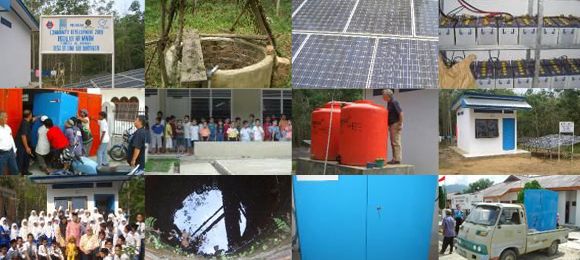
Projects in isolated areas can benefit from modular equipment that is transportable and simple to operate. Experience with compact treatment systems for harsh environments is illustrated in this desert mobile units case study, which is relevant to operators considering resilient water technology for remote Australian facilities.
Making The Business Case
A sound evaluation should include water purchase, sewer or disposal charges, chemical supply, labour, cleaning, replacement parts, energy use and the cost of lost production. The capital cost of filtration is only one part of the calculation. If improved water quality extends heat-exchanger efficiency and reduces cleaning outages, the operational return may be greater than the initial estimate based on consumables alone.
Performance should be verified after commissioning. Useful measures include lower turbidity, reduced basin sediment, stable heat-transfer temperatures, fewer blocked strainers, lower blowdown volume and a documented change in chemical consumption. These indicators give plant managers evidence that the system is producing a real operational improvement rather than simply adding another piece of equipment.
Swiss Cleanwater Group provides water treatment solutions for applications where contaminant removal, resource efficiency and dependable operation are priorities. Its technical team can help assess source water, treatment objectives and equipment requirements before a cooling tower project is specified.
A chemical-free filtration programme can give Australian industrial plants cleaner circulating water, steadier cooling performance and a lower environmental burden. Begin with water analysis and a review of the existing tower, then obtain a treatment design that reflects the site’s climate, process demands, compliance obligations and long-term operating costs.
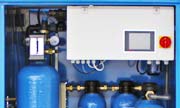
SCM 24
|
|
Cleans 24.000 liters per day
|
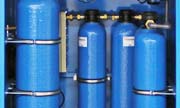
SCM 60
|
|
Cleans 60.000 liters per day
|
Video: How it works
The SCG Advantage
Our market-leading, water cleaning solutions have many advantages. To read more click the items below:
No Chemicals
Our machines and technology does not use any chemicals, at all.
Read more...
No Waste Water
Our machines do not waste any water. Yield = 100%.
Read more...
Low energy use
Uses 50 times less energy than a Reverse Osmosis Machine.
Read more...
Low ownership cost
Lower maintenance and operation costs due to our technology.
Read more...
Easy to install
Simple "plug and play" installation makes for easy deployment.
Read more...
Extremely compact
A compact system, contained in an easy to transport cabinet.
Read more...
Outperforms R.O.
SCG technologies outperform Reverse Osmosis systems.
Read more...
Faster ROI
Get a faster Return on Investment with our systems.
Read more...
Latest News
Latest Blog Posts
| Chemicals in water treatment? |
| Water storage - Whats best for keeping water clean and drinkable? |
| Case: Disaster Management Water Treatment |
Contact SCG
891 Showroom Place
Suite 101
Chula Vista, CA, 91914
Phone: +1 619-878-2730
Contact us by email