








Cleaner Pool Water Without a Heavy Chemical Load
Swimming pools in hot climates face a demanding combination of heat, intense sunlight, high bather numbers, and rapid evaporation. These conditions can accelerate algae growth, increase organic contamination, and make water chemistry harder to control. Conventional treatment often responds with larger doses of chlorine, algaecides, clarifiers, and pH-adjusting products.
Chemical-free or low-chemical filtration offers a different approach. By combining fine mechanical separation with appropriate disinfection and water circulation, a pool can reduce its dependence on consumable chemicals while maintaining clear, hygienic water. The result can be a more comfortable swimming environment, lower operating costs, and a smaller environmental footprint.
The phrase “chemical-free” requires careful interpretation. Filtration removes particles and some contaminants, but filtration alone does not guarantee disinfection. Public and commercial pools must still follow local health regulations, monitor microbiological quality, and use an approved sanitation strategy where required. The strongest systems are designed around safety rather than marketing language.
Why Hot Weather Increases Pool Treatment Demands
High temperatures create ideal conditions for microorganisms and algae. Warm water can support faster biological activity, while sunlight breaks down chlorine more quickly at the surface. Swimmers also introduce sweat, sunscreen, skin particles, and other organic matter, giving contaminants more opportunities to enter the water.
Evaporation adds another complication. Water leaves the pool, but many dissolved substances remain behind, increasing the concentration of salts, minerals, and stabilizers. Frequent topping up can alter the balance again, especially where source water contains hardness, iron, manganese, or other naturally occurring compounds.
Dust and airborne particles are common in arid and coastal regions. Wind can carry soil, pollen, insects, and agricultural residues into open pools. A filtration system that captures these materials efficiently reduces the load placed on disinfection equipment and helps prevent cloudy water after busy periods.
How Chemical-Free Filtration Supports Water Quality
The central principle is physical separation. A properly selected filter captures suspended solids before they can decompose, feed algae, or consume disinfectant. Depending on the application, treatment may use pressure filtration, ultrafiltration, membrane separation, activated media, or a combination of technologies.
Fine filtration is particularly useful for removing turbidity and microscopic particles that make water appear dull even when basic chemical readings are acceptable. Some systems can also target specific dissolved contaminants, although dissolved salts and certain molecules require a treatment process designed for that purpose. The choice should be based on laboratory analysis of both pool water and the source water.
Swiss Cleanwater Group presents water treatment solutions for applications where efficient contaminant removal, low waste, and reduced chemical use are priorities. For a swimming pool, the technology must be integrated with circulation pumps, pre-filters, flow controls, and monitoring equipment rather than treated as a standalone replacement for every sanitation measure.
Ultraviolet light, ozone, or advanced oxidation may complement physical filtration by addressing microorganisms and organic compounds. These methods can reduce the amount of chemical sanitizer needed, but each has operating limits. UV provides treatment as water passes through the chamber and does not always leave a lasting residual in the pool. Ozone can be highly effective within a contact system, yet it also needs careful control to protect swimmers and equipment.
Comfort, Health, And Maintenance Benefits
Reducing the chemical burden can improve the swimming experience. Strong chlorine odors are often associated with chloramines, which form when chlorine reacts with sweat, urine, and other nitrogen-containing contaminants. Better removal of organic matter can limit chloramine formation and help reduce eye, skin, and respiratory irritation.
Clearer water is another practical benefit. When fine particles are removed continuously, the pool is less likely to develop haze after storms, heavy use, or nearby construction. Consistent clarity also helps operators identify problems quickly, including an unusual color, surface contamination, or a circulation fault.
Filtration can simplify daily maintenance by reducing the demand for repeated shock treatments, clarifiers, and emergency adjustments. Operators still need to inspect the system, clean filters, test water, and maintain pumps. The difference is that routine management becomes more preventive and less dependent on correcting visible deterioration after it occurs.
For hotels, resorts, schools, and residential developments, improved water quality can support a more pleasant facility and fewer complaints about smell or irritation. In hot regions where pools may operate for much of the year, these incremental benefits can accumulate into meaningful savings and better asset performance.
Comparing Treatment Approaches
No single method suits every pool. A small private pool with low use has different requirements from a resort basin, an Olympic facility, or a pool supplied by mineral-rich groundwater. Flow rate, turnover time, bather load, climate, source water, and local regulations should guide the design.
| Treatment approach | Main strength | Key limitation | Best application |
|---|---|---|---|
| Conventional chlorination | Proven residual protection and broad regulatory acceptance | Can produce odor, irritation, and chemical handling demands | Public pools requiring established sanitation protocols |
| Fine mechanical filtration | Removes suspended particles and improves clarity | Does not reliably disinfect by itself | All pool types as a core water-quality process |
| Ultrafiltration | Captures very small particles and many microorganisms | Membranes require cleaning and careful flow management | High-clarity systems and challenging source water |
| UV treatment | Inactivates many microorganisms without adding a persistent chemical | Provides little ongoing protection after treatment | Pools seeking lower sanitizer demand |
| Ozone treatment | Oxidizes organic compounds and supports water polishing | Requires specialized equipment and safe off-gas control | Hotels, spas, and high-use commercial facilities |
| Chemical-free or reduced-chemical combinations | Can lower consumables, waste, and handling | Needs integrated engineering and regular monitoring | Sites prioritizing sustainability and operating efficiency |
A reduced-chemical system is often more realistic than a completely chemical-free public pool. A small residual sanitizer may remain necessary under health codes, particularly where many people share the same water. The objective is to make that residual more effective by removing contaminants before they consume it.
Environmental And Financial Advantages
Chemical reduction can lower the volume of disinfectants, pH correctors, algaecides, and clarifying agents purchased and transported to a site. This reduces packaging waste and limits the risks associated with storing concentrated products in hot plant rooms. It can also make remote facilities easier to operate, where chemical deliveries are expensive or unreliable.
Energy performance depends on the equipment design. A high-pressure membrane system may consume more electricity than a basic sand filter, while an efficient gravity or low-pressure configuration may offer a favorable balance. Pumps, backwashing frequency, pressure loss, and automation all affect the final result. The right comparison should consider total lifecycle cost rather than the purchase price alone.
Wastewater is another important factor. Traditional backwashing can send large volumes of treated water to drainage, carrying concentrated contaminants and treatment chemicals with it. Systems designed for lower backwash demand, recovery, or controlled cleaning can conserve water, which is especially valuable in dry climates.
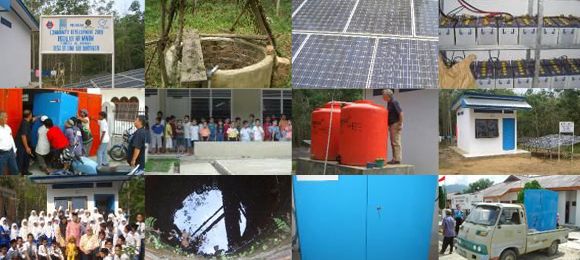
Experience from remote water projects also shows why modular, efficient treatment can matter where logistics are difficult. A remote mining case study illustrates how filtration planning can support reliable water production in locations with limited infrastructure. Pool operators can apply the same principles by selecting equipment that is robust, serviceable, and matched to local conditions.
Designing A Reliable Pool Filtration System
A successful installation begins with water testing. Analysis should cover turbidity, hardness, alkalinity, pH, conductivity, metals, organic load, and microbiological indicators where appropriate. If the pool is filled from a borehole, river, tanker, or desalination plant, the source profile may change seasonally and should be reviewed before sizing the system.
The treatment train should include a suitable intake screen or pre-filter, circulation pump, primary filter, and any polishing or disinfection stage required by the facility. Automatic controls can track pressure, flow, turbidity, UV intensity, conductivity, and sanitizer levels. Alarms are valuable because they allow staff to respond before poor water quality becomes visible.
Hot-climate installations also need protection from direct sun, high ambient temperatures, and dust. Equipment rooms should provide ventilation without allowing airborne debris to enter sensitive components. Pipes and tanks must be selected for the water chemistry, while spare parts and maintenance access should be considered from the beginning.
Operators should establish a documented cleaning schedule. Filters that are allowed to clog consume more energy and may reduce turnover below the required level. Membrane systems need their own cleaning protocols, and UV lamps or ozone components require periodic inspection. A chemical-free objective does not mean maintenance-free operation.
Practical Steps For A Lower-Chemical Pool
A responsible transition should be gradual and based on measured performance rather than assumptions. The following actions provide a practical starting point:
- Test the source and pool water before choosing filtration or disinfection equipment.
- Calculate peak bather load, required turnover time, evaporation losses, and seasonal temperature changes.
- Select a filter that captures the relevant contaminants without creating excessive pressure loss.
- Combine physical filtration with an approved sanitation method suited to the pool’s use and local regulations.
- Install monitoring for flow, filter pressure, water clarity, and critical disinfection parameters.
- Train staff to clean, inspect, and service the system according to a written schedule.
A pilot installation can help verify clarity, operating costs, water consumption, and user comfort before a full upgrade. Data from several hot-weather operating cycles will provide a more reliable basis for investment than a short demonstration during mild conditions.
Chemical-free filtration can become a valuable part of sustainable pool management when it is engineered as an integrated water-treatment system. By removing contaminants early, improving circulation, and pairing filtration with safe disinfection, operators can pursue cleaner water with fewer consumables and less waste. Contact Swiss Cleanwater Group to assess the water source, pool demands, and treatment options for a system designed around long-term performance.
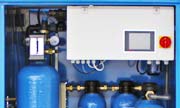
SCM 24
|
|
Cleans 24.000 liters per day
|
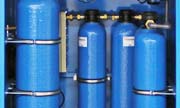
SCM 60
|
|
Cleans 60.000 liters per day
|
Video: How it works

The SCG Advantage
Our market-leading, water cleaning solutions have many advantages. To read more click the items below:
No Chemicals
Our machines and technology does not use any chemicals, at all.
Read more...
No Waste Water
Our machines do not waste any water. Yield = 100%.
Read more...
Low energy use
Uses 50 times less energy than a Reverse Osmosis Machine.
Read more...
Low ownership cost
Lower maintenance and operation costs due to our technology.
Read more...
Easy to install
Simple "plug and play" installation makes for easy deployment.
Read more...
Extremely compact
A compact system, contained in an easy to transport cabinet.
Read more...
Outperforms R.O.
SCG technologies outperform Reverse Osmosis systems.
Read more...
Faster ROI
Get a faster Return on Investment with our systems.
Read more...
Latest News
Latest Blog Posts
| Chemicals in water treatment? |
| Water storage - Whats best for keeping water clean and drinkable? |
| Case: Disaster Management Water Treatment |
Contact SCG
891 Showroom Place
Suite 101
Chula Vista, CA, 91914
Phone: +1 619-878-2730
Contact us by email