


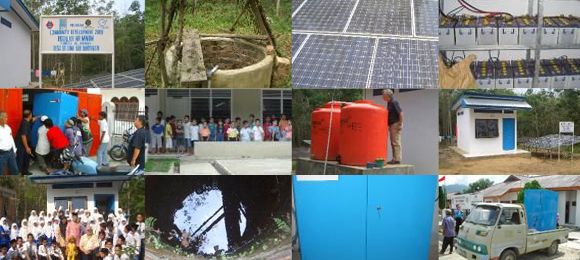







Catalytic Filtration For Uranium In Australian Municipal Water
Uranium is naturally present in some Australian soils and rock formations, particularly where groundwater moves through mineral-rich geological layers. Most supplies contain very low concentrations, yet localised levels can become a concern for councils drawing from borefields, remote aquifers, or mixed surface and groundwater systems.
For municipal water operators, the preferred treatment method must achieve reliable contaminant reduction without creating an unmanageable waste stream. Catalytic filtration can provide a practical alternative to high-pressure membrane processes by using specialised media to capture dissolved uranium as water passes through a treatment vessel.
The right system depends on the uranium species, alkalinity, pH, competing ions, flow rate, and required treated-water quality. A site assessment and pilot trial should therefore guide media selection, contact time, backwashing, monitoring, and final disposal arrangements.
Why Uranium Requires Careful Treatment
Uranium is a naturally occurring radioactive element, but in drinking water the primary concern is generally chemical toxicity to the kidneys rather than intense external radiation exposure. It is usually dissolved and invisible, so water can appear clear and taste normal while still requiring laboratory analysis.
The Australian Drinking Water Guidelines include a health-based guideline value of 0.017 milligrams per litre for uranium. This value gives utilities a benchmark for assessing source water and treated water, although each project must also consider its licence conditions, state requirements, and the characteristics of the local catchment.
Groundwater is especially important in Australia. Regional towns, mining communities, farms, and remote settlements may depend on bores where uranium occurs alongside iron, manganese, arsenic, hardness, or salinity. A process designed for uranium alone may perform poorly if these substances compete for adsorption sites or block the media.
How Catalytic Media Capture Contaminants
Catalytic filtration uses a reactive or adsorptive filter medium with a large active surface. As water travels through the bed, dissolved contaminants interact with the media and are retained through adsorption, surface reactions, or co-precipitation. The exact mechanism depends on the media formulation and the chemistry of the raw water.
This differs from a conventional sand filter, which primarily removes suspended particles. It also differs from reverse osmosis, where water is forced through a semi-permeable membrane and a concentrated reject stream is produced. Catalytic equipment can operate at comparatively low pressure and may be integrated into a conventional treatment train.
A well-designed system can reduce uranium while also helping manage selected metals and other groundwater contaminants. Performance still depends on contact time and breakthrough control. Operators need regular sampling, pressure monitoring, and a defined media replacement or backwash procedure rather than relying on appearance or flow alone.
For councils reviewing treatment options, this reverse osmosis comparison helps frame the differences in energy demand, infrastructure, operating complexity, and water losses. The most suitable choice will depend on the source and the required treatment target.
Operational Benefits For Australian Utilities
A major benefit is the potential to treat a high proportion of the incoming water without the continuous reject flow associated with membrane desalination. That can simplify water balance calculations in inland locations where every kilolitre matters. Backwash water and spent media still require responsible handling, but the waste profile may be easier to manage than a large brine stream.
Catalytic filtration can also fit within existing municipal infrastructure. A treatment skid may include pre-filtration, catalytic vessels, automated valves, flow controls, sampling points, and a clean-water storage connection. Modular equipment is useful for staged upgrades, temporary works, and smaller communities that cannot justify a complex central plant.
Energy consumption is another consideration. Because the process generally relies on gravity or moderate pumping pressure rather than high-pressure membrane operation, it may reduce power requirements. This matters in Queensland and Western Australia, where remote sites can depend on diesel generation or solar-battery systems, and in regional New South Wales communities managing rising operating costs.
The technology can support a broader clean water solutions programme when uranium is one of several source-water concerns. A combined design may address manganese, arsenic, bacteria, pesticides, or other contaminants through separate treatment stages rather than forcing one process to handle every problem.
| Consideration | Catalytic Filtration | Reverse Osmosis |
|---|---|---|
| Uranium reduction | Depends on media and water chemistry; confirmed by testing | Commonly effective when correctly designed |
| Energy demand | Usually low to moderate | Usually higher because of pressure requirements |
| Water recovery | Often high, with backwash requiring management | Produces a reject or concentrate stream |
| Maintenance | Media checks, backwashing, and replacement | Membrane cleaning, fouling control, and replacement |
| Mineral content | Can preserve useful minerals, depending on design | Removes many dissolved salts and minerals |
| Best fit | Targeted contaminant removal and modular plants | Broad dissolved-solids reduction or desalination |
Design Factors That Determine Performance
The first step is source-water characterisation. Testing should cover uranium concentration, pH, alkalinity, turbidity, hardness, iron, manganese, arsenic, sulphate, chloride, total dissolved solids, and microbiological indicators where relevant. Seasonal sampling is valuable because bore chemistry can change when extraction rates, rainfall, or blending arrangements change.
Pre-treatment can have a decisive effect. Turbidity and oxidised iron may clog a media bed, while organic matter can interfere with surface reactions. Depending on the analysis, the system may require sediment filtration, aeration, oxidation, pH adjustment, or a separate stage for iron and manganese before uranium treatment.
Hydraulic design also matters. Empty bed contact time, filtration velocity, vessel diameter, bed depth, flow variation, and peak demand must be calculated for actual municipal conditions. A plant serving a small South Australian township has a different duty cycle from a rapidly growing outer-Perth development or a large coastal network.
Pilot testing establishes the practical operating window. It can show how quickly the media reaches breakthrough, whether water chemistry changes the removal rate, how often backwashing is needed, and whether the treated water remains stable during demand peaks. These results help determine the number of vessels, duty-and-standby arrangements, monitoring points, and media replacement budget.
Responsible Management From Plant To Community
Water authorities should define uranium monitoring in the same disciplined way as any other health-related parameter. Samples may be collected from the raw source, after pre-treatment, after catalytic filtration, and at representative points in the distribution network. Laboratory methods must have suitable detection limits and quality controls.
Spent media and backwash residues deserve early attention. The quantity and classification will depend on the uranium concentration and the media’s retention capacity. A project should document how backwash water is contained, whether it can be returned to a permitted waste stream, and how exhausted media will be transported and disposed of under applicable Australian rules.
Communication is equally important. Residents are more likely to support an upgrade when the council explains the source of the contaminant, the treatment target, and the monitoring schedule in plain language. This is particularly relevant for small communities where the water operator, customer service team, and local decision-makers are closely connected.
Mobile or packaged systems can provide additional resilience during construction, drought, emergencies, or source changes. They may also support temporary operations in remote areas; specialised mobile treatment systems illustrate how compact treatment equipment can be deployed where permanent infrastructure is limited.
Building A Practical Treatment Programme
A municipal project should begin with a documented water-quality baseline and a clear treated-water objective. The design team can then compare catalytic filtration with ion exchange, reverse osmosis, adsorption, or a combination of technologies. Capital cost should be assessed alongside power, chemicals, operator time, waste handling, laboratory testing, and media replacement.
Automation can reduce the burden on small councils. Differential-pressure sensors, flow meters, automatic backwash sequences, sample ports, and remote alarms help operators identify fouling or breakthrough before water quality is affected. Even with automation, a local maintenance plan and trained personnel remain essential.
For Australia’s dispersed communities, standardised modular equipment can make procurement and servicing more predictable. Spare media, valves, pumps, and instrumentation should be available through an agreed supply chain, particularly for sites far from Brisbane, Sydney, Melbourne, Adelaide, Perth, or the major regional centres.
Swiss Cleanwater Group can help assess the source-water chemistry, select an appropriate treatment configuration, and develop a system for municipal, industrial, agricultural, or remote use. Councils and water contractors can request a site review, laboratory assessment, and project-specific proposal before committing to full-scale installation. Begin with reliable source data and a pilot-tested design so uranium reduction, operating cost, and long-term waste management are addressed together.
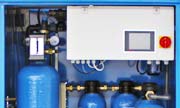
SCM 24
|
|
Cleans 24.000 liters per day
|
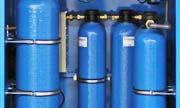
SCM 60
|
|
Cleans 60.000 liters per day
|
Video: How it works
The SCG Advantage
Our market-leading, water cleaning solutions have many advantages. To read more click the items below:
No Chemicals
Our machines and technology does not use any chemicals, at all.
Read more...
No Waste Water
Our machines do not waste any water. Yield = 100%.
Read more...
Low energy use
Uses 50 times less energy than a Reverse Osmosis Machine.
Read more...
Low ownership cost
Lower maintenance and operation costs due to our technology.
Read more...
Easy to install
Simple "plug and play" installation makes for easy deployment.
Read more...
Extremely compact
A compact system, contained in an easy to transport cabinet.
Read more...
Outperforms R.O.
SCG technologies outperform Reverse Osmosis systems.
Read more...
Faster ROI
Get a faster Return on Investment with our systems.
Read more...
Latest News
Latest Blog Posts
| Chemicals in water treatment? |
| Water storage - Whats best for keeping water clean and drinkable? |
| Case: Disaster Management Water Treatment |
Contact SCG
891 Showroom Place
Suite 101
Chula Vista, CA, 91914
Phone: +1 619-878-2730
Contact us by email