









How pH Shapes Catalytic Filtration for Arsenic and Uranium
pH is one of the most influential operating variables in groundwater treatment. It affects the chemical form of arsenic and uranium, the electrical charge of filter media, the stability of adsorbed compounds, and the competition created by naturally occurring minerals. A catalytic filter can therefore perform very differently when the source water shifts from slightly acidic to alkaline.
This matters especially for systems designed to remove contaminants without continuous chemical dosing. Catalytic and adsorptive media depend on contact between water and a reactive surface. The surface may promote oxidation, bind dissolved contaminants, or retain newly formed particles. Each mechanism has a pH range in which it is most effective.
A reliable design begins with laboratory analysis and pilot testing rather than a generic pH target. Alkalinity, dissolved oxygen, iron, manganese, phosphate, silica, sulfate, organic matter, and suspended solids can all influence the result. Treatment objectives should also account for the required finished-water limit, seasonal changes, and the expected life of the media.
Why pH Changes Contaminant Behavior
Arsenic commonly occurs in groundwater as arsenite, As(III), or arsenate, As(V). Arsenite is generally more difficult to remove through adsorption because it is often present as a neutral molecule across a broad drinking-water pH range. Arsenate usually forms negatively charged species that bind more readily to iron- and manganese-based surfaces.
Oxidation can convert arsenite into arsenate before or within a catalytic filtration bed. Dissolved oxygen, naturally present manganese dioxide, catalytic coatings, or other oxidation pathways may support this conversion, but the reaction rate depends on water chemistry. If oxidation is incomplete, arsenic removal can remain inconsistent even when the filter appears to be operating normally.
Uranium is commonly found as the uranyl ion and related carbonate complexes. In oxygenated groundwater, increasing pH and carbonate concentration can make uranium more soluble and can produce negatively charged complexes that are less strongly retained by some media. This means a pH that benefits arsenate adsorption may not deliver the same advantage for uranium removal.
Surface Charge And Adsorption
Many catalytic filtration media contain manganese dioxide, iron oxyhydroxides, activated minerals, or proprietary reactive coatings. Their surfaces carry pH-dependent electrical charges. At lower pH, protonation can make a surface more positively charged, which may favor attraction of anionic arsenate or certain uranium complexes. As pH rises, the same surface may become less positive or increasingly negative.
The effect is not universal. Very low pH can damage media, increase corrosion, mobilize metals, and create water-quality problems of its own. A strongly acidic condition may improve initial adsorption while reducing practical system performance, operator safety, and equipment life. The useful operating range is therefore a balance between contaminant binding and stable plant operation.
Arsenate adsorption often declines as pH moves into alkaline conditions, particularly when hydroxide ions compete for active sites. Uranium behavior can be more complicated because carbonate, calcium, and bicarbonate alter its aqueous chemistry. A high-pH source with substantial alkalinity may require a different medium, a lower pH before filtration, or a polishing stage after the catalytic bed.
The Role Of Competing Water Chemistry
Phosphate is a notable competitor for iron and aluminum adsorption sites. Even at relatively low concentrations, it can occupy reactive surface locations that would otherwise bind arsenate. Silicate and natural organic matter may have similar effects, while sulfate and bicarbonate can influence ionic strength and complex formation.
Iron and manganese can help or hinder treatment. Dissolved iron may oxidize and form hydroxide flocs that capture arsenic, supporting removal in a filter bed. However, excessive loading can cause pressure loss and premature backwashing. Manganese may contribute to catalytic oxidation, but its release or accumulation must be controlled to protect finished-water quality.
Uranium removal is particularly sensitive to carbonate chemistry. At higher pH, uranyl-carbonate complexes may remain dissolved and resist adsorption. Calcium can further stabilize these complexes. Testing only pH, without measuring alkalinity, dissolved inorganic carbon, and hardness, can produce an incomplete picture of expected performance.
Operating Ranges And Expected Responses
There is no single ideal pH for every catalytic filtration installation. The best value depends on the media, contaminant species, oxidation conditions, hydraulic loading, empty-bed contact time, and competing ions. The ranges below are practical tendencies rather than universal specifications.
| Water condition | Likely effect on arsenic | Likely effect on uranium | Design consideration |
|---|---|---|---|
| Acidic, below approximately pH 6.5 | May favor anion adsorption, but arsenite can remain difficult to capture | Can improve binding for some media, though corrosion and metal solubility may increase | Verify alkalinity, corrosion risk, and finished-water stability |
| Near-neutral, approximately pH 6.5–7.8 | Often supports balanced adsorption and oxidation when iron or manganese media are present | Frequently a practical starting range for testing | Confirm arsenic speciation and uranium concentration through laboratory analysis |
| Mildly alkaline, approximately pH 7.8–8.5 | Arsenate retention may weaken as surface charge changes and hydroxide competition increases | Carbonate complexes may reduce adsorption and increase dissolved uranium mobility | Assess alkalinity, carbonate, calcium, and contact time |
| Strongly alkaline, above approximately pH 8.5 | Removal can become less predictable, especially for arsenate | Uranium may be more difficult to retain because of stable carbonate complexes | Consider pH adjustment, alternative media, or a polishing step |
| Variable seasonal pH | Breakthrough risk can increase even if average concentration appears acceptable | Uranium and arsenic performance may shift with changing carbonate chemistry | Use online pH monitoring, conservative design, and periodic verification |
These tendencies should be confirmed with column studies using the actual source water. A short laboratory jar test may indicate whether adsorption is possible, but it may not reveal media exhaustion, slow oxidation, hydraulic effects, or contaminant breakthrough over time.
Managing pH Without Excessive Chemical Use
A chemical-free treatment objective does not mean pH can be ignored. In some waters, aeration, blending, degassing, or changes in hydraulic configuration can shift treatment conditions without continuous chemical addition. Removing carbon dioxide through aeration, for example, may raise pH, although the resulting effect on uranium chemistry must be evaluated rather than assumed to be beneficial.
Where adjustment is necessary, the choice should reflect the full operating context. Acid or alkali dosing can improve contaminant capture, but it adds storage, metering, monitoring, maintenance, and residual management requirements. A carefully selected catalytic medium may avoid routine dosing, but only if its performance remains stable under the source water’s natural pH and alkalinity.
For municipalities and smaller utilities, lifecycle planning is as important as initial removal efficiency. Guidance on small-town filtration choices can help frame questions about footprint, automation, maintenance, backwashing, and source-water variability. The most sustainable system is one that meets the treatment target consistently with manageable operating demands.
Monitoring Performance In The Field
A pH meter should be installed where it provides useful information about treatment, commonly at the raw-water inlet and treated-water outlet. Measurements should be temperature-compensated, regularly calibrated, and checked against grab samples. A single reading during commissioning cannot represent daily or seasonal behavior.
Operators should track arsenic and uranium alongside pH, flow rate, pressure drop, turbidity, oxidation-reduction potential, alkalinity, and backwash frequency. When possible, arsenic should be separated into As(III) and As(V), since total arsenic alone cannot show whether oxidation is occurring as intended.
Breakthrough monitoring is essential because a filter can appear clear while its active sites are nearing exhaustion. A rising treated-water concentration, a change in pressure behavior, or a shift in pH response may signal media aging or altered source-water chemistry. Design calculations should include a safety margin and define what happens when performance approaches the compliance limit.
Recommendations For Reliable Treatment
- Characterize pH, alkalinity, carbonate, iron, manganese, phosphate, silica, sulfate, organic matter, and hardness before selecting media.
- Measure arsenic species and uranium separately where laboratory capability allows, rather than relying only on total contaminant results.
- Use pilot columns or extended performance testing with representative water and realistic flow rates.
- Keep pH, flow, pressure loss, turbidity, and treated-water concentrations in a documented operating record.
- Specify a response plan for seasonal pH changes, breakthrough, media replacement, and any required pH adjustment.
Catalytic filtration works best when pH is treated as a design variable rather than a number checked after installation. Understanding how acidity, alkalinity, surface charge, oxidation, and carbonate complexation interact makes it possible to select a suitable medium and avoid overreliance on trial and error.
For project planning, compare expected removal, monitoring needs, backwash requirements, media longevity, and operator workload over the full service life. Information on low ownership cost can support that broader evaluation. Contact Swiss Cleanwater Group to discuss source-water analysis, pilot testing, and a catalytic filtration configuration matched to the actual pH and contaminant profile.
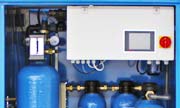
SCM 24
|
|
Cleans 24.000 liters per day
|
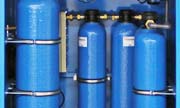
SCM 60
|
|
Cleans 60.000 liters per day
|
Video: How it works

The SCG Advantage
Our market-leading, water cleaning solutions have many advantages. To read more click the items below:
No Chemicals
Our machines and technology does not use any chemicals, at all.
Read more...
No Waste Water
Our machines do not waste any water. Yield = 100%.
Read more...
Low energy use
Uses 50 times less energy than a Reverse Osmosis Machine.
Read more...
Low ownership cost
Lower maintenance and operation costs due to our technology.
Read more...
Easy to install
Simple "plug and play" installation makes for easy deployment.
Read more...
Extremely compact
A compact system, contained in an easy to transport cabinet.
Read more...
Outperforms R.O.
SCG technologies outperform Reverse Osmosis systems.
Read more...
Faster ROI
Get a faster Return on Investment with our systems.
Read more...
Latest News
Latest Blog Posts
| Chemicals in water treatment? |
| Water storage - Whats best for keeping water clean and drinkable? |
| Case: Disaster Management Water Treatment |
Contact SCG
891 Showroom Place
Suite 101
Chula Vista, CA, 91914
Phone: +1 619-878-2730
Contact us by email