







How iron concentration affects catalytic media lifespan
Catalytic filtration is widely used to reduce dissolved iron in bore water, groundwater and process supplies. The media creates an active surface that encourages iron oxidation, allowing the resulting particles to be trapped and removed during backwashing. Its service life depends heavily on how much iron enters the vessel each day.
Concentration is a central factor, but it is not the only one. Flow rate, pH, dissolved oxygen, manganese, tannins, organic matter, temperature and backwash quality all influence how quickly catalytic media loses performance. For Australian operators, a correct assessment is especially important because water chemistry can vary significantly between coastal aquifers, inland bores, rainwater systems and agricultural properties.
Why iron loading matters
A water test may report iron in milligrams per litre, or mg/L. That figure becomes meaningful when combined with daily water use. A household using 1,000 litres per day at 2 mg/L iron receives approximately 2 grams of iron each day. A cattle operation using 50,000 litres at the same concentration introduces about 100 grams daily into its treatment system.
This accumulated mass increases the frequency and intensity of backwashing. Iron particles can occupy the media bed, restrict water flow and reduce the contact area available for oxidation. If the filter is not cleaned thoroughly, deposits may harden or form preferential channels, allowing untreated water to pass through.
The relationship is particularly important for Australian properties with variable demand. A rural home may use considerably more water during summer, while an agricultural or livestock site can experience seasonal peaks. Designing a filter around an annual average may leave the system undersized during periods when iron loading is highest.
A useful calculation is:
Daily iron load in kilograms = iron concentration in mg/L × daily water volume in cubic metres ÷ 1,000
This calculation gives designers a starting point for selecting vessel size, media volume and cleaning intervals. It also shows why a modest concentration can still shorten media life when the water volume is large.
What changes the working life of catalytic media
pH has a strong influence on iron removal. Many catalytic media products perform best when the water is sufficiently alkaline for rapid oxidation. At a low pH, iron may remain dissolved for longer, increasing the risk that it passes through the bed or reacts unevenly within the vessel. A pH adjustment stage may therefore be required, depending on the media and raw-water chemistry.
Dissolved oxygen also affects oxidation. Water with limited oxygen can require additional treatment conditions before iron becomes an easily filterable particle. Manganese often complicates the process because it oxidises more slowly than iron and may need a higher pH or a specialised media surface. Treating both contaminants without accounting for their interaction can produce premature fouling.
Organic substances can coat catalytic grains and reduce their activity. Tannins, common in some Australian groundwater and surface-influenced bore supplies, may give water a tea colour and interfere with oxidation. A tannin treatment guide can help explain why colour, dissolved organics and iron should be assessed together rather than treated as separate problems.
Media grain size and bed depth matter as well. Fine media can provide strong filtration but may need careful hydraulic control to prevent pressure loss. A deep bed may capture more solids, yet it must receive enough backwash flow to expand and clean the media properly. Australian water temperatures, which can rise substantially in above-ground tanks and plant rooms, may also change reaction rates and biological activity.
Estimating service life from real operating data
The stated lifespan of catalytic media is rarely a fixed number of years. It is better understood as a function of iron mass processed, cleaning performance and the condition of the media surface. Two systems using the same product can have very different service lives if one treats 0.2 mg/L iron at low flow and the other treats 5 mg/L at continuous industrial demand.
| Operating condition | Likely effect on media lifespan | Recommended control |
|---|---|---|
| Low iron concentration and moderate flow | Lower solids loading and longer run times | Routine testing and scheduled backwash |
| High iron concentration with high daily demand | Rapid bed loading and frequent pressure rise | Larger media volume, stronger cleaning cycle and flow verification |
| Low pH or limited dissolved oxygen | Slower oxidation and possible iron breakthrough | Test pH and oxygen conditions before selecting media |
| Iron combined with manganese | Greater chemical and filtration demand | Select media and operating conditions for both metals |
| Iron with tannins or organic matter | Surface coating and reduced catalytic activity | Characterise colour and organics; consider upstream treatment |
| Poor backwash performance | Retained solids, channeling and permanent pressure loss | Confirm drain capacity, flow rate and cycle duration |
Operators should record inlet and outlet iron, pressure differential, flow, backwash frequency and any visible colour changes. Testing only the treated water can hide a gradual decline. A rising pressure drop often provides an earlier warning than a failed laboratory result.
The iron concentration should ideally be measured at more than one point in the water supply. A bore may produce different quality after pumping begins, and storage tanks can collect settled material that later enters the treatment line. Sampling during normal operation gives a more realistic picture than relying on a single bottle collected from a household tap.
Media replacement decisions should consider performance rather than calendar age alone. If adequate backwashing, correct pH and stable flow no longer restore removal efficiency, the catalytic surface may be exhausted, fouled or physically degraded. A specialist assessment can distinguish between spent media and an operating fault, avoiding unnecessary replacement.
Australian water conditions and compliance
Iron is commonly treated because it causes staining, metallic taste, turbidity and deposits in pipes and appliances. The Australian Drinking Water Guidelines are a key national reference for drinking-water quality, while state and territory health authorities apply regulatory requirements in their own jurisdictions. Iron is generally managed as an aesthetic and operational concern rather than a principal health contaminant, but the complete water profile still needs to be assessed.
Private bore owners in regional areas are usually responsible for arranging testing and maintaining treatment equipment. This is relevant around Perth, where groundwater use is widespread, and in rural areas of Victoria, New South Wales and Queensland where bore water may supply homes, sheds or livestock. Water quality can change after rainfall, drought, altered pumping patterns or nearby land-use changes.
Australian operators should also consider plumbing and installation requirements. Equipment used in drinking-water systems may need to meet relevant Australian Standards, and products connected to regulated plumbing installations may require appropriate WaterMark certification. Local councils, state health departments and water authorities can impose additional requirements for public facilities, food businesses or community supplies.
The treatment objective may differ between a suburban home and a commercial site. In Sydney or Melbourne, iron treatment may protect household fixtures or improve bore water used for gardens. On a cattle property, the priority may be reliable trough supply and reduced blockage in drinker valves. At a processing plant or accommodation facility, flow continuity, records and validated water quality become more important than the filter’s nominal capacity.
Protecting performance through system design
The most effective way to extend catalytic media lifespan is to design around the complete water analysis. Testing should normally include iron, manganese, pH, alkalinity, turbidity, colour, hardness, dissolved oxygen and, where relevant, tannins or other organic compounds. Flow demand and peak usage should be recorded at the same time.
Backwashing must match the media and vessel. Insufficient flow leaves iron deposits in the bed, while excessive flow can carry media to the drain or disrupt the treatment zone. Drain restrictions, low pump pressure and undersized valves are common reasons for poor cleaning. Automatic controls should be checked periodically rather than assumed to be operating correctly.
Pre-filtration can reduce the burden on the catalytic stage when the source contains sand, silt or oxidised iron particles. Correctly managed storage may also help settle larger solids before water reaches the treatment vessel. These measures can preserve the active surface and make pressure changes easier to interpret.
Iron removal should not be confused with microbial control. If a supply also contains bacteria or viruses, a separate validated disinfection barrier may be needed. Swiss Cleanwater Group discusses chlorine-free disinfection options that may be relevant where chemical handling, taste or operating conditions limit conventional approaches.
Choosing the right technology requires more than matching a filter to the reported iron number. Swiss Cleanwater Group provides water treatment systems for municipal, agricultural, industrial, building and mobile applications, with equipment selection based on water quality and operating demands.
A reliable assessment should begin with representative sampling, a daily loading calculation and a review of backwash conditions. Request a site-specific evaluation from Swiss Cleanwater Group to determine the appropriate catalytic media, vessel size, monitoring plan and maintenance schedule for your Australian water supply.
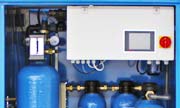
SCM 24
|
|
Cleans 24.000 liters per day
|
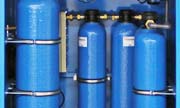
SCM 60
|
|
Cleans 60.000 liters per day
|
Video: How it works
The SCG Advantage
Our market-leading, water cleaning solutions have many advantages. To read more click the items below:
No Chemicals
Our machines and technology does not use any chemicals, at all.
Read more...
No Waste Water
Our machines do not waste any water. Yield = 100%.
Read more...
Low energy use
Uses 50 times less energy than a Reverse Osmosis Machine.
Read more...
Low ownership cost
Lower maintenance and operation costs due to our technology.
Read more...
Easy to install
Simple "plug and play" installation makes for easy deployment.
Read more...
Extremely compact
A compact system, contained in an easy to transport cabinet.
Read more...
Outperforms R.O.
SCG technologies outperform Reverse Osmosis systems.
Read more...
Faster ROI
Get a faster Return on Investment with our systems.
Read more...
Latest News
Latest Blog Posts
| Chemicals in water treatment? |
| Water storage - Whats best for keeping water clean and drinkable? |
| Case: Disaster Management Water Treatment |
Contact SCG
891 Showroom Place
Suite 101
Chula Vista, CA, 91914
Phone: +1 619-878-2730
Contact us by email