







How Water Hardness Affects Chemical-Free Filter Media Life
Water hardness is a routine operating factor that can determine whether a chemical-free filtration system performs reliably for months or struggles with rapid pressure loss. Calcium and magnesium are the main contributors, and their effects become more significant when they combine with alkalinity, elevated pH, iron, manganese, or suspended solids.
The impact of water hardness on chemical-free filtration media lifespan is rarely caused by hardness alone. The key issue is usually mineral scale: calcium carbonate or related deposits can coat media grains, reduce usable pore space, obstruct water flow, and interfere with contact between contaminants and the active filtration surface.
A properly designed system can manage hard water without chemical regeneration. It must, however, account for raw-water chemistry, hydraulic loading, backwash capacity, temperature, and the specific removal mechanism. This is especially important in drinking-water projects, agricultural installations, industrial facilities, and remote systems where frequent media replacement is costly.
What Water Hardness Means For Filtration
Hardness is generally measured as milligrams per litre of calcium carbonate equivalent, or as degrees of hardness. Temporary hardness is associated with bicarbonates and may form scale when water is heated, aerated, or exposed to a higher pH. Permanent hardness is linked mainly to sulphates and chlorides, which may remain dissolved under ordinary filtration conditions.
Most hardness minerals pass through a standard particulate filter because they are dissolved ions rather than suspended particles. A media bed designed to remove bacteria, manganese, arsenic, pesticides, or uranium does not automatically soften water. Instead, hardness influences the environment in which that media operates.
The risk increases when treatment encourages oxidation or pH adjustment. These conditions may be essential for converting dissolved contaminants into filterable forms, yet they can also reduce calcium carbonate solubility. Consequently, a system may remove the target contaminant effectively while gradually accumulating mineral deposits inside the bed.
How Scale Shortens Media Service Life
Scale forms when water becomes supersaturated with calcium carbonate or another sparingly soluble mineral. Deposits can grow around individual grains, at the top of the bed, within underdrains, or in valves and distribution channels. A thin coating may reduce adsorption or catalytic activity; a thicker layer can create preferential flow paths and uneven treatment.
Hardness can also make backwashing less effective. Deposited minerals add weight and bind media particles together, so the bed may require a higher expansion rate or longer backwash cycle to separate the grains. If the available flow is insufficient, trapped solids and scale remain in place, causing progressive clogging and increasing differential pressure.
Media lifespan should therefore be defined by more than the time until contaminant leakage occurs. A bed may still contain active material but become uneconomical because of rising pressure loss, reduced hydraulic capacity, frequent cleaning, or excessive water consumption during backwashing. Tracking these operational signals helps distinguish chemical exhaustion from physical fouling.
Operating Conditions That Change Media Longevity
Hardness has a different effect in a cold groundwater installation than in a warm industrial process. Temperature, pH, alkalinity, dissolved carbon dioxide, oxidation-reduction conditions, and flow velocity all influence precipitation. A water analysis that reports hardness alone is not enough to predict scaling potential.
The raw-water profile should include calcium, magnesium, alkalinity, pH, iron, manganese, silica, total dissolved solids, turbidity, and relevant contaminants. Seasonal variation matters as well. A well may produce stable water for much of the year but show changes after rainfall, pumping-rate adjustments, or shifts in groundwater levels.
Where several contaminants occur together, the wider water pollution profile should guide process selection. For example, iron and manganese precipitates can combine with carbonate deposits and suspended solids, producing a much denser fouling layer than hardness would create independently.
| Operating factor | Effect on filtration media | Useful control or response |
|---|---|---|
| High calcium and alkalinity | Carbonate scale, blocked pores, higher pressure drop | Review saturation risk and backwash capacity |
| Elevated pH | Greater likelihood of mineral precipitation | Keep pH within the media’s effective operating range |
| High hardness with iron or manganese | Composite fouling and reduced active surface | Use staged pretreatment or appropriate loading rates |
| Warm water | Faster scaling reactions in some systems | Monitor temperature and inspect heat-affected sections |
| Insufficient backwash flow | Retained solids and compacted media | Verify bed expansion, flow, and wash duration |
| High hydraulic loading | Short contact time and channel formation | Size the bed for peak flow, not only average demand |
| Variable raw-water chemistry | Unpredictable performance and cleaning intervals | Test seasonally and trend operating data |
Choosing Media For Hard Water Applications
Different chemical-free media respond differently to mineral deposition. Granular catalytic media often depend on surface reactions, so coating can reduce the sites available for oxidation or adsorption. Adsorptive media may lose capacity when scale blocks internal pores. Biological filtration can be disrupted if deposits alter pore structure, oxygen transfer, or the habitat needed by beneficial microorganisms.
Media density, grain size, hardness, porosity, and resistance to abrasion also matter. A material that withstands repeated backwashing may retain its physical structure longer, while a fragile medium can generate fines that increase turbidity and clog the bed. Smaller grains may provide greater surface area but can require more careful hydraulic control.
Chemical-free treatment does not mean that every installation should use a single media layer. A coarse support layer, sediment prefilter, aeration stage, or separate iron and manganese step may protect the primary media from excessive loading. In some projects, a polishing stage is appropriate for residual contaminants, while in others the most economical solution is a larger bed with a lower filtration rate.
Claims about heavy-metal removal should also be matched to water chemistry and validated with testing. The practical heavy-metal limits of a chemical-free process depend on contaminant concentration, oxidation state, pH, competing ions, contact time, and the chosen medium. Hardness can be one part of that interaction rather than an isolated design variable.
Designing For Longer Filter Media Life
The first design step is a complete water analysis, followed by a calculation of peak hourly flow and required empty bed contact time. Sizing only for daily average consumption can overload the filter during demand peaks, increasing velocity and encouraging channel formation. Correct bed depth and surface loading give the media more opportunity to capture or transform contaminants.
Hydraulic details are equally important. The vessel distributor should spread water evenly, and the underdrain should support effective backwashing without losing media. Backwash flow must be based on the medium’s density, grain size, and temperature-adjusted water viscosity. A system that cannot expand and clean the bed properly will usually show a shorter service life.
Monitoring should include inlet and outlet pressure, flow rate, turbidity, hardness, pH, and target-contaminant concentrations. A gradual pressure increase suggests fouling or scale, while a sudden change may indicate channeling, valve problems, or media displacement. Scheduled inspections can identify deposits before they become difficult to remove.
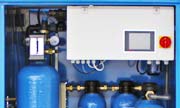
For modular or mobile applications, compact equipment must still provide adequate contact time and cleaning hydraulics. A packaged unit such as the SCM 24 machine can be assessed against site-specific flow, contaminant levels, and raw-water hardness rather than selected by capacity alone.
Practical Measures To Protect The Media
Hard water does not automatically rule out a chemical-free filtration process. It does require a design that separates dissolved hardness from the contaminants the media is intended to remove and anticipates the conditions that produce mineral precipitation.
Useful operating practices include:
- Test hardness, alkalinity, pH, iron, manganese, silica, and turbidity before selecting media.
- Establish baseline inlet and outlet pressure so scale-related fouling can be detected early.
- Set backwash flow and duration according to the actual media specification and water temperature.
- Inspect valves, distributors, underdrains, and the upper bed for carbonate or mixed mineral deposits.
- Recheck water chemistry after seasonal changes, new wells, altered pumping rates, or process modifications.
Cleaning intervals should be based on measured performance rather than a fixed calendar date. If deposits are confirmed, the appropriate response may involve a revised backwash programme, lower hydraulic loading, improved pretreatment, or a carefully selected cleaning procedure compatible with the media and drinking-water requirements.
For municipalities, farms, buildings, and industrial users, the cost of media replacement should be evaluated alongside pumping energy, water used for backwashing, downtime, and laboratory testing. A slightly larger filter or better pretreatment arrangement can extend operating life and lower the total cost of ownership.
Contact Swiss Cleanwater Group to assess your raw-water analysis, hardness level, contaminant profile, and required flow before choosing a chemical-free filtration configuration. A site-specific evaluation can identify the right media, vessel size, monitoring plan, and maintenance schedule for dependable clean-water production.
SCM 24
|
|
Cleans 24.000 liters per day
|
SCM 60
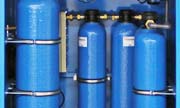
|
|
Cleans 60.000 liters per day
|
Video: How it works
The SCG Advantage
Our market-leading, water cleaning solutions have many advantages. To read more click the items below:
No Chemicals
Our machines and technology does not use any chemicals, at all.
Read more...
No Waste Water
Our machines do not waste any water. Yield = 100%.
Read more...
Low energy use
Uses 50 times less energy than a Reverse Osmosis Machine.
Read more...
Low ownership cost
Lower maintenance and operation costs due to our technology.
Read more...
Easy to install
Simple "plug and play" installation makes for easy deployment.
Read more...
Extremely compact
A compact system, contained in an easy to transport cabinet.
Read more...
Outperforms R.O.
SCG technologies outperform Reverse Osmosis systems.
Read more...
Faster ROI
Get a faster Return on Investment with our systems.
Read more...
Latest News
Latest Blog Posts
| Chemicals in water treatment? |
| Water storage - Whats best for keeping water clean and drinkable? |
| Case: Disaster Management Water Treatment |
Contact SCG
891 Showroom Place
Suite 101
Chula Vista, CA, 91914
Phone: +1 619-878-2730
Contact us by email