








Understanding The Limits Of Chemical-Free Heavy-Metal Filtration
Clean drinking water can sometimes be produced without continuously adding disinfectants, coagulants, or other treatment chemicals. That approach can reduce chemical handling, simplify operations, and limit unwanted by-products. It does not mean, however, that every contaminant can be removed by a single filter or that the process is maintenance-free.
Heavy metals and metal-like contaminants present a particular challenge. Their concentration may be very low, their chemical form may change with pH and oxygen, and several substances can compete for the same treatment capacity. A system that performs well at one site may produce very different results at another.
Chemical-free filtration should therefore be understood as a treatment strategy rather than a universal promise. Its success depends on water analysis, appropriate media or membranes, adequate contact time, pressure, temperature, monitoring, and a plan for handling exhausted materials or concentrated waste.
What Chemical-Free Treatment Actually Means
In water treatment, “chemical-free” usually means that the process does not require routine dosing of substances such as chlorine, alum, ferric salts, or sodium hydroxide. The equipment may instead use pressure-driven membranes, adsorption media, ion exchange, oxidation through air, ultraviolet light, or gravity-based processes.
The label does not mean that chemistry has disappeared. Contaminants still react with surfaces, change oxidation states, or become separated through physical and electrochemical forces. Filter media may also be manufactured materials that require replacement, and some systems need cleaning or regeneration agents during servicing.
This distinction matters when evaluating operating costs and environmental performance. A process that avoids daily chemical dosing may still create spent media, backwash water, membrane concentrate, or a contaminated sludge stream. Responsible system design considers the entire treatment cycle rather than focusing only on what enters the feed water.
Why Heavy Metals Behave Differently
Heavy metals are not a single contaminant group with one removal mechanism. Arsenic may occur as arsenite or arsenate, and the two forms respond differently to adsorption and oxidation. Chromium can be present as trivalent chromium or hexavalent chromium, while manganese changes behavior according to oxidation-reduction conditions and pH.
Uranium is often present as a dissolved, positively charged complex whose removal depends on water chemistry. Lead and copper can be associated with particles, dissolved compounds, or corrosion products from plumbing. Mercury may also occur in different forms, each requiring careful selection of treatment technology.
A filter rated for “metals” may therefore have a narrow performance range. The water’s alkalinity, hardness, sulfate, phosphate, silica, dissolved organic matter, and suspended solids can affect adsorption sites and membrane performance. A laboratory result showing removal under controlled conditions should not automatically be treated as a field guarantee.
Comparing Treatment Methods And Their Boundaries
Several chemical-free or low-chemical technologies can be useful for heavy-metal removal, but each has a defined operating envelope. Adsorptive media can bind arsenic, lead, or uranium, yet capacity declines as the active sites fill. Iron-based media may be effective for arsenic, while manganese dioxide-based materials can support manganese removal when oxidation and filtration conditions are suitable.
Reverse osmosis can reject many dissolved metals and minerals, but it requires pressure and produces a concentrate stream. Nanofiltration may use less pressure but generally has different rejection characteristics. Ion exchange can provide efficient removal of selected ions, although competing salts and the resin’s finite capacity must be considered.
| Treatment approach | Typical strength | Main limitation | Operational concern |
|---|---|---|---|
| Adsorptive media | Targeted removal of arsenic, uranium, lead, or other contaminants | Finite capacity and sensitivity to competing ions | Breakthrough testing and media replacement |
| Oxidation and filtration | Useful for manganese and iron in suitable water | Dissolved forms may require oxidation first | pH, oxygen, contact time, and backwashing |
| Reverse osmosis | Broad reduction of dissolved salts and metals | Concentrate production and energy demand | Membrane fouling, pressure, and recovery rate |
| Ion exchange | Selective removal of charged contaminants | Hardness and other ions consume capacity | Resin exhaustion and regeneration or disposal |
| UV or physical filtration | Microbial control or particle removal | Does not generally remove dissolved metals | Pretreatment and correct application |
The most reliable systems often combine processes. For example, sediment filtration can protect an adsorber or membrane, while oxidation can convert a dissolved metal into a form that can be captured by granular media. Combining stages may improve reliability, but it also increases the need for monitoring and competent commissioning.
The Importance Of Breakthrough And Waste
A filter can appear to work perfectly until its capacity is nearly exhausted. This is known as breakthrough: the contaminant begins passing through the treatment bed at a rising concentration. Depending on the media and water conditions, breakthrough may be gradual or surprisingly rapid.
Flow rate and contact time are central factors. Passing water too quickly through an adsorption bed reduces the opportunity for contaminant capture. Seasonal changes in groundwater chemistry, increased demand, or a damaged prefilter can also shorten service life. Relying on a calendar-based replacement schedule without sampling may leave operators unaware of declining performance.
The captured material must be managed safely. Spent media containing arsenic, lead, mercury, or uranium may require controlled handling and disposal according to local regulations. Reverse-osmosis concentrate should not automatically be discharged to soil, a septic system, or a surface watercourse. The treatment design should identify these residual streams before installation.
Designing For Remote And Variable Conditions
Municipal installations can often support laboratory testing, trained operators, and regular servicing. Farms, livestock sites, emergency projects, remote buildings, and mobile units may have less stable power, variable flow, limited storage, and fewer opportunities for technical intervention. Those constraints can determine whether a treatment process remains effective in practice.
A mobile system needs more than compact equipment. It may require pretreatment for turbid source water, robust pumps, protection from freezing, simple sampling points, clear alarms, and a way to isolate treated water if quality falls outside specification. The planning considerations described in this mobile treatment guidance illustrate why transportability and treatment performance must be designed together.
Water demand also affects sizing. A unit intended for intermittent emergency use may be configured differently from a continuous supply for a village, factory, or livestock operation. Surge flows can reduce contact time, while long idle periods may create stagnation or microbial concerns. Automatic flushing and storage management can be as important as the primary removal technology.
Verification Must Continue After Installation
A treatment system should begin with a representative water analysis, including contaminant concentrations and relevant supporting parameters. Testing should cover pH, conductivity, turbidity, alkalinity, hardness, iron, manganese, sulfate, organic matter, and the specific metal species where practical. Sampling from more than one season can reveal changes that a single test misses.
Performance validation should include influent and treated-water samples. Measuring only the source water confirms the problem but does not demonstrate removal. Measuring only the outlet can hide a sudden change in feed conditions. Routine records of flow, pressure, conductivity, turbidity, media age, and maintenance provide useful early warnings.
Ultraviolet treatment, for example, can be valuable for microorganisms but does not remove dissolved heavy metals. A chlorine-free pool approach may address disinfection and swimmer comfort while still requiring a separate strategy for metals and other dissolved substances; this distinction is explained in chlorine-free pool treatment. Each technology must be judged against the contaminant it is designed to control.
Build A Verification And Maintenance Plan
A practical chemical-free filtration project should define who tests the water, how often samples are collected, and what happens when results approach a safety threshold. Operators need instructions that are clear enough for routine use but specific enough to prevent bypassing alarms or delaying media changes.
Useful planning actions include:
- Test the source water for metal concentration, species, pH, hardness, turbidity, and competing ions.
- Select media or membranes using site-specific data rather than a general contaminant label.
- Establish design flow, contact time, recovery rate, and expected service life before procurement.
- Install sampling points before and after each critical treatment stage.
- Create written procedures for breakthrough, spent media, concentrate, backwashing, and emergency shutdown.
Independent certification or validated performance data can strengthen procurement decisions, especially when the treated water is intended for drinking. Pilot testing is worthwhile where concentrations fluctuate, regulations are strict, or the consequences of failure are significant. A short trial can reveal fouling, media exhaustion, pressure loss, and waste-handling issues before full-scale deployment.
Chemical-free systems can be highly effective when their limits are recognized. They may reduce chemical storage, lower routine dosing requirements, and support sustainable water production, but they still depend on sound engineering and disciplined operation. Swiss Cleanwater Group’s focus on contaminant-specific treatment solutions reflects the need to match equipment to the source, application, and quality target.
For a site affected by arsenic, manganese, uranium, lead, or another heavy metal, begin with a complete water analysis and define the required treated-water standard. Then compare suitable treatment trains, verify the expected performance through testing, and plan for maintenance and residuals from the start. Contact Swiss Cleanwater Group to discuss a site-specific approach to producing safer water without relying on unnecessary chemical dosing.
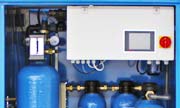
SCM 24
|
|
Cleans 24.000 liters per day
|
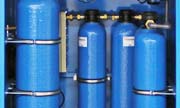
SCM 60
|
|
Cleans 60.000 liters per day
|
Video: How it works
The SCG Advantage
Our market-leading, water cleaning solutions have many advantages. To read more click the items below:
No Chemicals
Our machines and technology does not use any chemicals, at all.
Read more...
No Waste Water
Our machines do not waste any water. Yield = 100%.
Read more...
Low energy use
Uses 50 times less energy than a Reverse Osmosis Machine.
Read more...
Low ownership cost
Lower maintenance and operation costs due to our technology.
Read more...
Easy to install
Simple "plug and play" installation makes for easy deployment.
Read more...
Extremely compact
A compact system, contained in an easy to transport cabinet.
Read more...
Outperforms R.O.
SCG technologies outperform Reverse Osmosis systems.
Read more...
Faster ROI
Get a faster Return on Investment with our systems.
Read more...
Latest News
Latest Blog Posts
| Chemicals in water treatment? |
| Water storage - Whats best for keeping water clean and drinkable? |
| Case: Disaster Management Water Treatment |
Contact SCG
891 Showroom Place
Suite 101
Chula Vista, CA, 91914
Phone: +1 619-878-2730
Contact us by email