







Granular Activated Carbon in a Chemical-Free Treatment Train
Producing safe drinking water without routine chemical dosing requires a treatment train in which every stage has a defined purpose. Granular activated carbon (GAC) is often one of the most valuable stages because it captures many dissolved organic compounds that conventional particle filtration cannot retain. Its role, however, depends on water chemistry, flow rate, contact time, and the contaminants present.
A GAC filter contains porous carbon granules made from materials such as coconut shells, coal, or wood. Activation creates an extensive internal pore network. As water passes through the bed, selected molecules attach to the carbon surface through adsorption. This physical-chemical process can improve taste and odour while reducing pesticides, solvents, natural organic matter, and certain industrial contaminants.
Carbon should be viewed as a specialist stage within a broader purification system. It does not replace disinfection, oxidation, mineral filtration, or membrane treatment when those technologies are required. Correctly positioned, it can reduce the organic load reaching later stages and help create a robust, low-chemical water treatment process.
What GAC Removes From Water
Granular activated carbon is particularly effective against many organic micropollutants. These can include pesticides, herbicides, petroleum-related compounds, chlorinated solvents, pharmaceutical residues, and substances responsible for taste and odour. Its performance is influenced by molecular size, polarity, concentration, temperature, and the presence of competing organic matter.
Some PFAS compounds can also be reduced with selected carbon media, although results vary significantly. Short-chain compounds are generally more difficult to adsorb than long-chain compounds, and a carbon bed that performs well for one contaminant may perform poorly for another. Laboratory testing and pilot trials are therefore more dependable than assumptions based on a contaminant category alone.
GAC is less suitable as a stand-alone barrier for dissolved manganese, arsenic, uranium, hardness, salts, or high levels of suspended solids. It also should not be treated as a guaranteed microbiological barrier. Bacteria can grow within a carbon bed if conditions allow, so upstream clarification and a validated final disinfection or physical barrier may remain necessary.
Positioning Carbon Within The Process
A chemical-free treatment train commonly begins with intake protection, screening, and sediment removal. Depending on the source water, the next stages may include aeration, biological filtration, ultrafiltration, reverse osmosis, or a specialist medium for metals and radionuclides. GAC is usually placed after coarse solids have been removed, because turbidity and particulates can quickly block its pores.
Carbon may serve as a polishing stage near the end of the process, where the water contains relatively low concentrations of competing substances. In other designs, it is placed earlier to reduce organic matter before membranes or sensitive downstream equipment. The best position is determined by the source profile and the treatment objective rather than by a fixed sequence.
This staged approach matters because contaminants behave differently. Arsenic, manganese, bacteria, pesticides, and uranium do not respond equally to the same medium. A useful explanation of why multi-stage filtration is necessary can help decision-makers avoid expecting one filter to solve every water-quality problem.
Selecting The Right Carbon Media
The choice of carbon begins with the water analysis. Iodine number, molasses number, pore-size distribution, ash content, hardness, and particle size all provide useful information, but no single specification predicts performance in every installation. Adsorption tests using the actual water are more meaningful because natural organic matter can compete with target contaminants for available sites.
Empty bed contact time (EBCT) is another central design parameter. It describes the theoretical time water remains in the carbon volume. A short contact time may be sufficient for taste and odour control but inadequate for persistent micropollutants. Bed depth, flow distribution, temperature, and hydraulic loading must be considered together so water does not form preferential channels through the media.
| Treatment objective | Typical role of GAC | Important design consideration | Additional barrier often required |
|---|---|---|---|
| Taste and odour reduction | Adsorbs organic compounds and odour-forming molecules | Sufficient contact time and regular monitoring | Particle filtration or final disinfection |
| Pesticide reduction | Captures many hydrophobic organic pesticides | Media selection and breakthrough testing | Source protection and analytical verification |
| Natural organic matter control | Lowers organic load before downstream treatment | Competing adsorption and bed capacity | Clarification or membrane filtration |
| PFAS reduction | May reduce selected long-chain compounds | Chain length, concentration, and replacement timing | Validated specialist treatment where needed |
| Manganese or arsenic removal | Usually limited as a primary solution | Do not rely on standard GAC without evidence | Oxidation, specialist media, or membrane treatment |
| Microbiological protection | Not a reliable stand-alone disinfection step | Prevent biological growth and monitor the bed | Validated UV, membrane, or other barrier |
Managing Breakthrough And Media Life
Carbon adsorption has a finite capacity. At the beginning of a filter run, contaminants are captured effectively in the upper part of the bed. Over time, the adsorption zone moves downward. When the target compounds begin appearing at the outlet, breakthrough is occurring. Water may still look clear even though the carbon has lost its protective function.
Replacement intervals should therefore be based on measured performance, contaminant loading, flow volume, and operating conditions. Sampling only for taste and odour is insufficient when the system is intended to reduce pesticides or other regulated substances. A monitoring plan should identify target compounds, sampling points, testing frequency, alert levels, and the action required when concentrations rise.
Pre-filtration extends carbon life by reducing suspended solids and oxidised metals. Stable flow distribution prevents channeling, while correct backwashing removes accumulated particles without washing valuable carbon out of the vessel. Operators should also account for start-up water after a media change, because fine carbon particles may initially appear in the effluent.
Operating A Low-Chemical System
A chemical-free treatment train does not mean a maintenance-free installation. GAC vessels need inspection, pressure-drop monitoring, backwashing where appropriate, and hygienic control. If the bed is exposed to warm, nutrient-rich water, biological activity can develop. In some applications, biologically active carbon is intentional and can support biodegradation; in drinking-water systems, its behaviour must be understood and validated.
Spent carbon presents an operational responsibility. Depending on the contaminants it has captured, it may be suitable for thermal reactivation, controlled disposal, or another approved handling route. Reuse can reduce material demand, but it is only appropriate when the reactivation process restores the required adsorption capacity and does not create cross-contamination risks.
The environmental value of GAC comes from reducing or avoiding routine chemical addition, lowering energy demand compared with some intensive processes, and targeting contaminants efficiently. Those benefits are strongest when the carbon stage is correctly sized and replaced before failure. An undersized bed can create false confidence and lead to costly emergency interventions.
Building A Verified Treatment Train
Design should begin with a complete water-quality survey covering seasonal variation. Source water can change after heavy rainfall, drought, agricultural activity, industrial discharge, or shifts in groundwater levels. A single sample may miss contaminant peaks and provide an unrealistic basis for carbon capacity calculations.
Pilot testing can establish adsorption performance, EBCT, pressure loss, backwash requirements, and expected service life. It can also show whether upstream treatment protects the carbon from fouling. For municipal, agricultural, industrial, livestock, building, and mobile applications, the design must reflect different flow patterns and consequences of interruption.
A complete validation programme should connect each contaminant to a treatment mechanism and a measurement method. For example, a specialist medium may target arsenic or manganese, GAC may polish pesticides and organic compounds, and UV or another validated barrier may address microorganisms. This functional separation makes the system easier to operate and easier to explain to regulators and users.
Practical Design Priorities
The following priorities help make GAC a dependable part of a sustainable purification system:
- Analyse raw and treated water for the specific contaminants of concern, including seasonal changes.
- Remove turbidity, suspended solids, and oxidised metals before the carbon bed whenever possible.
- Size the vessel using verified contact time, bed depth, flow rate, and expected contaminant loading.
- Establish outlet monitoring and a planned media replacement or reactivation schedule before commissioning.
- Pair carbon adsorption with specialist treatment and final microbiological protection when the water profile requires it.
A well-designed train can use carbon efficiently rather than treating it as a universal filter. This reduces premature media exhaustion, protects downstream equipment, and makes operating costs more predictable. It also supports the wider objective of producing clean water with minimal chemical consumption and controlled material use.
For a site-specific assessment, a water treatment specialist can compare GAC with oxidation, membrane filtration, specialist adsorption media, and biological processes. Swiss Cleanwater Group provides information on purification technologies and project applications, and a treatment inquiry can begin the discussion around source water, flow requirements, contaminants, and the intended use of the treated water.
Choose the carbon stage for a measured purpose, verify its performance in the actual water, and connect it to complementary barriers. Used in that way, granular activated carbon becomes a precise and sustainable component of a chemical-free treatment train rather than an unsupported promise of universal purification.
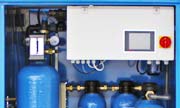
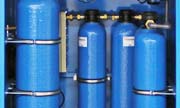
SCM 24
|
|
Cleans 24.000 liters per day
|
SCM 60
|
|
Cleans 60.000 liters per day
|
Video: How it works
The SCG Advantage
Our market-leading, water cleaning solutions have many advantages. To read more click the items below:
No Chemicals
Our machines and technology does not use any chemicals, at all.
Read more...
No Waste Water
Our machines do not waste any water. Yield = 100%.
Read more...
Low energy use
Uses 50 times less energy than a Reverse Osmosis Machine.
Read more...
Low ownership cost
Lower maintenance and operation costs due to our technology.
Read more...
Easy to install
Simple "plug and play" installation makes for easy deployment.
Read more...
Extremely compact
A compact system, contained in an easy to transport cabinet.
Read more...
Outperforms R.O.
SCG technologies outperform Reverse Osmosis systems.
Read more...
Faster ROI
Get a faster Return on Investment with our systems.
Read more...
Latest News
Latest Blog Posts
| Chemicals in water treatment? |
| Water storage - Whats best for keeping water clean and drinkable? |
| Case: Disaster Management Water Treatment |
Contact SCG
891 Showroom Place
Suite 101
Chula Vista, CA, 91914
Phone: +1 619-878-2730
Contact us by email