








Cleaner Car Wash Operations Through Water Reuse
A commercial car wash can use a large volume of water every day, especially during pre-rinsing, foam application, high-pressure washing, and final rinsing. Much of that water leaves the vehicle carrying grit, oil, metals, detergents, tire residue, and organic matter. Sending it directly to a drain increases operating costs and places unnecessary pressure on local water resources.
A well-designed water reclamation system captures this wastewater, removes contaminants, and returns suitable water to selected stages of the wash cycle. The goal is not to make every drop potable. It is to produce reliable non-potable process water for tasks such as underbody washing, wheel cleaning, or the first rinse, while reserving fresh water for applications that require higher quality.
Chemical-free treatment can support this approach by using physical separation, filtration, and membrane technology rather than relying on large doses of coagulants, disinfectants, or other additives. The right design depends on the wash format, incoming water quality, local discharge rules, and the required finish on the vehicle.
Why Wash Water Needs Treatment
Car wash wastewater is a complex stream rather than simple greywater. Sand and road dust settle quickly, while fine particles remain suspended and create turbidity. Hydrocarbons, grease, brake dust, traces of heavy metals, and organic residues can affect filters and pumps. Cleaning products may also contribute surfactants and dissolved compounds that cause foaming or leave marks on paintwork.
The first priority is usually to slow the water down and remove coarse material. Collection channels, settling tanks, screens, and grit chambers protect downstream equipment from abrasion and excessive loading. An oil-water separator may be necessary where fuel, lubricants, or road oils enter the wash bay in significant quantities.
The history of water use shows why efficient recovery has become increasingly important; this water history resource provides useful context for the growing need to protect freshwater supplies. For a car wash, conservation is also a practical financial decision: reducing mains water consumption can lower supply charges, sewer fees, and the cost of handling wastewater.
Building A Reuse Loop
A dependable recycling system begins with separate collection. Water from vehicle washing should be kept apart from sanitary wastewater, stormwater, and highly contaminated maintenance drains. This makes the treatment process more predictable and prevents avoidable contamination of the reuse tank.
After initial settling and separation, the water can pass through cartridge filters, sand or multimedia filters, activated carbon, ultrafiltration, or other membrane systems. Each stage has a specific purpose. Particle filtration reduces suspended solids, carbon can help with some organic compounds and odors, and ultrafiltration provides a barrier against very fine particles, bacteria, and certain colloidal materials.
Storage capacity is just as important as filtration capacity. A buffer tank allows the system to handle busy periods, pauses between wash cycles, and variations in flow. Level sensors, automatic backwashing, pressure monitoring, and turbidity controls help maintain consistent performance without requiring constant manual adjustment.
Treatment Stages And Their Roles
No single filter is suitable for every car wash. A compact self-service site may need a relatively simple recovery loop, while a tunnel wash with high throughput may require multiple filtration stages and automated controls. The system should be sized using actual water consumption, peak flow, contaminant loading, and the percentage of water intended for reuse.
| Treatment stage | Main purpose | Typical place in the system |
|---|---|---|
| Screening and grit removal | Captures leaves, stones, fibers, and coarse sediment | At the collection point |
| Settling or clarification | Reduces heavier suspended solids | Before fine filtration |
| Oil-water separation | Removes floating oils and hydrocarbons | Where vehicle residues are significant |
| Multimedia filtration | Lowers turbidity and suspended particles | Before polishing or membranes |
| Activated carbon | Reduces some organic compounds, odors, and color | When dissolved contaminants affect quality |
| Ultrafiltration or similar membranes | Provides fine separation and microbial reduction | For higher-quality process reuse |
| Disinfection, where required | Controls microbial growth in stored water | According to local rules and risk assessment |
Treatment without added chemicals does not mean that maintenance can be ignored. Filters still need cleaning, backwashing, or replacement, and settled solids must be removed responsibly. A chemical-free system aims to avoid routine dosing and reduce secondary waste, but it still requires proper management of captured sediment, oil, and filter media.
In some applications, reverse osmosis may be considered for very low dissolved-solids water, particularly where spotting on dark vehicles is a concern. However, reverse osmosis produces a concentrate stream and uses more energy than simpler treatment. It should be selected because the water quality target requires it, not as an automatic part of every installation.
Matching Water Quality To The Wash
Recycled water is most effective when each quality level has a defined use. Water with some remaining color or mineral content may be entirely suitable for floor washing, underbody cleaning, or the first wash stage. Final rinsing often demands lower turbidity and fewer dissolved minerals to prevent spots and streaks.
Separating “process water” from “spot-free rinse water” can reduce treatment costs. A car wash may use reclaimed water for most of the cycle and a smaller volume of fresh or polished water for the final finish. This approach cuts freshwater demand without forcing one treatment train to meet the strictest requirement at every point.
Operators should monitor turbidity, conductivity, pH, odor, and microbial indicators where appropriate. The precise parameters depend on the equipment and local regulations. A practical monitoring plan can identify rising contamination before it affects vehicle quality, pumps, membranes, or customer satisfaction.
Chemical-free filtration guidance for a small community water supply can also offer useful principles for evaluating treatment barriers, maintenance needs, and source-water variation; this filtration guidance is relevant when a car wash is comparing physical treatment options.
Operating Without Routine Chemicals
Chemical-free water treatment can reduce the risks associated with overdosing, chemical storage, accidental releases, and unstable water chemistry. It may also simplify staff training and make the system easier to operate at sites where specialized technical support is limited. Physical filtration and membrane separation are especially valuable when the objective is to recover water rather than alter it chemically.
The operating plan should still account for biological growth in tanks and pipework. Stagnant water, warm temperatures, and long storage times can create odor or microbial problems. Good tank design, regular turnover, protected storage, automated flushing, and appropriate disinfection procedures—where required by regulation or risk assessment—help keep recycled water stable.
A clear maintenance schedule is essential. Staff should know when to inspect collection pits, remove settled solids, check separator performance, clean filters, test sensors, and review water-quality results. Keeping records makes it easier to identify seasonal changes, unusually dirty vehicles, or a failing treatment component.
Practical Steps For A Reliable System
Before selecting equipment, a car wash operator should map the complete water cycle. Measure water use by wash stage, identify where wastewater enters the drainage system, and distinguish peak demand from average daily demand. This information prevents oversized equipment, undersized storage, and unrealistic recovery targets.
Useful priorities include:
- Install effective screens, grit removal, and settling before fine filtration.
- Separate stormwater, sanitary wastewater, and heavily contaminated maintenance flows.
- Reserve the highest-quality treated water for final rinsing or other sensitive tasks.
- Use sensors and routine testing to track turbidity, conductivity, levels, and filter pressure.
- Plan in advance for sediment, oil, concentrate, and spent filter disposal.
Local authorities may impose requirements for discharge, water reuse, backflow protection, worker safety, and microbial control. Those requirements should be reviewed before construction, especially when a site connects recycled water equipment to existing plumbing. A qualified treatment provider can help translate regulatory limits and wash-quality goals into a practical system specification.
Turn Water Recovery Into Daily Practice
Reusing water at a car wash is most successful when treatment technology, site drainage, storage, and operating habits are designed as one system. Capturing wastewater alone will not deliver savings if solids quickly block filters or if recycled water is used without matching its quality to the task.
Swiss Cleanwater Group can help organizations assess water-treatment requirements for commercial, municipal, industrial, and mobile applications. Contact the company to discuss a site-specific water audit, treatment targets, and a low-waste recovery system that supports dependable washing while reducing reliance on freshwater.
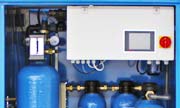
SCM 24
|
|
Cleans 24.000 liters per day
|
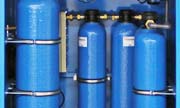
SCM 60
|
|
Cleans 60.000 liters per day
|
Video: How it works
The SCG Advantage
Our market-leading, water cleaning solutions have many advantages. To read more click the items below:
No Chemicals
Our machines and technology does not use any chemicals, at all.
Read more...
No Waste Water
Our machines do not waste any water. Yield = 100%.
Read more...
Low energy use
Uses 50 times less energy than a Reverse Osmosis Machine.
Read more...
Low ownership cost
Lower maintenance and operation costs due to our technology.
Read more...
Easy to install
Simple "plug and play" installation makes for easy deployment.
Read more...
Extremely compact
A compact system, contained in an easy to transport cabinet.
Read more...
Outperforms R.O.
SCG technologies outperform Reverse Osmosis systems.
Read more...
Faster ROI
Get a faster Return on Investment with our systems.
Read more...
Latest News
Latest Blog Posts
| Chemicals in water treatment? |
| Water storage - Whats best for keeping water clean and drinkable? |
| Case: Disaster Management Water Treatment |
Contact SCG
891 Showroom Place
Suite 101
Chula Vista, CA, 91914
Phone: +1 619-878-2730
Contact us by email