








Treating Water for Carpet Cleaning With Less Chemical Waste
Carpet cleaning depends on water at nearly every stage: pre-spray dilution, hot-water extraction, rinsing, equipment flushing, and the final recovery process. When that water contains hardness minerals, iron, manganese, sediment, or microbial contamination, cleaners often compensate with stronger detergents, extra rinsing, or repeated treatments. These responses raise operating costs and can leave residues in carpet fibres.
A filtration-led approach changes the process at its source. By improving the quality of incoming and recycled water, cleaning companies can use detergents more efficiently, protect pumps and heating components, and reduce the volume of chemical-laden wastewater. The goal is not to eliminate every cleaning product, since soils and stains still require targeted chemistry, but to create water conditions that support lower-impact cleaning.
This is especially valuable for mobile operators, hotels, schools, healthcare facilities, property managers, and large commercial sites. Each location may have different water chemistry, so treatment should be selected from laboratory results rather than from a generic equipment list.
Why Water Quality Affects Carpet Cleaning
Hard water contains calcium and magnesium that can react with surfactants and reduce their cleaning performance. A detergent may still produce foam, but visible foam is not proof that soil is being removed effectively. Mineral interactions can also contribute to dullness, sticky residues, and slower rinsing, particularly when a cleaning solution is repeatedly applied.
Sediment creates a different set of problems. Fine particles can block spray jets, restrict inline filters, wear pump components, and interfere with valves in truck-mounted or portable extractors. Iron and manganese may stain light-coloured fibres or produce discolouration when they oxidize. If untreated water is used for rinsing, a cleaner may unintentionally add contaminants after removing the original soil.
Microbiological quality matters when water is stored in tanks or transported between jobs. Warm, stagnant water can support biofilm formation, producing odours and hygiene concerns. Filtration and disinfection are separate functions: a filter can remove particles and some contaminants, while an appropriate disinfection stage may be needed to control microorganisms.
Filtration Methods That Support Lower Chemical Use
A practical system usually begins with sediment filtration. This stage captures sand, rust, silt, and other suspended matter before water reaches finer treatment media or cleaning equipment. Cartridge filters are simple to install, while larger operations may use backwashing multimedia filters that offer greater flow capacity and lower replacement frequency.
Activated carbon can reduce chlorine, unpleasant tastes, odours, and some organic compounds. It may be useful where municipal water contains a noticeable chlorine residual that affects odour or interacts with certain cleaning formulations. Carbon media must be sized for contact time and flow; an undersized unit can provide disappointing results and may become a source of bacterial growth if poorly maintained.
Water softening and membrane treatment address dissolved substances rather than visible particles. A softener exchanges calcium and magnesium ions, while reverse osmosis removes a broad range of dissolved salts and contaminants. Depending on the source water, advanced systems can also target arsenic, uranium, fluoride, pesticides, or manganese. Swiss Cleanwater Group describes approaches for fluoride removal without additives, demonstrating why treatment selection should reflect the specific contaminant profile.
Matching Treatment to the Cleaning Operation
A small carpet-cleaning business may need only a sediment filter, carbon stage, or compact softener at its filling point. The best choice depends on incoming water analysis, daily consumption, pressure, and the sensitivity of the equipment. Treating all water can be unnecessary if only the extractor’s fill water requires improvement.
High-volume operations have different priorities. A hotel laundry, airport, university, or facilities contractor may need pre-filtration, softened water, reverse osmosis, storage management, and monitoring controls. Flow demand must be calculated from simultaneous equipment use, peak filling periods, and the recovery rate of the treatment system. If pressure drops during operation, cleaning productivity can suffer even when the treated water is technically suitable.
Mobile cleaning units also need protection from vibration, temperature changes, and inconsistent source water. A compact treatment package can be installed at a depot or mounted near the filling station. When water is transported in tanks, tank hygiene, turnover time, and scheduled sanitation become as important as the filter itself.
| Water issue | Likely cleaning impact | Useful treatment response |
|---|---|---|
| Sand, rust, and silt | Blocked jets, abrasive wear, cloudy rinse water | Sediment or multimedia filtration |
| Calcium and magnesium | Reduced detergent efficiency, mineral residue | Water softening or membrane treatment |
| Iron and manganese | Yellow, orange, or dark staining | Oxidation and filtration selected for the source |
| Chlorine and odour compounds | Unpleasant smell and formulation interference | Activated carbon with correct contact time |
| Dissolved salts and selected contaminants | Residue, spotting, inconsistent rinse quality | Reverse osmosis or specialized media |
| Microbial growth in stored water | Odour, biofilm, hygiene concerns | Tank management and suitable disinfection |
Reducing Detergent, Water, And Waste
Cleaner water can allow operators to review chemical dosing rather than automatically increasing it. A detergent that performs consistently in low-hardness water may require a smaller dose than the same product used with mineral-rich water. Lower dosing reduces product purchases, packaging waste, and the chemical load in recovered wastewater.
Effective filtration can also reduce repeat passes. When rinse water does not redeposit minerals or suspended particles, fibres may dry with a cleaner appearance and less tacky residue. Faster drying can reduce the risk of odour and customer complaints, especially in humid environments or heavily used buildings.
The environmental benefit depends on correct operation. Filters consume resources through replacement media, backwash water, or reject water from reverse osmosis. A responsible design compares the full water balance, including wastewater generation, maintenance materials, electricity, and transport. In some applications, a low-reject membrane, recyclable media, or treated-water reuse may offer a better result than a standard system selected without site measurements.
Protecting Equipment And Controlling Costs
Water treatment supports the performance of pumps, heaters, injectors, hoses, and recovery systems. Lower mineral loading can reduce scale on heating elements, while sediment control protects moving parts and narrow passages. Fewer breakdowns mean less emergency travel, replacement equipment, and downtime between scheduled jobs.
Operating cost should be assessed over the equipment’s service life rather than by purchase price alone. Electricity demand, consumables, cleaning cycles, replacement cartridges, maintenance labour, and water losses all affect the financial outcome. A system designed around actual flow and contaminant levels may provide better value than an oversized installation that requires excessive energy or frequent servicing. Businesses can use this low ownership cost perspective when comparing treatment technologies.
Automation can make maintenance more reliable. Differential-pressure gauges show when sediment filters are becoming restricted, while conductivity meters help monitor reverse-osmosis performance. Flow meters, sampling points, and service logs create a record that can connect water quality with detergent use, cleaning results, and equipment failures.
Designing A Practical Treatment Program
The first step is a water analysis covering hardness, pH, conductivity, turbidity, iron, manganese, chlorine, and any contaminants relevant to the local source. Private wells may require additional testing for bacteria, arsenic, nitrate, or pesticides. A laboratory report gives engineers a basis for selecting media, flow rates, and treatment stages.
The next step is to define the cleaning workflow. Important details include litres used per job, peak demand, storage volume, source-water pressure, available drainage, and whether water will be used immediately or stored. The system should also account for the manufacturer’s limits for carpet extractors, boilers, pumps, and chemical injectors.
Recommendations for a lower-impact installation include:
- Test source water before choosing softeners, carbon, membranes, or specialty media.
- Install sediment protection before fine filters and sensitive cleaning equipment.
- Set detergent doses through cleaning trials rather than relying on maximum label rates.
- Track treated-water volume, conductivity, filter pressure, chemical use, and repeat visits.
- Create a maintenance schedule for cartridges, backwashing, tanks, membranes, and disinfection.
Training completes the program. Staff should know how to identify pressure loss, unusual odour, scale, staining, and changes in rinse performance. They should also understand that filtration is not a substitute for correct carpet inspection, safe chemical handling, controlled dwell time, and thorough extraction.
Building A Cleaner Water Workflow
Treating water for carpet cleaning is most effective when it is integrated into the entire service process. Water quality, chemical concentration, agitation, temperature, extraction speed, and drying conditions all influence the final result. Filtration removes avoidable variation so technicians can work with more predictable conditions.
For larger facilities, the treatment system can support wider water-management goals. Source water may be treated for cleaning, equipment protection, livestock, production, or drinking-water applications through separate, purpose-built lines. This avoids using an inappropriate treatment level for every application and helps organizations measure where water and chemicals are actually being consumed.
A well-designed installation should leave room for testing and future adjustment. Changes in municipal supply, seasonal well conditions, cleaning volume, or equipment can alter treatment requirements. Regular sampling and performance records make it easier to identify those changes before they become visible stains, damaged machinery, or increased chemical spending.
Swiss Cleanwater Group provides water-treatment technologies for municipal, industrial, agricultural, building, and mobile applications. Contact the company to discuss source-water testing, contaminant removal, equipment protection, and a treatment configuration that helps carpet-cleaning operations deliver consistent results with less chemical waste.
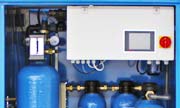
SCM 24
|
|
Cleans 24.000 liters per day
|
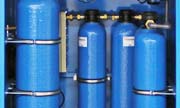
SCM 60
|
|
Cleans 60.000 liters per day
|
Video: How it works
The SCG Advantage
Our market-leading, water cleaning solutions have many advantages. To read more click the items below:
No Chemicals
Our machines and technology does not use any chemicals, at all.
Read more...
No Waste Water
Our machines do not waste any water. Yield = 100%.
Read more...
Low energy use
Uses 50 times less energy than a Reverse Osmosis Machine.
Read more...
Low ownership cost
Lower maintenance and operation costs due to our technology.
Read more...
Easy to install
Simple "plug and play" installation makes for easy deployment.
Read more...
Extremely compact
A compact system, contained in an easy to transport cabinet.
Read more...
Outperforms R.O.
SCG technologies outperform Reverse Osmosis systems.
Read more...
Faster ROI
Get a faster Return on Investment with our systems.
Read more...
Latest News
Latest Blog Posts
| Chemicals in water treatment? |
| Water storage - Whats best for keeping water clean and drinkable? |
| Case: Disaster Management Water Treatment |
Contact SCG
891 Showroom Place
Suite 101
Chula Vista, CA, 91914
Phone: +1 619-878-2730
Contact us by email