









Treating Dairy Farm Water for Healthier Herds and Safer Operations
Reliable water quality is essential on every dairy farm. Cattle consume large volumes of water each day, and the quality of that water affects hydration, feed intake, milk production, animal comfort, and the cleanliness of milking equipment. When a private well or surface source contains elevated iron and manganese, the effects can extend throughout the farm’s drinking-water and cleaning systems.
Iron and manganese are naturally occurring minerals found in many groundwater sources. They are not always visible when water is drawn from a well. After exposure to oxygen, however, dissolved iron can form reddish-brown particles, while manganese may create dark deposits, metallic tastes, and stubborn staining. A treatment strategy should therefore address both the dissolved contaminants and the conditions that cause them to accumulate.
Modern water purification can reduce these problems without adding unnecessary chemicals or creating large waste streams. The right solution begins with laboratory testing, continues with properly selected oxidation and filtration equipment, and ends with routine monitoring suited to the farm’s herd size and water demand.
Why Iron And Manganese Matter On Dairy Farms
Water with excessive iron often develops a metallic taste and unpleasant odor after oxidation. Cattle may drink less of it, particularly when a cleaner alternative is available. Reduced water intake can affect feed consumption and rumen function, while insufficient hydration may contribute to heat stress and lower milk yield. Water quality is especially important during warm weather, when lactating cows have increased water needs.
Manganese can produce black or brown deposits in troughs, water lines, valves, and storage tanks. Iron bacteria may grow inside plumbing and create slimy masses that restrict flow. These deposits can shelter microorganisms and make cleaning more difficult. A system that appears to have adequate pumping capacity may still deliver too little water at the trough because mineral buildup has narrowed the internal diameter of pipes and fittings.
The consequences also reach the milking parlor. Iron and manganese can stain surfaces, interfere with detergents, and leave deposits on heat exchangers or washing equipment. Water treatment for agriculture should therefore be viewed as part of herd-health management, sanitation, and infrastructure protection rather than as a separate utility expense.
Test The Source Before Selecting Equipment
A complete water analysis is the foundation of effective treatment. Testing should measure total iron, dissolved iron where relevant, manganese, pH, alkalinity, hardness, turbidity, electrical conductivity, and microbiological indicators. Nitrate, arsenic, uranium, pesticides, and other contaminants may also need evaluation, depending on local geology and agricultural conditions.
Samples should represent the water that animals actually receive. A sample taken directly from the well may differ from water collected at a distant trough or in the milking area. Corrosion, storage tanks, stagnant pipe sections, and biofilm can alter the final quality. Seasonal testing is useful where groundwater levels or surface-water conditions change during the year.
The analysis also needs to include operating information. A treatment supplier should know the peak flow required when several troughs refill at once, the daily water volume, available pressure, well-pump capacity, and whether the farm needs drinking water treatment, wash-water treatment, or both. The water purification solutions available for farms and other demanding sites can then be matched to actual contaminant levels and flow requirements.
How Iron And Manganese Removal Works
Most iron and manganese treatment systems use oxidation followed by filtration. Oxidation converts dissolved minerals into solid particles that can be captured by a properly selected filter medium. Depending on water chemistry, oxidation may be achieved through aeration, contact with oxygen, catalytic media, or another process designed for the specific source.
Manganese is often more difficult to remove than iron. It may require a higher oxidation potential, longer contact time, a suitable filter bed, or carefully controlled pH. A system designed only for iron can therefore perform poorly when manganese is also present. The treatment design should account for both contaminants, along with flow changes caused by automatic trough filling and cleaning operations.
Chemical-free or low-chemical treatment can be attractive for livestock facilities because it simplifies storage, handling, and dosing. However, “chemical-free” does not mean maintenance-free. Filters still require backwashing, drains must be sized correctly, and treated water should be tested to confirm performance. A supplier should explain the expected pressure loss, media life, backwash frequency, and protection required for pumps and control valves.
Comparing Treatment Options For Farm Water
Different systems suit different source-water conditions. Aeration and filtration can work well when iron is readily oxidized and the farm has adequate space for contact and backwash equipment. Catalytic media can improve removal in compact installations, while specialized manganese media may be required for more resistant dissolved manganese.
Point-of-use filters can protect a small number of drinking stations, but they are rarely sufficient for a dairy farm with multiple barns, wash-down areas, and storage tanks. Whole-farm treatment provides more consistent control and protects the distribution network. In some operations, a central system for livestock water is combined with a separate polishing stage for sensitive milking or processing equipment.
| Treatment approach | Best suited to | Main benefits | Points to verify |
|---|---|---|---|
| Aeration and filtration | Oxidizable iron and moderate manganese | Low chemical demand and straightforward operation | Contact time, air management, and backwash drainage |
| Catalytic filtration media | Dissolved iron and manganese in compact systems | High removal efficiency in a relatively small footprint | pH range, media replacement, and peak flow |
| Oxidation with specialized filtration | Difficult manganese or mixed contaminants | Flexible performance for challenging groundwater | Control settings, energy use, and operator training |
| Point-of-use filtration | Individual troughs or small buildings | Targeted protection with lower initial cost | Cartridge changes, flow limits, and uneven coverage |
| Central treatment plant | Multiple barns and high daily demand | Consistent quality across the farm | Pump capacity, storage, automation, and service access |
Protect Troughs, Plumbing, And Milking Areas
Treatment works best when clean water is delivered through a clean distribution system. Existing deposits may continue to break loose after a new filter is installed, causing temporary discoloration or clogging. Pipes, troughs, float valves, storage tanks, and drinker bowls should be inspected and cleaned according to a planned sanitation procedure.
Water velocity and line design also influence mineral buildup. Dead legs, oversized storage tanks, and long sections of rarely used pipe allow sediment and biofilm to accumulate. Automatic flushing points, accessible drain valves, and correctly sized lines make the system easier to maintain. Troughs should be positioned and cleaned so cattle can drink comfortably without excessive contamination from feed, bedding, or manure.
Cooling and cleaning systems deserve separate attention. Dairy farms may use substantial water for milk cooling, wash-down, refrigeration, and heat rejection. Where water is recirculated in industrial or agricultural cooling equipment, a biocide-free treatment approach may help reduce chemical handling while controlling deposits and biological growth, provided the technology is selected for the system’s specific water chemistry.
Build A Practical Maintenance Program
A treatment plant should be simple enough for farm staff to operate during busy routines. Automatic valves, flow alarms, pressure gauges, and remote monitoring can reduce the chance that a clogged filter or failed backwash cycle will remain unnoticed. Clear labels and written procedures are especially valuable when several employees share responsibility for livestock water.
Useful operating records include raw-water and treated-water test results, pressure before and after filtration, backwash dates, unusual odors or colors, and any changes in animal drinking behavior. These records can reveal gradual deterioration before it becomes a production problem. They also help service technicians adjust the system efficiently.
Farm managers can strengthen daily performance by focusing on a few practical priorities:
- Test the well and the water at representative livestock outlets at least on a scheduled basis.
- Size equipment for peak trough demand rather than average daily consumption.
- Inspect and clean troughs, tanks, float valves, and low-flow sections of pipe.
- Track filter pressure, backwash performance, and any changes in water appearance or taste.
- Keep treatment equipment, drains, and electrical controls accessible for safe servicing.
Connect Water Quality With Herd Management
Clean, palatable water supports normal drinking behavior and helps cattle cope with heat, lactation, transport, and changes in feed intake. Water quality should be reviewed alongside nutrition, ventilation, bedding, and milking hygiene. If animals drink less than expected, mineral content is one possible factor, but trough access, temperature, cleanliness, and flow rate should also be assessed.
A well-designed treatment system can reduce staining, protect pumps and valves, extend the service life of plumbing, and improve the reliability of cleaning operations. It can also reduce the need for repeated manual descaling and help farms use water and energy more efficiently. These benefits are strongest when treatment is integrated with source protection and regular maintenance.
Iron and manganese control is a site-specific engineering task. The best solution depends on the water analysis, herd size, peak demand, available space, discharge arrangements, and the farm’s operating priorities. Swiss Cleanwater Group can help assess these factors and identify a treatment configuration suited to livestock health and dependable farm operations. Contact the company to discuss your water results and plan a reliable path to cleaner drinking water across the dairy.
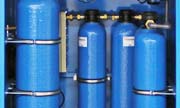
SCM 24

|
|
Cleans 24.000 liters per day
|
SCM 60
|
|
Cleans 60.000 liters per day
|
Video: How it works

The SCG Advantage
Our market-leading, water cleaning solutions have many advantages. To read more click the items below:
No Chemicals
Our machines and technology does not use any chemicals, at all.
Read more...
No Waste Water
Our machines do not waste any water. Yield = 100%.
Read more...
Low energy use
Uses 50 times less energy than a Reverse Osmosis Machine.
Read more...
Low ownership cost
Lower maintenance and operation costs due to our technology.
Read more...
Easy to install
Simple "plug and play" installation makes for easy deployment.
Read more...
Extremely compact
A compact system, contained in an easy to transport cabinet.
Read more...
Outperforms R.O.
SCG technologies outperform Reverse Osmosis systems.
Read more...
Faster ROI
Get a faster Return on Investment with our systems.
Read more...
Latest News
Latest Blog Posts
| Chemicals in water treatment? |
| Water storage - Whats best for keeping water clean and drinkable? |
| Case: Disaster Management Water Treatment |
Contact SCG
891 Showroom Place
Suite 101
Chula Vista, CA, 91914
Phone: +1 619-878-2730
Contact us by email