






Chemical-Free Water Treatment for Greenhouse Irrigation
Greenhouse crops depend on consistent irrigation water, yet the same warm, bright conditions that support healthy plants can encourage algae in tanks, channels, filters and drip lines. Algae may begin as a green film on a reservoir wall before spreading through recirculating water, blocking emitters and creating a habitat for unwanted microorganisms.
A practical water-management strategy combines source-water testing, light control, filtration and routine maintenance. For Australian growers, this approach is especially useful where bore water, harvested rainwater, recycled water or variable municipal supplies must be managed carefully without adding treatment chemicals to the irrigation system.
Why Algae Develops In Greenhouse Water
Algae need light, moisture, nutrients and time. An uncovered storage tank exposed to the Australian sun can provide all four, particularly when fertiliser solution, plant debris or dust enters the water. Warm conditions in Queensland and the Northern Territory can accelerate growth, while enclosed glasshouses in Sydney, Melbourne and Adelaide may create humid pockets where algae persists around channels and wet surfaces.
The first visible signs are often a slippery coating, floating strands, green deposits near outlets or a musty odour. The problem can then move into fertigation equipment, fine filters and drip irrigation lines. Algae can consume nutrients intended for crops, alter water quality and break into particles that lodge in pressure-compensating emitters.
Recirculating hydroponic systems require special attention because water remains in use for longer periods. A small contamination point can be distributed throughout the greenhouse unless storage, return lines and treatment equipment are designed as one water circuit.
Start With A Complete Water Assessment
Before selecting equipment, test the source and the water at several points in the system. Important measurements include turbidity, pH, electrical conductivity, hardness, iron, manganese, alkalinity and microbiological indicators. Testing should cover bore water, rainwater tanks and recycled water separately because each source carries a different risk profile.
In Western Australia, bore water may have elevated salinity or hardness. Around the Murray–Darling Basin, irrigation supplies can vary with seasonal conditions and local salinity pressures. Rainwater collected from greenhouse roofs may appear clean while carrying bird waste, dust, organic matter and roofing residues. These differences affect the choice of prefiltration, membranes and disinfection.
A water analysis also helps distinguish algae from other causes of blocked irrigation. Mineral scale, iron deposits, root fragments and biofilm can look similar inside a narrow dripper. Correct diagnosis prevents a grower from installing a basic screen filter when dissolved contaminants or microbial contamination require a deeper treatment process.
Block Light Before Treating The Water
The simplest algae-control measure is to prevent light from reaching stored water. Use opaque tanks, closed lids, shaded pipework and covered channels wherever practical. Repair cracked tank covers and eliminate unnecessary transparent sections between the reservoir and the irrigation manifold.
Shade cloth over a greenhouse may reduce solar gain, but it does not replace a covered storage tank. A black or UV-stable tank can reduce photosynthesis, while clean, sealed access points help prevent dust and organic material from entering. Keeping tanks away from direct afternoon sun is particularly valuable during hot Australian summers.
Good housekeeping supports this physical barrier. Remove dead leaves, spilled growing media and fertiliser residue from around tanks and channels. Avoid returning visibly dirty water to a clean reservoir without screening and treatment. Light exclusion slows algae growth, although it will not remove organisms already present in the water or eliminate deposits attached to pipe walls.
Build A Chemical-Free Treatment Train
A reliable system normally uses several physical treatment stages rather than relying on one device. Coarse screening can catch leaves and insects, followed by sediment filtration to remove suspended particles. A finer cartridge, ultrafiltration membrane or another suitable barrier can reduce smaller particles and microorganisms before water reaches the fertigation equipment.
Ultraviolet treatment can inactivate algae cells and many microorganisms when the water has low turbidity and the UV unit receives the correct flow rate. It does not remove dead cells, dissolved salts or established slime from pipes. For this reason, UV works best after prefiltration and alongside tank hygiene, line flushing and light exclusion.
Where the source contains multiple contaminants, multi-stage filtration may be more appropriate than a single filter. Reverse osmosis can help where salinity or specific dissolved substances threaten crop performance, although it produces a reject stream and needs careful management. The treatment design should match the crop, water source, flow rate and level of recirculation.
Protect Drip Lines And Fertigation Equipment
Even clear water can carry fine organic particles into a greenhouse irrigation network. Install filtration before pumps, injectors and sensitive emitters, and select the filter rating according to the smallest passage in the system. A pressure differential gauge can show when a filter is loading up, allowing servicing before flow becomes uneven.
Flush mainlines, submains and lateral lines on a planned schedule. Open the ends of lines long enough to remove settled particles, then inspect emitters in representative greenhouse zones. Uneven flow, dry areas and changing pressure are early indications that algae, sediment or biofilm is affecting distribution.
Fertiliser management matters as well. Excess nutrients that remain in a warm, illuminated tank can feed algae, while poorly mixed concentrates may leave deposits in injectors. Keep stock solutions separate from treated irrigation water until the correct injection point, and verify the final electrical conductivity and pH required by the crop.
Manage Recirculation And Seasonal Conditions
Closed-loop systems save water, an important benefit in drought-prone regions, but every cycle can concentrate contaminants. Monitor return-water turbidity, electrical conductivity and temperature, and establish a controlled bleed or treatment loop where required. Water should not be returned to the crop simply because it looks clear.
Greenhouse operators in Melbourne may face cool winter conditions followed by rapid spring growth, while growers near Darwin or Brisbane may manage high temperatures for much of the year. These seasonal shifts change irrigation demand, tank temperature and algae pressure. Treatment capacity and flushing frequency should be reviewed before periods of intense production.
Australian water restrictions and variable rainfall also make storage planning important. Rainwater tanks can supplement mains or bore supplies, but they need screened inlets, first-flush diversion where appropriate and regular inspection. If recycled water is used, the treatment system should be selected around its known microbial and chemical profile rather than assuming that filtration alone makes every source suitable for every crop.
Maintain The System Without Routine Chemicals
Chemical-free water treatment still requires disciplined maintenance. Clean tank walls and covers, inspect ultraviolet lamps and sleeves, replace loaded cartridges, and follow membrane cleaning instructions from the equipment manufacturer. A filter that is bypassed, damaged or overdue for service can undermine the rest of the treatment train.
Keep records of pressure, flow, conductivity, turbidity and microbiological test results. A simple log can reveal gradual changes before they affect crop quality. It also helps compare bore, rainwater and mains supplies when switching sources during dry periods or water restrictions.
For a treatment system matched to municipal, agricultural and commercial requirements, growers can review the capabilities of the Swiss Cleanwater Group. Appropriate sizing, installation and monitoring make it easier to control algae while preserving irrigation efficiency and avoiding unnecessary chemical dosing.
A clean water strategy should be designed around the entire greenhouse: source, storage tank, filtration, fertigation, distribution and return loop. Arrange a water assessment, test each supply, and set a maintenance schedule before algae reaches the crop root zone or blocks critical emitters. With the right physical barriers and treatment stages, Australian growers can protect plant health, reduce water waste and maintain dependable irrigation without routine chemicals.
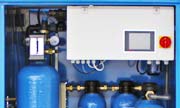
SCM 24
|
|
Cleans 24.000 liters per day
|
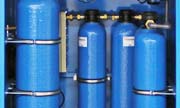
SCM 60
|
|
Cleans 60.000 liters per day
|
Video: How it works
The SCG Advantage
Our market-leading, water cleaning solutions have many advantages. To read more click the items below:
No Chemicals
Our machines and technology does not use any chemicals, at all.
Read more...
No Waste Water
Our machines do not waste any water. Yield = 100%.
Read more...
Low energy use
Uses 50 times less energy than a Reverse Osmosis Machine.
Read more...
Low ownership cost
Lower maintenance and operation costs due to our technology.
Read more...
Easy to install
Simple "plug and play" installation makes for easy deployment.
Read more...
Extremely compact
A compact system, contained in an easy to transport cabinet.
Read more...
Outperforms R.O.
SCG technologies outperform Reverse Osmosis systems.
Read more...
Faster ROI
Get a faster Return on Investment with our systems.
Read more...
Latest News
Latest Blog Posts
| Chemicals in water treatment? |
| Water storage - Whats best for keeping water clean and drinkable? |
| Case: Disaster Management Water Treatment |
Contact SCG
891 Showroom Place
Suite 101
Chula Vista, CA, 91914
Phone: +1 619-878-2730
Contact us by email