







Treating Greenhouse Water for Nutrition and Pathogen Control
Greenhouse crops depend on water for far more than hydration. Irrigation water carries dissolved nutrients into the root zone, influences substrate chemistry, and affects how reliably plants absorb calcium, magnesium, iron, and trace elements. At the same time, the same water can transport bacteria, fungi, algae, and other contaminants that threaten crop health.
A successful water-treatment program therefore has to protect plants without stripping away useful minerals or creating an unstable nutrient solution. The right approach depends on the source water, crop type, irrigation method, growing medium, and level of recirculation. Water from a municipal supply may need different treatment from rainwater, a borehole, or a surface reservoir.
The objective is a consistent supply with predictable chemistry and a low biological risk. That requires more than choosing a filter by flow rate. It calls for source-water testing, targeted purification, hygienic storage, and routine monitoring of the treated water and the fertigation system.
Water Quality Starts At The Root Zone
Source-water analysis should include pH, electrical conductivity, alkalinity, hardness, sodium, chloride, iron, manganese, and any locally relevant contaminants. Agricultural water may also contain arsenic, uranium, pesticides, or microbial contamination. Even when concentrations are below drinking-water limits, repeated irrigation can cause salts to accumulate in slabs, soil, or hydroponic channels.
Water quality also changes during storage and distribution. Warm tanks, stagnant pipe sections, organic debris, and poorly cleaned filters create favorable conditions for microbial growth. Biofilm can shelter pathogens from brief disinfection events and later release them into irrigation lines, where they spread rapidly through drippers or spray nozzles.
A treatment design should consider the complete path from intake to root zone. Pre-filtration protects downstream equipment, contaminant-specific media can target dissolved pollutants, and final disinfection can reduce viable organisms before water reaches sensitive crops. Each stage should be selected to preserve a stable flow and avoid unnecessary chemical loading.
Nutrient Delivery Requires Controlled Chemistry
Fertigation works best when the treated water has a known and repeatable mineral profile. High alkalinity can push pH upward and reduce the availability of iron, manganese, phosphorus, and certain micronutrients. Excess sodium and chloride can damage roots and foliage, while too much calcium or magnesium can interfere with nutrient balance and cause precipitation in concentrated stock solutions.
Reverse osmosis can reduce a broad range of dissolved salts, but very low-mineral water is not automatically ideal for crops. It may require remineralization or precise fertilizer blending to provide adequate buffering and prevent aggressive water from affecting equipment or substrate chemistry. In contrast, selective filtration may be preferable when only manganese, iron, arsenic, or another specific contaminant must be removed.
Treatment should be integrated with nutrient management rather than operated as a separate utility. Growers can compare source-water and drain-water EC, monitor pH at the injector and at the outlet, and test runoff or leachate for sodium and chloride. These measurements reveal whether the irrigation recipe is reaching the root zone as intended or whether salts are accumulating between irrigation cycles.
Pathogen Control Without Losing Crop Performance
Pathogen management begins with excluding contamination. Covered reservoirs, sealed pipework, clean tank vents, and backflow prevention reduce the chance that treated water will be recontaminated. Filters should be sized for the actual irrigation flow and maintained before pressure loss causes bypassing or uneven distribution.
Ultraviolet treatment can inactivate microorganisms without adding a residual chemical, provided the water has low enough turbidity and the equipment receives the correct dose. Ozone and other advanced oxidation methods can also support microbial control, but they require careful engineering because excessive exposure may affect organic additives, beneficial organisms, or sensitive plant tissues.
Disinfection is most effective when paired with physical cleaning. Irrigation lines, emitters, mixing tanks, and return channels need scheduled sanitation, especially in recirculating systems. Growers should also distinguish between water intended for direct crop contact and water used for non-contact purposes, such as equipment washing, because the required treatment intensity may differ.
Selecting Treatment For Different Water Sources
Rainwater often has low mineral content, but collection surfaces can introduce dust, bird waste, roofing residues, and organic matter. A screened intake, sediment filter, covered tank, and microbial barrier can improve its suitability for fertigation. Stored rainwater should be protected from sunlight where possible, since algae growth can create both biological and operational problems.
Borehole water is usually more consistent than surface water, yet it may contain elevated iron, manganese, hardness, arsenic, fluoride, or uranium. These constituents can stain equipment, clog emitters, affect nutrient availability, or create long-term accumulation in soil. Treatment media must be chosen according to the contaminant and verified under the site’s pH, temperature, and flow conditions.
Surface water and recycled drainage present a higher biological burden. They may carry suspended solids, algae, plant debris, pesticides, and plant pathogens. A staged system with clarification, fine filtration, and disinfection is often necessary. Recirculation also requires close monitoring because contaminants and nutrients become concentrated as water passes repeatedly through the greenhouse.
Microplastics may enter water through atmospheric deposition, storage materials, pipes, or degraded equipment. When this is relevant to the site, growers can review advanced filtration media as part of a broader particulate-control strategy, while still checking that the chosen system does not remove beneficial nutrient ions.
Comparing Treatment Options In Practice
No single process solves every greenhouse water problem. A suitable system balances contaminant removal, microbial reduction, nutrient preservation, energy use, waste production, and maintenance requirements. The following comparison provides a practical starting point rather than a substitute for laboratory testing.
| Treatment approach | Main role | Nutrient impact | Pathogen control | Important considerations |
|---|---|---|---|---|
| Sediment and multimedia filtration | Removes suspended solids, rust, and organic particles | Usually low | Limited on its own | Protects emitters and UV equipment; requires backwashing or media service |
| Catalytic or adsorption media | Targets contaminants such as manganese, arsenic, or selected pesticides | Depends on media and chemistry | Usually indirect | Requires correct contact time, pH control, and performance monitoring |
| Activated carbon | Reduces some organic compounds, odors, and chlorine | Generally low for minerals | Can harbor biology if neglected | Needs regular replacement or regeneration and careful sanitation |
| Ultraviolet treatment | Inactivates bacteria, viruses, and some fungi | None | Strong when turbidity is controlled | Requires lamp cleaning, dose verification, and stable flow |
| Ozone or advanced oxidation | Oxidizes selected compounds and supports disinfection | May alter some dissolved compounds | Strong when properly engineered | Needs off-gas management and material compatibility checks |
| Reverse osmosis | Reduces dissolved salts and many contaminants | Removes useful minerals as well | Not a complete disinfection barrier | Produces concentrate and requires remineralization or nutrient adjustment |
The best configuration may combine two or more methods. For example, a borehole system could use oxidation and media filtration for iron and manganese, followed by UV for microbial control. A recirculating hydroponic operation might need fine filtration, nutrient correction, and a disinfection step that does not destabilize the fertilizer solution.
Monitoring Keeps Treatment Predictable
Water treatment performance changes as media becomes exhausted, filters load with solids, lamps lose output, or flow rates increase. A pressure gauge before and after each major filter can reveal clogging early. Flow measurement confirms whether contact time and UV exposure remain within the design range.
For media-based treatment, the breakthrough curve helps explain why a system can appear effective for weeks and then begin releasing a contaminant as capacity is consumed. Sampling only at installation may miss this change. A monitoring schedule should match the risk, with more frequent checks for high-consequence contaminants.
Useful operational records include source-water results, treated-water results, EC, pH, temperature, turbidity, pressure drop, disinfectant performance, and media replacement dates. These records allow greenhouse managers to connect changes in crop symptoms or emitter performance with actual water conditions rather than relying on visual assumptions.
Practical Priorities For Greenhouse Operators
A treatment system becomes easier to manage when responsibilities, thresholds, and maintenance intervals are defined before commissioning. The following priorities help connect water safety with crop nutrition:
- Test the source water and irrigation return water through a qualified laboratory before selecting equipment.
- Separate contaminant removal from disinfection so each stage can be monitored and serviced appropriately.
- Set target ranges for pH, EC, alkalinity, sodium, chloride, turbidity, and microbial indicators.
- Protect treated water from recontamination through covered storage, hygienic pipework, and backflow prevention.
- Record pressure, flow, treatment performance, and crop responses to identify gradual changes early.
These measures also support more efficient resource use. When treatment is matched to the actual contaminant profile, operators can avoid excessive filtration, unnecessary chemical dosing, and oversized equipment. Lower waste and energy demand can improve operating costs while supporting a cleaner production system.
Building A Reliable Water Strategy
Greenhouse water treatment should be designed around the crop’s complete production cycle. Seedlings, mature plants, leafy greens, ornamentals, and fruiting crops may have different sensitivity to salinity, pathogens, and nutrient imbalance. The treatment target should reflect those needs as well as the irrigation method and whether water is discharged or recirculated.
Swiss Cleanwater Group can help evaluate source-water risks and match purification technologies to agricultural applications, from contaminant-specific filtration to systems for microbial control. Contact the company to discuss laboratory results, flow requirements, treatment objectives, and a practical configuration that delivers clean, consistent water without compromising fertigation performance.
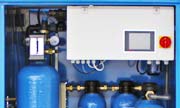
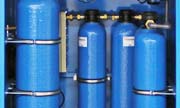
SCM 24
|
|
Cleans 24.000 liters per day
|
SCM 60
|
|
Cleans 60.000 liters per day
|
Video: How it works

The SCG Advantage
Our market-leading, water cleaning solutions have many advantages. To read more click the items below:
No Chemicals
Our machines and technology does not use any chemicals, at all.
Read more...
No Waste Water
Our machines do not waste any water. Yield = 100%.
Read more...
Low energy use
Uses 50 times less energy than a Reverse Osmosis Machine.
Read more...
Low ownership cost
Lower maintenance and operation costs due to our technology.
Read more...
Easy to install
Simple "plug and play" installation makes for easy deployment.
Read more...
Extremely compact
A compact system, contained in an easy to transport cabinet.
Read more...
Outperforms R.O.
SCG technologies outperform Reverse Osmosis systems.
Read more...
Faster ROI
Get a faster Return on Investment with our systems.
Read more...
Latest News
Latest Blog Posts
| Chemicals in water treatment? |
| Water storage - Whats best for keeping water clean and drinkable? |
| Case: Disaster Management Water Treatment |
Contact SCG
891 Showroom Place
Suite 101
Chula Vista, CA, 91914
Phone: +1 619-878-2730
Contact us by email