








Hospital Water Treatment for Legionella Control Without Chemical Dosing
Hospitals need a water safety strategy that protects patients, staff, and visitors from waterborne pathogens while preserving reliable service. Legionella control is especially demanding because the bacteria can persist inside plumbing biofilms, storage tanks, dead legs, shower hoses, cooling systems, and other areas where water becomes warm or stagnant.
Chemical dosing is one established control method, but it can create operational, regulatory, and environmental concerns. Some facilities seek a treatment train based on filtration, ultraviolet disinfection, thermal management, hydraulic improvements, and rigorous monitoring instead. This approach requires careful engineering because removing contaminants from incoming water does not automatically eliminate bacterial growth inside a hospital distribution network.
A well-designed program combines source-water treatment with infection prevention, water management, and documented response procedures. Swiss Cleanwater Group provides information on purification systems for applications where low chemical use, reduced waste, and dependable drinking-water quality are important.
Why Hospital Water Requires Layered Protection
Hospital water systems serve people with very different levels of vulnerability. Patients in intensive care, transplant units, oncology wards, neonatal departments, and respiratory care may be more susceptible to severe Legionnaires’ disease. Aerosol-generating outlets, including showers, taps, respiratory equipment, and decorative water features, can create routes for exposure when contaminated water is released into the air.
Legionella pneumophila grows most effectively in warm, stagnant environments and can live within protozoa and pipe-wall biofilms. A clear sample from one outlet does not prove that every branch of the building is safe. Risk can vary according to temperature, flow rate, plumbing materials, disinfectant conditions, and how frequently each outlet is used.
For this reason, a hospital water safety plan should address the entire system. It should begin with the incoming supply and continue through treatment equipment, storage, hot-water generation, recirculation loops, branches, outlets, maintenance routines, and patient-care practices.
Where Legionella Risk Develops
The hot-water system is often a major focus because temperatures between approximately 25°C and 45°C can support Legionella growth. Poorly balanced recirculation loops, undersized return lines, faulty thermostatic mixing valves, and long pipe runs may allow sections of the network to remain within this range. Cold-water systems can also present a risk when they warm above normal conditions.
Low-use rooms, seasonal wards, vacant beds, emergency fixtures, and rarely operated showers may develop stagnant sections. Flexible hoses, showerheads, tap aerators, filters, and storage vessels can collect sediment and organic matter that support microbial persistence. Construction work and changes in occupancy can further disturb biofilms or alter hydraulic conditions.
Hospitals should therefore map the water system and identify critical control points. Temperature records, outlet sampling, flushing schedules, equipment inspections, and maintenance logs provide evidence that controls are working. A risk assessment should also consider whether point-of-use filters are needed temporarily or permanently in high-risk clinical areas.
Building A Chemical-Free Treatment Barrier
A non-dosing strategy can start with robust pretreatment. Sediment removal protects downstream equipment, while appropriate filtration can reduce suspended solids, particulate matter, and some microorganisms entering the building. Depending on the source-water profile, additional processes may be required for arsenic, manganese, iron, pesticides, uranium, hardness, or other contaminants.
Ultraviolet treatment can inactivate microorganisms in flowing water without leaving a chemical residual. Its performance depends on adequate UV transmittance, correct flow control, lamp output, sleeve cleanliness, and continuous monitoring. UV should be installed where the water is already sufficiently clear, because turbidity and dissolved compounds can shield microorganisms from the radiation.
Membrane filtration can provide a stronger physical barrier, especially where a very high level of microbial and particulate removal is required. However, membranes need suitable pretreatment, pressure management, integrity testing, and a plan for cleaning or replacement. A treatment specialist should match the process to water chemistry, flow demand, peak occupancy, and the hospital’s required continuity of supply.
Source-water treatment can also prevent mineral deposits and sediment from worsening hygiene problems. For facilities dealing with combined mineral contamination, manganese and iron filtration may reduce the load on later purification stages and help maintain stable equipment performance.
Comparing Legionella Control Measures
No single technology can manage every hospital water risk. Physical purification is valuable at the point where water enters a building or a sensitive clinical area, but it does not replace temperature control, circulation, outlet hygiene, or environmental surveillance. Each method has a different role, maintenance burden, and limitation.
| Control measure | Main function | Chemical residual | Important limitations |
|---|---|---|---|
| Ultraviolet disinfection | Inactivates microorganisms in treated flow | No | Offers no downstream residual and requires clear water |
| Microfiltration or ultrafiltration | Physically removes particles and many microorganisms | No | Needs integrity checks, pressure control, and replacement |
| Point-of-use membrane filter | Protects a specific outlet or patient-care application | No | Requires scheduled replacement and correct installation |
| Thermal disinfection | Reduces microbial contamination through controlled heat | No | Can cause scalding, energy use, and uneven exposure if poorly managed |
| Chlorine-based dosing | Provides ongoing disinfectant residual | Yes | Requires chemical handling, monitoring, and by-product management |
| Copper-silver ionization | Maintains antimicrobial ions in distribution water | Yes, through added ions | Needs concentration control, equipment oversight, and regulatory review |
A hospital may use several of these measures together. For example, incoming-water filtration and UV treatment can be paired with hot-water temperature control, regular flushing, and point-of-use filters in a transplant unit. The selection should reflect the building’s plumbing design rather than relying on a standard package.
Managing The Distribution Network
Water treatment equipment is only effective when the distribution system is managed as part of the same program. Hot-water storage and return temperatures should be monitored at suitable locations, while cold-water temperatures should be checked during warm periods and after building alterations. Automatic alarms can identify loss of circulation, unusual temperature changes, or equipment failure.
Dead legs should be removed where practical, and unused outlets should be reviewed rather than left disconnected with stagnant water trapped in the branch. Recirculation balancing helps ensure that distant parts of the building receive adequate flow. Showerheads, aerators, hoses, mixing valves, and storage tanks require documented cleaning and replacement schedules.
Point-of-use filters can provide an added safeguard at outlets used by highly vulnerable patients. These filters must be selected for the target organisms, installed according to the manufacturer’s instructions, and changed before their rated service life ends. They should be treated as controlled medical-environment devices, not as a substitute for correcting a contaminated or poorly maintained plumbing system.
Verification, Sampling, And Incident Response
A chemical-free water safety program needs measurable performance criteria. Useful records may include inlet and outlet water quality, UV intensity, flow rate, membrane pressure, filter changes, system temperatures, flushing activity, and microbiological test results. Trend analysis is more informative than isolated readings because it can reveal gradual deterioration before a serious event occurs.
Sampling plans should be developed with infection prevention specialists, water hygiene professionals, and the relevant public health authority. Samples may be taken from storage tanks, return loops, representative outlets, high-risk clinical areas, and locations with a history of stagnation. Laboratory results should be interpreted alongside system conditions, since a negative result does not guarantee that hidden colonization is absent.
If Legionella is detected or a clinical case is suspected, the response should be predetermined. It may include restricting aerosol-generating outlets, installing temporary filters, increasing flushing, performing thermal disinfection, investigating the plumbing, and notifying authorities. Treatment equipment should also be inspected to determine whether a bypass, overload, poor maintenance, or process failure contributed to the finding.
Choosing A Suitable Hospital System
System design should begin with a water and building assessment rather than with a preferred technology. Engineers need information about source-water quality, daily and peak demand, storage capacity, pressure, pipe materials, hot-water configuration, critical care zones, and available space. The treatment train should maintain safe water quality during routine operation, maintenance, power interruptions, and changes in occupancy.
Chemical-free operation can reduce chemical storage, dosing pumps, handling requirements, and some environmental impacts. It may also support facilities where chemical residuals are undesirable for specific uses. Yet the absence of dosing does not remove the need for disinfection verification, microbial monitoring, temperature management, or an emergency plan.
Procurement documents should define measurable requirements for microbial reduction, contaminant removal, flow capacity, alarm functions, validation, spare parts, operator training, and service support. A supplier should explain how the equipment behaves during peak demand and what happens if UV intensity falls, a membrane loses integrity, or a filter reaches its capacity.
Practical Priorities For Hospital Water Safety
- Map the complete water system, including storage tanks, return loops, low-use branches, outlets, and aerosol-producing fixtures.
- Combine source-water purification with temperature control, circulation management, cleaning, flushing, and targeted point-of-use protection.
- Validate UV units, membranes, filters, alarms, and monitoring instruments under actual hospital flow conditions.
- Create written procedures for sampling, maintenance, equipment failure, Legionella detection, and communication with public health authorities.
- Review the water safety plan after renovations, occupancy changes, new treatment equipment, or any confirmed or suspected case.
A hospital can reduce reliance on chemical dosing while maintaining strong Legionella controls, but success depends on system-wide discipline. Physical purification protects the treated water supply; plumbing management limits bacterial growth after treatment; monitoring confirms that both layers continue to perform.
Swiss Cleanwater Group can help facilities assess sustainable purification options for municipal, healthcare, institutional, and other demanding applications. Contact the company to discuss source-water conditions, contaminant concerns, flow requirements, and a treatment configuration designed around dependable hospital water safety.
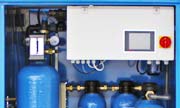
SCM 24
|
|
Cleans 24.000 liters per day
|
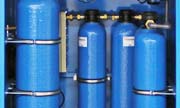
SCM 60
|
|
Cleans 60.000 liters per day
|
Video: How it works
The SCG Advantage
Our market-leading, water cleaning solutions have many advantages. To read more click the items below:
No Chemicals
Our machines and technology does not use any chemicals, at all.
Read more...
No Waste Water
Our machines do not waste any water. Yield = 100%.
Read more...
Low energy use
Uses 50 times less energy than a Reverse Osmosis Machine.
Read more...
Low ownership cost
Lower maintenance and operation costs due to our technology.
Read more...
Easy to install
Simple "plug and play" installation makes for easy deployment.
Read more...
Extremely compact
A compact system, contained in an easy to transport cabinet.
Read more...
Outperforms R.O.
SCG technologies outperform Reverse Osmosis systems.
Read more...
Faster ROI
Get a faster Return on Investment with our systems.
Read more...
Latest News
Latest Blog Posts
| Chemicals in water treatment? |
| Water storage - Whats best for keeping water clean and drinkable? |
| Case: Disaster Management Water Treatment |
Contact SCG
891 Showroom Place
Suite 101
Chula Vista, CA, 91914
Phone: +1 619-878-2730
Contact us by email