






Treating Orchard Water to Prevent Iron and Manganese Emitter Clogging
Efficient irrigation is essential for healthy orchards, especially where drip lines and micro-sprinklers deliver water directly to the root zone. These systems reduce evaporation and improve precision, but their narrow passages are vulnerable to suspended solids and mineral deposits. Iron and manganese can turn a clean irrigation network into a source of uneven watering, pressure loss, and costly maintenance.
The problem may begin with clear water at the wellhead. Dissolved iron and manganese are often invisible until the water contacts air, changes temperature, or passes through the irrigation system. Oxidation then creates particles that settle in filters, valves, laterals, and emitters. Biological activity can make the buildup more persistent.
A sound water-treatment strategy protects the entire irrigation network rather than relying on periodic flushing alone. It combines source-water testing, appropriate filtration, pressure management, and regular monitoring. For growers, the goal is simple: maintain consistent flow while avoiding unnecessary chemicals, water waste, and energy consumption.
Water quality starts at the irrigation source
Groundwater is a common source for orchards, yet its mineral content can vary significantly between wells and seasons. Iron may be present in a soluble ferrous form, while manganese can remain dissolved until oxidation occurs. Once exposed to oxygen, both elements may form insoluble particles that are difficult for small emitters to tolerate.
Other water-quality factors influence the severity of clogging. High pH, alkalinity, hardness, suspended clay, organic matter, and bacterial growth can change how minerals precipitate and attach to plastic surfaces. A laboratory analysis should therefore include iron and manganese alongside pH, electrical conductivity, turbidity, hardness, alkalinity, and microbiological indicators.
Sampling should take place at the well or storage tank and, when possible, at the end of an irrigation line. Comparing these points shows whether contamination is entering with the source water or developing inside the distribution network. Testing after aeration or storage can also reveal how quickly dissolved metals oxidize.
How iron and manganese damage emitters
Iron deposits often appear as orange, brown, or reddish-brown material. Manganese may create dark brown or black deposits. These particles can accumulate on screen filters and disc filters, but they may also pass through if the filtration grade is unsuitable. Once trapped in an emitter labyrinth, even a small amount can reduce the flow rate.
Mineral deposits are only part of the issue. Iron- and manganese-oxidizing bacteria can create slimy coatings that bind sediment and form thick biological mats. This combination is particularly difficult because flushing may remove loose particles without eliminating the underlying biofilm. Some wells can produce intermittent clogging, making the problem seem unpredictable.
Reduced emitter flow creates dry zones beneath trees and uneven crop development. Growers may compensate by increasing pump pressure or irrigation duration, which raises operating costs without correcting distribution uniformity. Over time, affected trees can show stress, smaller fruit, weaker growth, and inconsistent nutrient uptake.
For a closer explanation of treatment approaches that avoid hazardous residues, this guide to manganese removal methods provides useful technical context.
Testing before choosing treatment
Treatment should be based on the chemical form and concentration of contaminants, not on appearance alone. A water sample that looks clear may still contain dissolved iron or manganese at levels capable of causing deposits after oxidation. Conversely, visible turbidity may come primarily from clay or sand and require a different filtration approach.
Flow rate is equally important. An orchard system may need substantial output during peak irrigation, and treatment equipment must maintain that flow without excessive pressure loss. The design should account for simultaneous irrigation blocks, backwashing requirements, storage capacity, and future expansion.
| Water condition | Likely irrigation risk | Useful control measure |
|---|---|---|
| Dissolved iron | Orange deposits after oxidation; filter loading | Oxidation followed by media filtration |
| Dissolved manganese | Dark deposits and restricted emitter passages | Manganese-specific filtration with suitable pretreatment |
| Iron or manganese bacteria | Slimy biofilm and recurring clogging | Source assessment, line cleaning, and biological control |
| Sand or sediment | Abrasion and blocked emitters | Well protection, hydrocyclone, or sediment filtration |
| High pH or hardness | Mineral scaling and reduced passage size | Water chemistry adjustment and scale management |
| Variable water quality | Unpredictable treatment performance | Seasonal sampling and automatic monitoring |
A pilot test or treatability assessment can prevent an undersized or ineffective installation. It can show how much iron and manganese are removed, how often filters need cleaning, and whether the treated water remains stable during storage. This is especially valuable when several wells feed one orchard or when water quality changes during the year.
Treatment options for orchard water
A typical treatment train may include well protection, aeration or another oxidation step, filtration, fine irrigation filtration, and controlled flushing. The correct sequence depends on whether metals are dissolved, already particulate, or associated with biological growth. Removing larger sediment before fine filtration helps protect downstream equipment.
Media filters are commonly used when oxidation converts dissolved iron and manganese into particles. The filter media must be selected for the target contaminants and operating conditions. Backwash water should be managed carefully, since poorly planned discharge can create muddy areas, contaminate drainage channels, or return concentrated solids to the water source.
Chemical oxidants can work in some installations, but they introduce storage, dosing, worker-safety, and residual-management requirements. Where a low-chemical or chemical-free approach is preferred, technologies that use controlled oxidation and specialized filtration may provide a more sustainable alternative. Swiss Cleanwater Group presents zero-waste water treatment as part of its focus on reducing waste and resource use.
No treatment system should be selected solely from a brochure. The supplier should evaluate raw-water chemistry, irrigation flow, pressure limits, seasonal operation, and the destination of backwash or concentrate. A solution that removes contaminants but causes excessive water loss may not be suitable for an orchard with limited supply.
Designing a reliable filtration line
The treatment plant should be placed where operators can inspect it easily and isolate sections for maintenance. Pressure gauges before and after each filter reveal rising differential pressure, while flow meters show whether the orchard is receiving the expected volume. Automated alarms can identify abnormal pressure, low flow, or a failed backwash cycle before crop stress becomes visible.
Fine filters near the irrigation headers provide a final barrier against particles that escaped earlier treatment. Their mesh or micron rating must match the emitter manufacturer’s requirements and the actual particle load. An excessively fine filter can create unnecessary pressure loss and frequent cleaning, while an inadequate filter leaves emitters exposed.
Flushing is a core part of emitter protection. Mainlines, submains, and laterals should be flushed at suitable intervals with enough velocity to carry sediment out of the system. End caps, valves, and low points deserve special attention because deposits often accumulate there. Flushing cannot replace water treatment, but it prevents small amounts of residual material from becoming a permanent blockage.
Storage tanks should also be reviewed. Open or poorly protected tanks can introduce dust, algae, insects, and oxygen that accelerate oxidation. Covered tanks, controlled residence time, and appropriate turnover help preserve treated-water quality between filtration and irrigation.
Practical recommendations for growers
A preventive program is easier to manage when responsibilities and inspection intervals are written down. Operators should record source-water results, filter pressure, backwash events, flushing dates, and representative emitter flow rates. These records help distinguish a treatment failure from a pump issue, a blocked valve, or a change in well chemistry.
The most useful actions are:
- Test raw and treated water at least seasonally, with additional sampling after well or pump changes.
- Measure emitter flow from representative rows and compare results across irrigation blocks.
- Install pressure gauges and flow monitoring before and after critical filtration stages.
- Flush lines on a documented schedule, increasing frequency when turbidity or metal levels rise.
- Design backwash and sludge handling so removed solids do not re-enter the orchard water supply.
Treatment performance should be judged by distribution uniformity, not only by laboratory removal percentages. If the system consistently delivers the intended flow to the trees, maintains acceptable pressure, and operates without excessive water or energy consumption, it is supporting both crop health and long-term infrastructure value.
Iron and manganese control is a specialized engineering task, particularly when groundwater chemistry changes throughout the year. Swiss Cleanwater Group works with water-treatment applications that include agriculture and sustainable contaminant removal. Its technical team can assess the source water, treatment objectives, and operating conditions needed for a dependable orchard irrigation system.
A site-specific water analysis is the right starting point. Share well results, irrigation flow requirements, emitter specifications, and current maintenance records with a qualified treatment provider to develop a system that keeps mineral deposits out of the lines and clean water moving to every tree.
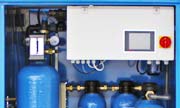
SCM 24
|
|
Cleans 24.000 liters per day
|
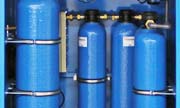
SCM 60
|
|
Cleans 60.000 liters per day
|
Video: How it works
The SCG Advantage
Our market-leading, water cleaning solutions have many advantages. To read more click the items below:
No Chemicals
Our machines and technology does not use any chemicals, at all.
Read more...
No Waste Water
Our machines do not waste any water. Yield = 100%.
Read more...
Low energy use
Uses 50 times less energy than a Reverse Osmosis Machine.
Read more...
Low ownership cost
Lower maintenance and operation costs due to our technology.
Read more...
Easy to install
Simple "plug and play" installation makes for easy deployment.
Read more...
Extremely compact
A compact system, contained in an easy to transport cabinet.
Read more...
Outperforms R.O.
SCG technologies outperform Reverse Osmosis systems.
Read more...
Faster ROI
Get a faster Return on Investment with our systems.
Read more...
Latest News
Latest Blog Posts
| Chemicals in water treatment? |
| Water storage - Whats best for keeping water clean and drinkable? |
| Case: Disaster Management Water Treatment |
Contact SCG
891 Showroom Place
Suite 101
Chula Vista, CA, 91914
Phone: +1 619-878-2730
Contact us by email