







Managing High-Sulfate Water Without Chemical Precipitation
Elevated sulfate can make otherwise clear water unsuitable for drinking, food processing, irrigation, livestock, or industrial use. It may create a bitter or medicinal taste, contribute to scaling, and cause gastrointestinal effects at sufficiently high concentrations. The risk depends on the sulfate level, the water’s overall chemistry, and the people or processes relying on the supply.
Treating water with elevated sulfate levels without chemical precipitation is possible when the treatment train is designed around source conditions rather than a single contaminant. Membrane separation, selective ion exchange, electrodialysis, biological conversion, and careful concentrate management can reduce sulfate while avoiding the sludge and reagent demand associated with conventional precipitation.
Why Sulfate Becomes A Water-Quality Problem
Sulfate occurs naturally in groundwater and surface water when rain passes through sulfate-bearing minerals, including gypsum and certain evaporite deposits. Mining areas, agricultural drainage, industrial discharges, and seawater intrusion can also increase the concentration. In Australia, dry conditions and prolonged groundwater use may concentrate dissolved salts, particularly where recharge is limited.
At moderate levels, the first concern is often taste. Higher concentrations can produce a laxative effect, especially for infants or people who are not accustomed to the water. Sulfate also combines with calcium and magnesium to influence hardness, scaling, and the performance of boilers, cooling systems, membranes, and irrigation equipment.
The Australian Drinking Water Guidelines are an important reference, but sulfate is generally managed through aesthetic and operational considerations rather than a simple health-based limit. A project should check the current guideline values and consult the relevant state or territory regulator before setting a final treated-water target.
Start With Source And Water Analysis
A reliable solution begins with laboratory testing of raw and finished water. Sulfate should be measured alongside total dissolved solids, electrical conductivity, chloride, alkalinity, calcium, magnesium, sodium, pH, turbidity, iron, manganese, nitrate, fluoride, arsenic, uranium, and microbiological indicators. These results show whether sulfate is the main issue or part of a broader salinity problem.
Seasonal sampling is valuable for rural supplies, dams, shallow bores, and rainwater systems. A bore near the Murray–Darling Basin may change during drought or intensive pumping, while a coastal supply near Perth can be affected by groundwater movement and seawater influence. A single sample may therefore understate the treatment duty during the most difficult part of the year.
Flow rate and use must be recorded as carefully as chemistry. Drinking water for a small regional facility has a different design requirement from process water for a food plant, irrigation water for a farm, or high-volume water for livestock. Peak demand, storage capacity, cleaning cycles, and reject-water disposal all affect the best treatment approach.
Membranes Provide Direct Sulfate Separation
Reverse osmosis is usually the most direct non-precipitation method for removing sulfate. The membrane rejects dissolved ions and produces a low-salt permeate, while the concentrated reject stream contains most of the removed sulfate and other dissolved solids. Recovery can be adjusted to balance water efficiency, scaling risk, and concentrate volume.
Nanofiltration may remove a substantial proportion of sulfate with lower operating pressure than reverse osmosis. Its performance depends on membrane chemistry and the balance between sulfate, chloride, hardness, and organic matter. It can be attractive when the objective is partial sulfate reduction rather than desalination, although pilot testing is needed to confirm the actual rejection rate.
Membrane systems require pretreatment. Suspended solids, iron, manganese, oil, and biological growth can foul the membrane or reduce its service life. Depending on the source, pretreatment may include screening, multimedia filtration, ultrafiltration, activated carbon, or specialist catalytic media. Swiss Cleanwater Group provides water-treatment technologies that can be considered as part of a broader contaminant-control system.
Ion Exchange And Electrodialysis Options
Sulfate-selective ion exchange can reduce sulfate without forming a precipitate. The resin exchanges sulfate for another ion, allowing the treated stream to pass through with a lower sulfate concentration. This approach can be efficient where sulfate is the principal target and the flow is relatively consistent.
The resin eventually requires regeneration, creating a waste stream that must be stored, treated, or sent to an approved disposal route. That chemical demand does not involve precipitation, but it still affects operating cost and environmental performance. A water balance should account for regeneration frequency, brine volume, chemical transport, and operator requirements.
Electrodialysis and electrodialysis reversal use an electrical field and selective membranes to move dissolved ions out of the product stream. These systems can provide flexible control over salinity and may be suitable for brackish groundwater or industrial reuse. Electrodialysis reversal can reduce some fouling risks by periodically changing flow direction, although energy use and concentrate handling remain important design considerations.
Biological Conversion Needs Careful Control
Biological sulfate reduction uses specialised microorganisms to convert sulfate into sulfide under oxygen-free conditions. The process can reduce sulfate without chemical precipitation, but it creates a new treatment requirement: sulfide must be captured, oxidised, biologically removed, or otherwise controlled before the water is released or used.
This method may suit larger facilities with stable flows and trained operators. It is less straightforward for a small remote drinking-water plant because temperature, nutrient balance, residence time, redox conditions, and microbial stability must remain within a controlled range. Unmanaged sulfide can cause odour, corrosion, toxicity concerns, and poor taste.
Where biological treatment is selected, downstream polishing may include aeration, biological filtration, activated carbon, or another approved oxidation process. The system should also monitor dissolved oxygen, oxidation-reduction potential, sulfide, sulfate, pH, and microbiology. Biological conversion is a process choice, not a substitute for a complete water-quality management plan.
Combine Sulfate Control With Other Barriers
Sulfate is often discovered alongside contaminants that require separate treatment. Groundwater may contain arsenic, uranium, iron, manganese, pesticides, or bacteria, and a sulfate-reduction system should not be assumed to remove all of them. A staged design prevents one unit from being overloaded with incompatible duties.
Iron and manganese removal may be placed before membranes to limit fouling. Disinfection is still required where pathogens are possible, using ultraviolet light, chlorination, or another validated barrier. If arsenic is present, review the relevant arsenic guidance and select media, membrane, or adsorption equipment according to the measured arsenic species and concentration.
Uranium also deserves separate assessment in certain Australian groundwater regions. It may be controlled through adsorption, ion exchange, or membrane treatment, but the appropriate process depends on pH, alkalinity, competing ions, and the required recovery. Information on catalytic filtration can help explain how specialist filtration may address uranium-related treatment needs, although it should not be presented as a universal sulfate-removal method.
Manage Reject Water And Compliance
Avoiding precipitation does not eliminate waste. Reverse osmosis and nanofiltration generate concentrate, ion exchange produces regeneration brine, and biological systems may produce sulfide-bearing residuals. The selected system must identify where these streams will go before equipment is purchased.
Discharge requirements vary by state, local authority, receiving environment, and end use. A facility near a sensitive river, coastal wetland, or agricultural drainage area may face stricter controls than an isolated industrial site with an approved disposal arrangement. Reuse, evaporation, sewer discharge, licensed transport, and deep-well options all require site-specific approval.
For Australian drinking-water projects, operators should work with the responsible water authority and follow the current Australian Drinking Water Guidelines, state public-health requirements, and relevant plumbing and electrical standards. Recycled-water schemes, mining operations, and mobile or defence applications may have additional approvals. Online conductivity monitoring, sulfate testing, pressure alarms, flow measurement, and scheduled laboratory verification help demonstrate consistent performance.
Compare Treatment Routes For Australian Sites
The best technology depends on sulfate concentration, water volume, source variability, target use, energy availability, and the cost of managing residual streams. Remote stations may value low chemical handling and automation, while a city or large industrial plant may justify advanced recovery and concentrate treatment. In Sydney, Melbourne, Brisbane, and other major cities, connection to a regulated network may be preferable where available; regional and remote properties often need independent treatment.
| Treatment route | Sulfate reduction potential | Main residual stream | Typical fit |
|---|---|---|---|
| Reverse osmosis | High | Concentrated reject water | Drinking water, brackish groundwater, industrial reuse |
| Nanofiltration | Moderate to high | Concentrate | Partial desalination and lower-pressure systems |
| Ion exchange | High when selective resin is suitable | Regeneration brine | Consistent flows with manageable brine disposal |
| Electrodialysis | Moderate to high | Ion-rich concentrate | Brackish water and adjustable salinity control |
| Biological sulfate reduction | High under stable conditions | Sulfide-bearing biomass or liquid | Larger managed facilities with specialist operation |
| Catalytic or media filtration | Usually low for dissolved sulfate | Backwash water | Pretreatment and removal of other contaminants |
A practical design should begin with a complete laboratory profile, a pilot or field trial where uncertainty is significant, and a clear water-quality target for each use. Engage a qualified treatment provider to size the process, verify Australian compliance requirements, and plan concentrate management before installation. For a site-specific assessment, contact Swiss Cleanwater Group through its water-treatment service channels and provide recent analysis, flow data, intended use, and operating constraints.
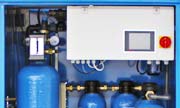
SCM 24
|
|
Cleans 24.000 liters per day
|
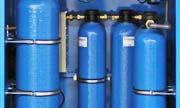
SCM 60
|
|
Cleans 60.000 liters per day
|
Video: How it works
The SCG Advantage
Our market-leading, water cleaning solutions have many advantages. To read more click the items below:
No Chemicals
Our machines and technology does not use any chemicals, at all.
Read more...
No Waste Water
Our machines do not waste any water. Yield = 100%.
Read more...
Low energy use
Uses 50 times less energy than a Reverse Osmosis Machine.
Read more...
Low ownership cost
Lower maintenance and operation costs due to our technology.
Read more...
Easy to install
Simple "plug and play" installation makes for easy deployment.
Read more...
Extremely compact
A compact system, contained in an easy to transport cabinet.
Read more...
Outperforms R.O.
SCG technologies outperform Reverse Osmosis systems.
Read more...
Faster ROI
Get a faster Return on Investment with our systems.
Read more...
Latest News
Latest Blog Posts
| Chemicals in water treatment? |
| Water storage - Whats best for keeping water clean and drinkable? |
| Case: Disaster Management Water Treatment |
Contact SCG
891 Showroom Place
Suite 101
Chula Vista, CA, 91914
Phone: +1 619-878-2730
Contact us by email