







Chemical-Free Filtration for Vineyard Drip Irrigation
A vineyard’s irrigation water can look clear and still carry fine sediment, iron, manganese, bacteria, pesticide residues or other contaminants. For drip irrigation, that hidden load can become an expensive problem. Emitters clog, pressure becomes uneven and vines in the far end of a block may receive less water than those closest to the pump.
This case study follows a vineyard using chemical-free water treatment to protect its drip irrigation network and make better use of a variable bore-water supply. The setting reflects conditions familiar to Australian growers: long, hot summers, seasonal water restrictions, limited labour and a strong need to keep every litre working in the root zone.
The system was selected around the vineyard’s actual water analysis rather than a standard catalogue solution. Treatment focused on contaminant removal, reliable filtration and practical operation, allowing the property to reduce its dependence on chemical dosing while maintaining a steady supply for vines.
The Vineyard’s Water Challenge
The vineyard was located in a warm Australian wine region where irrigation is central to crop quality and yield. Its water came mainly from a bore, supported by a storage dam when available. During dry periods, the bore became more important, but its quality varied after changes in groundwater levels and pumping patterns.
Initial testing identified fine particles and dissolved metals that could affect irrigation equipment. The water also carried a background risk of biological contamination and traces of agricultural chemicals moving through the catchment. None of these issues was necessarily obvious at the outlet. The real warning signs appeared in the irrigation system: blocked emitters, dirty filters and uneven pressure between rows.
The vineyard team used the language common on Australian farms: the “top block” was coping, while the “back block” was getting thirsty. That distinction mattered. A small restriction in a filter or lateral line can have a sizeable impact across hundreds of metres of vines, particularly when irrigation windows are short.
Why Drip Irrigation Needed Better Protection
Drip irrigation is efficient because it places water close to each vine, reducing evaporation and limiting unnecessary wetting between rows. In the Riverland, Barossa and other dry wine-growing areas, that efficiency is important when allocations, pumping costs and summer heat all influence farm decisions.
The same precision makes drip systems sensitive to water quality. Fine sediment can settle inside filters and lines. Manganese and iron may contribute to deposits, while biological growth can create slime that catches particles. Pesticide residues and other dissolved contaminants may not block an emitter directly, yet they remain relevant when water is reused, stored or applied to a high-value crop.
The grower wanted filtration that could operate continuously without relying on routine chemical conditioning. That meant looking beyond a basic screen filter and considering the full treatment train: incoming water quality, flow rate, pressure, filter loading, cleaning requirements and the protection of the existing fertigation and irrigation equipment.
Designing A Chemical-Free Treatment Process
The treatment design began with representative water sampling from the bore and storage supply. Samples were assessed for suspended solids, pH, conductivity, hardness, metals, microbial indicators and agricultural contaminants. This step was essential because a system suitable for one bore may be poorly matched to another, even within the same district.
The selected approach used physical and media-based filtration to target the identified contaminants. Depending on the analysis, this type of treatment can support the reduction of manganese, arsenic, bacteria, pesticides and other unwanted substances without conventional chemical dosing. It also allows the equipment to be sized around the vineyard’s irrigation demand rather than a theoretical household flow rate.
For growers comparing treatment options, the difference between carbon products can be significant. A practical reference on pesticide media options helps explain why media selection should follow the contaminant, contact time and operating conditions instead of being based on a generic “carbon filter” label.
Installation Around Existing Farm Operations
The filtration equipment was placed between the raw-water source and the irrigation distribution network. This position protected pumps, manifolds, mainlines and drip laterals while keeping the treatment process separate from the vineyard’s normal watering controls.
Installation planning considered farm access, electrical supply, backwash or cleaning arrangements and seasonal maintenance. Australian properties often have long distances between a bore, shed and vineyard blocks, so a system must be practical for the people who operate it. A treatment unit that is technically effective but difficult to inspect will eventually be neglected during harvest or a hot spell.
The system was also integrated with existing storage and pressure equipment where possible. This reduced unnecessary changes to the farm layout and helped the grower retain familiar controls. The result was a more manageable transition rather than a complete rebuild of the irrigation infrastructure.
Operating Without Routine Chemical Dosing
Chemical-free filtration does not mean the equipment requires no management. The vineyard still monitored pressure, flow, filter condition and water quality. Operators checked whether the treated-water pressure remained stable and watched for changes that could indicate media exhaustion, unusual raw-water conditions or a problem upstream.
The key difference was that contaminant removal did not depend on continuously adding treatment chemicals to the irrigation water. This simplified handling and reduced the need to store, mix and transport chemical products around the property. It was particularly useful during busy periods when staff were focused on pruning, canopy work, spraying, harvest and dispatch.
Reduced chemical use also supported the vineyard’s broader sustainability objectives. Water treatment was considered alongside soil health, electricity consumption, irrigation scheduling and responsible input management. The aim was not simply to produce cleaner water at the outlet, but to create a reliable process that fitted the farm’s environmental and commercial priorities.
Results Across The Irrigation Network
After commissioning, the vineyard observed cleaner filtration stages and more consistent water delivery through the drip network. Emitters required less frequent attention, and irrigation pressure was easier to manage across distant rows. The maintenance team could identify issues earlier through routine checks instead of waiting for visible vine stress.
The benefits were practical rather than dramatic. A grower may not see a single headline result from filtration; the value accumulates through fewer blocked emitters, less flushing, reduced labour and more uniform watering. Better distribution also gives the vineyard manager greater confidence when scheduling irrigation during a hot South Australian summer or a restricted-water period in the Murray-Darling Basin.
The treated supply also created a stronger foundation for future monitoring. With a clearer understanding of the raw water and the filtration performance, the vineyard could make decisions about storage, irrigation timing and system maintenance using measured information rather than guesswork.
Lessons For Australian Vineyards
Every vineyard should begin with water testing from the source that will actually feed the irrigation system. A dam, shallow bore, deep bore and town supply can have very different profiles. Seasonal sampling is useful where groundwater changes, storm runoff affects storage or nearby farming activity creates a risk of pesticide movement.
Local conditions also shape the design. A property near Mildura may be managing salinity and scarce allocations, while a vineyard in Margaret River may place greater emphasis on rainfall-driven runoff and storage quality. In New South Wales, pumping energy and water entitlements can influence operating costs. In Queensland, high temperatures and intense seasonal weather can place extra pressure on tanks, pumps and exposed pipework.
The case also reinforces the importance of sizing treatment for real irrigation demand. A vineyard should account for the number of blocks irrigated at once, peak flow, pressure requirements, water storage and the level of filtration already installed. The right system is the one that protects the crop and infrastructure while remaining straightforward for farm staff to operate.
For a site-specific review, growers can book a technical discussion with a water-treatment specialist. Sharing laboratory results, pump data and irrigation drawings makes it easier to assess the suitable process and avoid paying for equipment that does not address the actual risk.
Chemical-free filtration gave this vineyard a practical way to improve irrigation-water quality without adding routine chemical dosing to the farm’s daily workload. By matching the treatment process to the bore-water profile, the grower improved protection for drip emitters, strengthened water-use efficiency and created a more consistent operating routine.
Swiss Cleanwater Group provides treatment technologies for agricultural, municipal, industrial and mobile applications. Vineyard operators can send through their water analysis and irrigation requirements to explore a filtration approach suited to their property, climate and production goals.
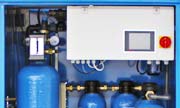
SCM 24
|
|
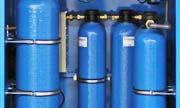
Cleans 24.000 liters per day
|
SCM 60
|
|
Cleans 60.000 liters per day
|
Video: How it works
The SCG Advantage
Our market-leading, water cleaning solutions have many advantages. To read more click the items below:
No Chemicals
Our machines and technology does not use any chemicals, at all.
Read more...
No Waste Water
Our machines do not waste any water. Yield = 100%.
Read more...
Low energy use
Uses 50 times less energy than a Reverse Osmosis Machine.
Read more...
Low ownership cost
Lower maintenance and operation costs due to our technology.
Read more...
Easy to install
Simple "plug and play" installation makes for easy deployment.
Read more...
Extremely compact
A compact system, contained in an easy to transport cabinet.
Read more...
Outperforms R.O.
SCG technologies outperform Reverse Osmosis systems.
Read more...
Faster ROI
Get a faster Return on Investment with our systems.
Read more...
Latest News
Latest Blog Posts
| Chemicals in water treatment? |
| Water storage - Whats best for keeping water clean and drinkable? |
| Case: Disaster Management Water Treatment |
Contact SCG
891 Showroom Place
Suite 101
Chula Vista, CA, 91914
Phone: +1 619-878-2730
Contact us by email