







Reliable Water Treatment With Catalytic Media From Global Sources
When a treatment plant in regional New South Wales draws raw water from a bore that smells faintly of rotten eggs, the operator does not want a discussion about where the filter media came from. They want the iron and the sulphur gone, the manganese down to whatever the consent order sets, and the same result in winter as in summer. Catalytic oxidation media can deliver that kind of predictable performance, yet practitioners notice real differences depending on whether the material originated in Europe, North America, or Asia.
The basic chemistry is well understood. A substrate of clinoptilolite, bauxite, or doped aluminium oxide is coated with manganese dioxide or another transition metal oxide, accelerating the conversion of dissolved iron, manganese, and hydrogen sulphide into insoluble solids. The trouble is that coatings are not identical. Pore size distribution, binder ratios, and the crystalline phase of the active layer shift between manufacturers, and even between production runs when raw feedstock comes from quarries in different countries.
A regional council recently commissioned two identical skids from the same supplier, but the catalyst batches were manufactured six months apart using mineral feedstock from two separate countries. The earlier batch removed manganese to 0.02 mg/L within twenty minutes of contact time. The later batch needed forty minutes to reach the same threshold. Both met the Australian Drinking Water Guidelines, but one ran with margin to spare and the other ran close to the line.
Operators running multiple sites now ask for batch certificates and provenance records before signing off. In a country where raw water swings from acidic granite catchments on the east coast to hypersaline bores in the Pilbara, knowing what is inside the media matters more than the brand on the bag. The conversation is happening around bore head works, in grower sheds, and in council chambers from Bendigo to the Barossa.
Understanding Catalytic Media Variability
Catalytic oxidation media are often described as a single product category, but the family is broad. Some media are sintered at relatively low temperatures and rely on high surface area to draw contaminants close to the coating. Others are fired harder, producing denser beads that survive rougher backwash. The active layer can be manganese dioxide alone or a blend that includes copper, iron, or rare earth oxides, each chosen to shift the redox potential of the surface in a particular direction.
When raw materials are sourced internationally, the variability grows. Manganese ore from South Africa, Gabon, or Australia carries different impurities from synthetic manganese dioxide precipitated from industrial solutions. Bauxite from Jamaica behaves differently under kiln conditions than bauxite from Vietnam. A plant buying through a global supplier may not even realise the coating chemistry has shifted between one delivery and the next. For Australian operators, batch transparency matters more than brand loyalty, which is why data sheets, certificates of analysis, and confirmed surface area measurements are worth chasing down before any media is signed into service.
Transport, Storage, and Commissioning Effects
Most Australian treatment plants sit a long way from the port where the media arrives. A container landing in Fremantle might still be three days on a truck before it reaches a horticultural scheme in the Gascoyne. During that time the media is exposed to diesel fumes, road salt, and temperature swings well above what the manufacturer intended. The beads arrive looking identical, but their behaviour in service can shift noticeably.
Storage conditions compound the issue. Bags stacked on a concrete slab in a Pilbara workshop through a long hot dry lose a small fraction of their coating long before they enter the vessel. Media unpacked in the wet, or activated while still cold from overnight transport, reach rated performance later than acclimatised and pre-soaked material. Operators sometimes misread this delay as a quality problem with the batch itself. Commissioning protocols, from staged backwash patterns to an initial flush with raw water rather than service water, all reduce variability and pay back into the operating record.
Site Calibration Across Australian Conditions
A skid plumbed and started in suburban Melbourne behaves very differently from the same skid installed at an outback cattle station. The contact time needed for full oxidation depends on pH, alkalinity, influent iron concentration, and any residual chlorine carried over from pre-treatment. Sites drawing from limestone country benefit from catalytic media by default, while soft, low-buffering water sometimes needs a small dose of alkali ahead of the bed to keep conversion efficient.
Service flow rates matter as well. Most media suppliers publish a recommended flow expressed in metres per hour, calibrated against clean temperate source water. A scheme in the Hunter Valley drawing from a creek that runs turbid after a storm sits at the lower end of that range. A bore in central Queensland with stable low-turbidity water sits at the upper end. Treating the published number as a fixed point usually ends in under-performance that has nothing to do with the media itself.
Process Water With Tight Tolerances
Food and beverage processors run on consistency. A winery washing barrels between batches, a dairy plant feeding CIP loops, or a brewery cleaning mash tuns all expect finished water to behave the same way every hour of every shift. Catalytic media serve those operations well, but tolerance bands are tighter than in municipal supply and drift shows up quickly as off-flavours or staining. Producers in the Barossa and Margaret River have taken to running a parallel polishing stage so any shift in the primary media is caught before it reaches the process line, and they treat incoming batches with extra scepticism, as a Barossa winery case study on process water shows.
The same logic is spreading to livestock operations washing down parlours and food processors preparing wash water, where a small change in iron or manganese shows up quickly. The fix is rarely to swap brands. It is to tighten commissioning, monitoring, and the conversation between supplier and operator.
Monitoring, Adjusting, and Closing the Loop
The difference between a plant that runs cleanly and one that drifts usually comes down to monitoring. Online iron and manganese analysers are now affordable enough for medium-sized schemes, giving operators a real-time signal when something has shifted in either the raw water or the media itself. A steady baseline followed by gradual creep is the signature of media slowly exhausting. A sudden spike usually points elsewhere.
Backwash behaviour tells its own story. Media that lifts evenly and settles within a few minutes is doing what it should. Media that channels, clumps, or carries fines into the service line signals either a commissioning issue or a batch that has aged faster than expected. Recording the backwash expansion rate once a month takes only a few minutes and gives a long-term baseline that pays off when troubleshooting starts. When adjustment is needed, the fix is rarely to throw out the media. More often the response is a tweak to the pre-chlorination dose, a small change in backwash frequency, or a shift in service flow.
Sourcing Media That Suits the Job
Procurement decisions in Australia tend to be driven by value, lead time, and after-sales support. Media suppliers that ship ex-stock from a local warehouse usually win a contract over a cheaper imported option that takes six weeks to clear quarantine. A remote community scheme with no on-site chemist will usually prioritise a forgiving media with wide operating margins, while a bottling plant will want tighter specifications and a published tolerance band. Comparing options through a structured view of the clean water solutions range helps operators see which formulations line up with which source conditions.
Plants that treat media as a calibrated component rather than a generic commodity, monitor consistently, ask searching questions of every supplier, and refuse batches without paperwork proving they were produced to specification are the ones who keep finished water stable season after season. Anyone keen to compare configurations for their own source water can ask for a tailored specification, a sample evaluation, and ongoing support.
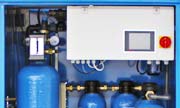
SCM 24
|
|
Cleans 24.000 liters per day
|
SCM 60
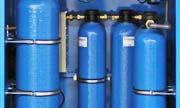
|
|
Cleans 60.000 liters per day
|
Video: How it works
The SCG Advantage
Our market-leading, water cleaning solutions have many advantages. To read more click the items below:
No Chemicals
Our machines and technology does not use any chemicals, at all.
Read more...
No Waste Water
Our machines do not waste any water. Yield = 100%.
Read more...
Low energy use
Uses 50 times less energy than a Reverse Osmosis Machine.
Read more...
Low ownership cost
Lower maintenance and operation costs due to our technology.
Read more...
Easy to install
Simple "plug and play" installation makes for easy deployment.
Read more...
Extremely compact
A compact system, contained in an easy to transport cabinet.
Read more...
Outperforms R.O.
SCG technologies outperform Reverse Osmosis systems.
Read more...
Faster ROI
Get a faster Return on Investment with our systems.
Read more...
Latest News
Latest Blog Posts
| Chemicals in water treatment? |
| Water storage - Whats best for keeping water clean and drinkable? |
| Case: Disaster Management Water Treatment |
Contact SCG
891 Showroom Place
Suite 101
Chula Vista, CA, 91914
Phone: +1 619-878-2730
Contact us by email