







Designing Safer Drinking Water Systems for Australian Schools
Schools and early learning centres need a practical way to manage potential lead exposure at drinking taps, kitchen outlets and food-preparation areas. A point-of-use water treatment system can provide controlled protection where children fill bottles or drink directly, without requiring immediate replacement of every pipe, fitting or storage tank across an entire site.
The right design begins with the building, the plumbing and the way water is used each day. Older facilities in Sydney, Melbourne, Adelaide and regional towns may contain ageing fixtures or legacy plumbing, while newer buildings can still have unsuitable tapware, solder, brass components or poorly managed stagnation. A local risk assessment, verified filtration performance and a clear maintenance plan are essential.
Identify Where Lead Risk Can Occur
Lead is rarely distributed evenly through a school or daycare. It may enter water through older brass taps, fittings, soldered joints or sections of plumbing that have remained unused overnight, over a weekend or during school holidays. Drinking fountains, classroom sinks, kitchen taps and bottle-filling stations deserve separate attention because they have different flow rates and patterns of use.
A risk review should map every outlet used for drinking, cooking, formula preparation and food washing. In a Melbourne primary school built several decades ago, for example, a cold-water bubbler may have a different plumbing history from a recently renovated staff kitchen. In a rural Queensland or New South Wales centre, rainwater tanks and intermittent occupancy can add another layer of complexity.
Point-of-use treatment is most effective when installed at the outlet that matters. It avoids treating water used for toilets, gardens or cleaning and can reduce capital costs compared with whole-building replacement. The system should be selected for the expected flow, daily volume, available bench or cabinet space and the number of children likely to use the outlet during peak periods.
Establish A Reliable Testing Baseline
Before choosing equipment, collect samples using a documented protocol. A first-draw sample, taken after water has remained stagnant, can indicate whether contaminants have accumulated in the outlet or nearby plumbing. A flushed sample helps show the condition of the incoming supply after the outlet has run for an agreed period. Both results can be useful, but they answer different questions.
Testing should be performed by a laboratory accredited by the National Association of Testing Authorities (NATA), with sampling records that identify the outlet, date, time, flushing method and recent site conditions. Testing may also examine copper, nickel, iron, manganese, bacteria and other indicators when the building has old plumbing, a private bore or a rainwater system. Australian schools should use the Australian Drinking Water Guidelines and advice from the relevant state or territory health authority when interpreting results.
The water authority supplying Sydney, Melbourne, Brisbane, Perth or another city may provide useful information about mains-water quality, but a utility result does not replace testing at the tap. Internal plumbing can change the water between the property boundary and the child’s drinking outlet. Results should be reviewed with the school’s facilities manager, an appropriately qualified plumber and the treatment supplier before procurement.
Match Filtration To The Outlet
A lead-removal system must be certified or independently validated for the contaminant, not simply advertised as a general purifier. The specification should state lead reduction capacity, operating pressure, rated flow, cartridge life, replacement indicators and the conditions under which performance was measured. A filter designed mainly for chlorine taste or sediment may not provide adequate lead control.
Common designs include an under-sink cartridge connected to a dedicated drinking-water tap, an inline unit fitted to a bottle filler, or a compact drinking-water station serving several outlets. A system may combine sediment protection with activated carbon, ion exchange or another lead-specific medium. Ultrafiltration can be valuable for microbial barriers and particulate removal; background information on ultrafiltration and bacteria can help teams understand where that technology fits. Ultrafiltration alone should not automatically be treated as a complete solution for dissolved lead.
| Design factor | Practical requirement in a school or daycare | Verification point |
|---|---|---|
| Treatment target | Lead reduction at the exact drinking outlet | Confirm independent performance data |
| Flow rate | Enough water for bottle filling during recess or meal breaks | Compare peak demand with rated flow |
| Capacity | Cartridge life suited to student numbers and water quality | Calculate litres and replacement interval |
| Plumbing | Dedicated treated-water line where possible | Use compliant components and qualified installation |
| Microbial control | Protection against contamination inside the system | Follow hygiene, flushing and sanitising instructions |
| Monitoring | Clear indication of cartridge exhaustion or fault | Assign responsibility for daily and monthly checks |
| Access | Secure equipment with safe service clearance | Prevent tampering while allowing maintenance |
Equipment should be selected with Australian plumbing requirements in mind. Tapware and connected products may need WaterMark certification, and materials that contact drinking water should be suitable under AS/NZS 4020 or the applicable procurement specification. A supplier’s chemical-free treatment range, such as these no-chemical water systems, may suit facilities seeking to avoid dosing chemicals, but “chemical-free” does not remove the need for hygienic design, testing or cartridge management.
Design For Hygiene And Daily Use
A treatment unit installed in a school becomes part of the site’s public-health routine. Stagnant water inside unused tubing, warm cupboard spaces, dirty dispense points and neglected drip trays can undermine an otherwise capable filter. The design should minimise dead legs, use food-contact-rated materials and make it simple to flush the outlet after holidays or extended closure.
The outlet should be positioned where staff can observe use and clean surrounding surfaces. Bottle fillers are often preferable to shared cups, particularly in Australian schools where reusable drink bottles are common during hot weather. A dedicated cold-water tap in a daycare kitchen can support safe food preparation, but it should be clearly identified so untreated and treated outlets are not confused.
Maintenance intervals should be based on actual water consumption and contaminant loading rather than a generic calendar alone. The responsible person can record filter changes, flow restrictions, leaks, cleaning, test results and periods of non-use. Schools should keep spare cartridges on site when procurement lead times are long, especially for regional Western Australia, the Northern Territory or remote Queensland.
Water should be flushed according to the manufacturer’s instructions after installation, cartridge replacement and extended shutdown. Staff need a short written procedure covering hand hygiene, cleaning the dispenser, reporting unusual taste or odour, isolating a leaking unit and contacting the service provider. Children should never be asked to service or dismantle treatment equipment.
Plan Installation, Verification And Ongoing Control
Installation should be coordinated with the school’s facilities team, the local authority responsible for the building and a licensed plumber. The work may require isolation of a water line, cabinet modification, backflow protection or electrical planning if the dispenser includes cooling, UV or monitoring equipment. In older facilities, the installer should check for cross-connections and confirm that treated water cannot flow back into the mains supply.
After commissioning, take a post-installation sample from the treated outlet and verify flow, pressure, leak tightness and dispenser hygiene. A useful acceptance record includes the equipment model, serial number, cartridge type, installation date, laboratory report, plumber details and operating instructions. The Water Cleaning Unit 600 illustrates the importance of reviewing published specifications against the actual application, including capacity and intended operating conditions.
A school or daycare should also establish a response plan if a result exceeds the selected limit. The affected outlet can be taken out of service, clearly labelled and replaced temporarily with bottled or separately verified drinking water while the cause is investigated. Follow-up sampling should distinguish between a depleted cartridge, contaminated outlet, plumbing contribution or an error in sampling.
Australian procurement teams should consider the full service life rather than the purchase price alone. Include installation, laboratory testing, replacement media, technician travel, staff training, waste handling and record keeping. A well-designed point-of-use arrangement can provide dependable drinking water protection while a broader plumbing upgrade is planned, but it should remain part of a documented water safety program.
Bring together your site plan, outlet list, recent water results and expected daily demand before selecting equipment. Swiss Cleanwater Group can help assess treatment requirements and identify a suitable configuration for schools, childcare facilities and other public buildings. Contact the company to discuss a practical lead-control system that supports safe daily drinking water and straightforward maintenance.
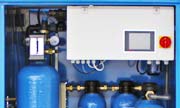
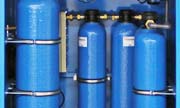
SCM 24
|
|
Cleans 24.000 liters per day
|
SCM 60
|
|
Cleans 60.000 liters per day
|
Video: How it works
The SCG Advantage
Our market-leading, water cleaning solutions have many advantages. To read more click the items below:
No Chemicals
Our machines and technology does not use any chemicals, at all.
Read more...
No Waste Water
Our machines do not waste any water. Yield = 100%.
Read more...
Low energy use
Uses 50 times less energy than a Reverse Osmosis Machine.
Read more...
Low ownership cost
Lower maintenance and operation costs due to our technology.
Read more...
Easy to install
Simple "plug and play" installation makes for easy deployment.
Read more...
Extremely compact
A compact system, contained in an easy to transport cabinet.
Read more...
Outperforms R.O.
SCG technologies outperform Reverse Osmosis systems.
Read more...
Faster ROI
Get a faster Return on Investment with our systems.
Read more...
Latest News
Latest Blog Posts
| Chemicals in water treatment? |
| Water storage - Whats best for keeping water clean and drinkable? |
| Case: Disaster Management Water Treatment |
Contact SCG
891 Showroom Place
Suite 101
Chula Vista, CA, 91914
Phone: +1 619-878-2730
Contact us by email