








Zero-chemical systems for precision irrigation in arid climates
Precision irrigation can deliver water more efficiently across Australian farms, particularly where channel and sprinkler losses are significant. The finest drip network still performs poorly when source water carries sediment, manganese, hydrogen sulfide, salinity or other dissolved contaminants. These problems can clog emitters, damage pumps and reduce crop performance before yield data appears. In hot, dry districts, a water-quality issue quickly becomes an operating cost.
A chemical-free treatment train addresses that risk without routine coagulants, oxidants or biocides. It can use catalytic and physical filtration to remove selected contaminants, lower suspended solids and protect irrigation hardware. The design must still be based on laboratory analysis, source-water variability, soil chemistry and crop demand. Zero-chemical describes the treatment approach, not an absence of monitoring, maintenance or responsible waste management.
Characterise the water before choosing equipment
Begin with the source rather than a filtration catalogue. Bore water, farm dams, channel allocations and recycled supplies each have different behaviour. Collect samples at the proposed abstraction point and across relevant operating conditions. A laboratory panel should measure pH, conductivity, salinity, hardness, iron, manganese, arsenic, sulfide, turbidity and any site-specific contaminants. This information establishes the treatment objective and prevents expensive equipment from being installed for a problem the water does not contain.
A bore can also change after pumping. Lower water levels may introduce hydrogen sulfide, iron or sediment that was absent during an initial test. The hydrogen sulfide filtration details explain the mechanisms and filter considerations involved in controlling this compound. Where other water sources are available, blending may reduce treatment requirements, but the blend must be tested because the proportions can change throughout a season.
The design basis should record peak and average flow, hours of operation, storage capacity, irrigation demand and the consequences of a treatment failure. Irrigation systems often run in short, high-flow windows, while livestock or household demand may continue throughout the day. Sizing equipment only for average demand can lead to excessive pressure, rapid filter loading or insufficient treated-water storage.
Match filtration to the contaminant mechanism
Chemical-free treatment combines several controlled mechanisms. Physical filtration captures suspended particles, catalytic media transform selected dissolved substances into forms that can be removed, and suitable adsorption media address contaminants such as arsenic or uranium. The correct sequence depends on the water analysis. Coarse pretreatment may protect finer catalytic stages, while post-filtration may be needed to protect sensitive emitters from remaining particles.
Each target contaminant requires a defined treatment step. Manganese, iron and hydrogen sulfide respond to different filtration mechanisms, while pesticides and uranium may require dedicated media. Bacteria also need a validated microbial barrier rather than an assumption based on water clarity. Swiss Cleanwater Group’s systems are designed around these contaminant-specific requirements, with configuration based on source water and operating conditions.
Performance claims should be tied to measurable acceptance criteria. Useful measures include treated-water turbidity, pressure loss, flow stability and analytical results for regulated contaminants. These checks should be performed at commissioning and repeated when source conditions change. This approach keeps the system focused on verified outcomes rather than a general claim of clean water.
Engineer for heat, salinity and remote operation
Inland Australia places substantial demands on treatment equipment. High ambient temperatures increase evaporation, stress seals and accelerate corrosion, while dust can load filters faster than expected. Enclosed vessels, shaded installations and appropriately rated components reduce these risks. Equipment should also tolerate variable feed temperatures, because catalytic reactions and media performance can depend on water chemistry as well as temperature.
Water suitable for irrigation is not automatically suitable for every crop. In parts of the Murray-Darling Basin, including the Riverland and Sunraysia districts, salinity and sodicity are recurring constraints. Electrical conductivity, sodium adsorption ratio, chloride and boron must be considered alongside the crop root zone and leaching strategy. A filter can remove particles and metals, but it cannot make saline groundwater economically suitable for salt-sensitive crops.
Remote properties and small horticultural operations often have limited access to specialist technicians. Solar power, remote monitoring, automatic backwashing and locally stocked seals can reduce downtime, but every automated function still needs a manual inspection plan. A treatment system should use standard components that Australian service crews can source without lengthy international delivery times.
Connect treatment to the irrigation network
Filtration must be designed around the hydraulic system rather than added as a separate box. Pump curves, downstream pressure, pipe diameter, emitter flow and filtration capacity should be reviewed together. Excessive pressure increases energy use and can damage emitters, while inadequate backwash or flushing capacity causes rapid clogging. Automatic screen or disk filters may still be useful for removing debris collected from open channels or dams.
Operational controls should reveal changing conditions before crop performance is affected. Differential-pressure monitoring shows when a filter is loading, while flow and pressure trends can identify leaks, blocked emitters or an unusual source-water change. Where water is expensive or tightly allocated, metering also provides a reliable basis for comparing pumped, treated and delivered volumes. The goal is not simply clean water at the filter outlet, but consistent water at the crop root.
Nutrient injection requires special planning. Fertigation equipment can foul from precipitates or contaminate filtration media, so it should be isolated where practical and checked for compatibility with the selected treatment train. This separation matters more in chemical-free systems because operators cannot compensate for poor water chemistry with an additional dose of treatment chemical.
Fit the project to the Australian market
Australian irrigation projects range from large council schemes and private broadacre developments to orchards, nurseries, dairy farms and remote livestock operations. Procurement often involves irrigation trusts, contractors, agronomists, water authorities and local government bodies. Specifications are strongest when they define water quality, flow, availability, maintenance access and whole-of-life performance rather than requiring a particular vessel or brand.
Water approvals and commercial arrangements sit alongside the technical design. Murray-Darling users may need to account for extraction limits, water allocations and irrigation restrictions, while groundwater users elsewhere may operate under state or territory bore licences. Recycled water can add site-specific consent conditions. Access to an installation partner network can help establish local capability, installation coverage and clear responsibilities for handover and servicing.
The supply chain should also support Australian operating conditions. Contracts can define response times, operator training, spare-part availability, filter-media replacement procedures and laboratory support. For food production, treatment documentation may need to align with Freshcare, retailer or customer requirements, even when the water is used for irrigation rather than direct consumption. Clear records make audits and seasonal performance reviews easier.
Verify performance and cost over time
Commissioning should demonstrate the system under real operating demand. Run the installation through a complete irrigation cycle, record flow and pressure at working and peak demand, and check treated-water results against the agreed specification. Inspect screens, seals, controls and drainage arrangements. If multiple sources or treatment stages are used, confirm that changeover and flushing sequences work as intended.
Monitoring continues after handover. Periodic laboratory testing is appropriate even when daily instruments appear normal, because dissolved contaminants may change without producing a visible effect. Backwash frequency, media condition and water consumption should be recorded to reveal rising maintenance costs or declining performance. Spent media and flush water also require a documented disposal route that suits the site and local regulations.
The business case should compare more than purchase price. Include energy, operator time, chemical handling, water loss, emitter replacement, crop yield, downtime and the cost of obtaining replacement water. A modular system can be valuable where demand is seasonal or capital is staged across several growing seasons. For Australian operations, reliable uptime and simple servicing often deliver greater savings than a low-cost design that needs constant specialist attention.
The first practical step is to obtain a source-water analysis and define the irrigation duty cycle. From that information, Swiss Cleanwater Group can develop a contaminant-specific treatment concept, size the equipment, identify suitable installation support and compare operating options over the system’s expected life.
Send the laboratory results, peak flow, source-water details and site location to Swiss Cleanwater Group for a source-specific zero-chemical irrigation design and a clear implementation pathway.
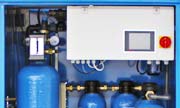
SCM 24
|
|
Cleans 24.000 liters per day
|
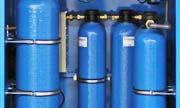
SCM 60
|
|
Cleans 60.000 liters per day
|
Video: How it works
The SCG Advantage
Our market-leading, water cleaning solutions have many advantages. To read more click the items below:
No Chemicals
Our machines and technology does not use any chemicals, at all.
Read more...
No Waste Water
Our machines do not waste any water. Yield = 100%.
Read more...
Low energy use
Uses 50 times less energy than a Reverse Osmosis Machine.
Read more...
Low ownership cost
Lower maintenance and operation costs due to our technology.
Read more...
Easy to install
Simple "plug and play" installation makes for easy deployment.
Read more...
Extremely compact
A compact system, contained in an easy to transport cabinet.
Read more...
Outperforms R.O.
SCG technologies outperform Reverse Osmosis systems.
Read more...
Faster ROI
Get a faster Return on Investment with our systems.
Read more...
Latest News
Latest Blog Posts
| Chemicals in water treatment? |
| Water storage - Whats best for keeping water clean and drinkable? |
| Case: Disaster Management Water Treatment |
Contact SCG
891 Showroom Place
Suite 101
Chula Vista, CA, 91914
Phone: +1 619-878-2730
Contact us by email