







How to design a zero-waste backwash system for catalytic filtration
Clean drinking water from an Australian bore or tank can carry iron, manganese, arsenic, bacteria and sediment that ordinary taste and odour checks may miss. A catalytic filter can remove these contaminants without continuous chemical dosing, but its backwash still needs a disciplined recovery system.
Designing a zero-waste backwash system for catalytic filtration begins with the quantity and quality of water, not the filter vessel alone. Every litre sent backwards must be captured, separated, tested and either returned to service or routed to an approved endpoint.
The aim is containment rather than dilution: spent wash water should not become an uncontrolled discharge, while captured solids remain traceable. Australian climate, plumbing rules, drinking-water objectives and the intended application must shape the final design from the outset.
Start with the source-water duty
Collect source samples across at least normal and peak-demand periods, including after heavy rain where relevant. Test turbidity, iron, manganese, arsenic, bacteria, pesticides and uranium against the actual risk profile. Australian bore water can change with pumping and depth, while harvested tank water may pick up dust, roof material or animal waste.
Build a daily water balance from clean production, forward-rinse volume, backwash volume, recovery losses and final residues. A brief water treatment history shows why treatment assumptions inherited from older gravity systems should be checked against current catalytic media and backwash behaviour.
Define the waste boundary
Define “zero waste” at the site boundary. It can mean no untreated wash water reaches a stormwater drain, sewer or natural watercourse, while settled or filtered solids are dewatered and handled as a controlled waste stream. It does not mean that filter media or contaminated sludge disappear.
Establish what the recovered water will contact next: potable supply, livestock, irrigation, wash-down, pool filling or cooling. A cleaner-looking liquid may still contain manganese, arsenic or pathogens, so reuse needs verification. Any unavoidable liquid purge must be lawful; claiming zero discharge without a tested solids-removal route would be misleading.
Build the hydraulic separation stages
Arrange the hydraulic train so each stream has a clear destination. A practical layout is raw-water storage, the catalytic vessel, a backwash header, an equalisation tank, solids separation, polishing and a protected return line to raw-water storage or treatment feed.
Slow the recovered backwash enough for settleable particles to separate, then remove finer floc through a mechanical filter or validated polishing stage. Size tanks from measured backwash intensity and duration, not average service flow. Overflow-free equalisation is essential because several filters may backwash in sequence during a peak day.
Use isolation valves and a diverting valve that cannot leave both the filter and recovery tank exposed to an uncontrolled path. Provide pressure gauges, sample points, air gaps where appropriate and accessible drains for maintenance. Pipework should suit local water chemistry and be supported by an engineer familiar with Australian installation practice.
Control each backwash cycle
Trigger backwash from a rising pressure differential, declining forward flow, turbidity breakthrough or a scheduled exercise, with the final logic set by pilot testing. Bed expansion and wash quality depend on media type, vessel area and upward velocity, so generic timing can waste water or fail to clean the bed properly. Turbidity alone will not reveal dissolved arsenic or uranium, so laboratory verification remains necessary.
During a cycle, route the initial weak pulse to equalisation if analysis shows it can be reused. Send the stronger wash pulse to separation, then return only validated polished water to the raw-water tank. A short forward rinse restores the bed, and its water should follow the same controlled recovery route.
Automatic control needs high-water diversion, pump-run interlocks and a manual fallback. Sensors should be repeatable and easy to clean. Record valve position, flow, pressure, turbidity and recovery volume for every cycle so an operator can notice a worn seal, blocked line or changing source-water condition.
Recover and treat the backwash
Solids capture is central to the design. Assess whether the recovered water carries mostly suspended iron and manganese particles or dissolved contaminants that conventional settling cannot remove. This distinction changes the separator choice and determines whether recycle can continue without increasing concentration in the filter feed.
A broader view of water pollution sources helps operators connect filter performance to geology, land use and runoff. For mining, agriculture and livestock areas, keep catchment controls and water-quality verification in the plan; treatment cannot compensate for an unstable source or poor sanitary practice.
Track solids through collection, dewatering and an approved end-use or disposal route. If polishing cannot meet the receiving water’s limits, direct discharge is not justified by the word “zero-waste”. This may require additional treatment, evaporation or a small controlled purge, each of which should be costed rather than hidden in the water balance.
Fit the system to Australian conditions
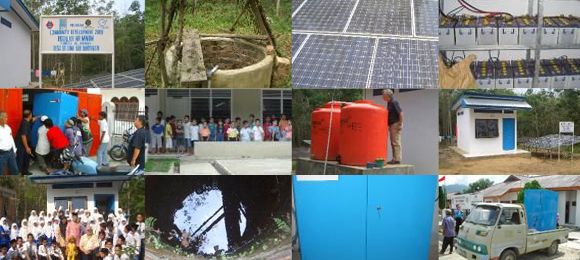
The rural school case study shows how biological pretreatment and catalytic filtration can be combined when source-water conditions demand more than one barrier. It is a useful design reference, although local rainfall, bore chemistry, maintenance capacity and regulatory requirements still determine the equipment and process selected in Australia.
Remote communities in the Kimberley, Pilbara and Far North Queensland may face limited reticulated water, long freight routes and seasonal power constraints. Projects serving Aboriginal and Torres Strait Islander communities need reliable equipment, straightforward controls, local training and culturally appropriate consultation from planning through operation.
Councils, farms, mine sites and small commercial operators often ask contractors to “size the plant” for worst-case demand while keeping lifecycle costs manageable. Compare shipping access, available skilled labour, spare-parts stock and service response before selecting automatic equipment. Flood, cyclone, dust, heat and very hard or saline water can change hydraulic and material requirements.
For drinking-water installations, document compliance with the Australian Drinking Water Guidelines and confirm which products need WaterMark certification, along with state plumbing, building and environmental approvals. A supplier warranty alone does not establish regulatory suitability.
Commission and verify performance
Start with a pilot unit using the real source and representative dirty-water loads. Establish backwash velocity, duration, solids loading, separator performance and recycled-water quality before fixing the commercial design. Acceptance tests should include several backwash cycles, peak simultaneous demand and a power or valve-failure scenario.
Set measurable operating limits rather than a vague promise of zero waste. Examples include recovered-water turbidity, pressure loss, backwash volume per megalitre produced and the mass of wet solids removed. Trends in these values reveal fouling before output water declines and support maintenance planning.
Train operators to take samples, interpret trends, isolate equipment and manage residues. Keep as-built drawings, control settings, calibration records, spare parts and a clear emergency procedure. Review performance after seasonal changes, especially after rain, drought or changes to nearby land use, then update the water balance.
Bring a source-water analysis, peak flow estimate and intended reuse path to the first design discussion. Swiss Cleanwater Group can compare treatment and recovery options, identify information gaps and help define pilot tests, sizing assumptions and Australian approval requirements.
Contact Swiss Cleanwater Group today to discuss a zero-waste backwash system for catalytic filtration and arrange a technical consultation for your bore, tank, surface-water or project supply.
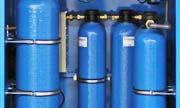
SCM 24
|
|
Cleans 24.000 liters per day
|
SCM 60
|
|
Cleans 60.000 liters per day
|
Video: How it works
The SCG Advantage
Our market-leading, water cleaning solutions have many advantages. To read more click the items below:
No Chemicals
Our machines and technology does not use any chemicals, at all.
Read more...
No Waste Water
Our machines do not waste any water. Yield = 100%.
Read more...
Low energy use
Uses 50 times less energy than a Reverse Osmosis Machine.
Read more...
Low ownership cost
Lower maintenance and operation costs due to our technology.
Read more...
Easy to install
Simple "plug and play" installation makes for easy deployment.
Read more...
Extremely compact
A compact system, contained in an easy to transport cabinet.
Read more...
Outperforms R.O.
SCG technologies outperform Reverse Osmosis systems.
Read more...
Faster ROI
Get a faster Return on Investment with our systems.
Read more...
Latest News
Latest Blog Posts
| Chemicals in water treatment? |
| Water storage - Whats best for keeping water clean and drinkable? |
| Case: Disaster Management Water Treatment |
Contact SCG
891 Showroom Place
Suite 101
Chula Vista, CA, 91914
Phone: +1 619-878-2730
Contact us by email