







Removing Uranium From Well Water Without Chemical Dosing
Uranium can occur naturally in groundwater where minerals release it into bores, wells and fractured-rock aquifers. It is invisible, odourless and tasteless, so clear water cannot be assumed to be safe. For Australian households, farms, communities and industrial sites, reliable testing is the starting point for selecting an effective uranium removal system.
Catalytic co-oxidation offers a chemical-free approach that uses dissolved oxygen and a catalytic filter bed to promote the conversion and capture of dissolved contaminants. The process can support uranium reduction alongside iron, manganese and other groundwater impurities, provided the equipment is designed around the actual water chemistry and verified against the required drinking-water standard.
| Treatment approach | Chemical dosing | Main operating principle | Typical consideration |
|---|---|---|---|
| Catalytic co-oxidation | No routine chemical addition | Oxygen-assisted oxidation and catalytic filtration | Requires correct media selection and contact time |
| Ion exchange | Usually no oxidant dosing | Uranium ions are exchanged onto resin | Resin capacity, competing ions and disposal matter |
| Reverse osmosis | No oxidant dosing | Pressure-driven membrane separation | Produces a concentrate stream and uses more energy |
| Adsorption | Usually no dosing | Contaminants attach to a specialised medium | Media replacement and breakthrough monitoring are essential |
| Biological or passive treatment | Variable | Microbial or geochemical transformation | Site conditions can be difficult to control |
Why Uranium Can Be Present In Australian Bore Water
Uranium is a naturally occurring element in many geological formations. Groundwater moving through granite, sandstone, volcanic rock or mineralised zones can dissolve small quantities of uranium and carry it into a bore. Alkaline water, elevated bicarbonate and oxidising conditions may increase uranium mobility, especially where the aquifer has long contact times with surrounding rock.
This matters in parts of South Australia, Western Australia, Queensland and the Northern Territory, as well as in regional areas where bore water is used without a reticulated supply. The Great Artesian Basin supports towns, stations and agricultural operations across several states, but water quality varies considerably between bores. A result from one bore cannot be used to predict the quality of another nearby source.
Australian operators should compare laboratory results with the current Australian Drinking Water Guidelines and any requirements set by the relevant state or territory authority. Uranium is generally assessed as a long-term health concern rather than an acute taste or odour problem, which makes routine sampling particularly important.
How Catalytic Co-Oxidation Works
Catalytic co-oxidation combines aeration or oxygen transfer with a reactive filtration medium. Water is exposed to oxygen, allowing readily oxidised substances such as ferrous iron and manganese to change into less soluble forms. The catalytic surface then encourages these reactions and retains the resulting particles within the filter bed.
Uranium chemistry is more complex because dissolved uranium commonly exists as uranyl species, often associated with carbonate. A properly engineered system can use co-precipitation, adsorption and surface reactions involving iron and manganese oxides to reduce uranium in the treated water. The exact mechanism depends on pH, alkalinity, redox conditions, competing ions and the selected catalytic media.
The phrase “without chemical dosing” means the system does not require routine addition of oxidants or coagulants such as chlorine, ozone, permanganate or ferric salts. Oxygen from air or an oxygen-enriched source may still be used. This distinction is important when estimating operating costs, maintenance requirements and the handling of residual solids.
Testing Determines The Right Treatment Design
A treatment system should be based on a complete raw-water profile rather than a uranium result alone. Useful laboratory parameters include uranium concentration, pH, alkalinity, conductivity, hardness, iron, manganese, arsenic, nitrate, sulphate, chloride, silica, turbidity and microbiological indicators. Where relevant, radium and gross alpha activity may also require assessment.
The water should be sampled at the borehead and, if an existing system is installed, at the point of use. Seasonal changes can affect groundwater quality, particularly after heavy rainfall, prolonged pumping or changes in aquifer pressure. A pilot test or treatability study can show whether catalytic co-oxidation achieves the target at the available flow rate and whether other contaminants compete for the media surface.
Flow demand is equally important. A rural home, cattle watering system, caravan park and municipal plant have very different peak-flow patterns. Contact time, backwashing capacity, vessel size and treated-water storage must be calculated together. Designing only for the average daily volume can produce poor performance during morning household demand or livestock watering periods.
Performance Without Routine Chemical Addition
The main attraction of chemical-free uranium treatment is operational simplicity. There is no regular oxidant delivery, chemical storage room or dosing pump calibration, and operators avoid the transport of hazardous reagents to isolated sites. This can be valuable for remote Australian stations, Aboriginal communities and mobile installations where supply chains are long and technical support is limited.
A catalytic filter still needs care. Backwashing removes accumulated solids and protects hydraulic performance, while valves, air systems and pumps require inspection. Media may eventually lose capacity or become fouled by organic matter, silica or excess iron. Monitoring treated-water uranium is essential because a clear outlet and normal pressure do not prove that the removal target is still being met.
Waste management should be included in the design. Captured uranium and associated metals remain in the spent backwash solids or exhausted media. The quantity may be small, but disposal must follow applicable Australian rules and site-specific advice. A supplier should explain sampling, media replacement, residual handling and recordkeeping before commissioning the plant.
Applications For Farms, Livestock And Remote Sites
Bore water used for cattle, sheep, poultry or horses needs a risk assessment that distinguishes animal consumption from general wash-down or irrigation. Long-term exposure, salinity and other contaminants may affect animal health and farm productivity. Guidance on clean water for livestock is relevant when planning a treatment train for troughs, dairy operations or intensive animal facilities.
Australian farms often rely on unattended systems, solar power, pressure pumps and tanks positioned far from the main residence. A suitable installation therefore needs robust controls, low consumables demand and an alarm or sampling plan that works without daily specialist attendance. Treated water may be directed to drinking points while separate raw-water lines continue to serve stock yards, fire storage or irrigation where appropriate.
The same principles apply to remote accommodation, mine camps, defence facilities and emergency water units. In regional New South Wales or Queensland, for example, a system may need to operate through high summer temperatures, variable electricity supply and restricted access to replacement parts. Compact modular equipment can reduce civil works, but it must still provide enough residence time and backwash water for the measured contaminant load.
Combining Uranium Removal With Other Treatment Stages
Uranium rarely appears as the only water-quality issue. A bore may also contain manganese, arsenic, iron, pesticides, bacteria or elevated salinity. Catalytic co-oxidation can be an effective first or middle stage, but it should not be assumed to address every contaminant. A separate disinfection, carbon, membrane or ion-exchange stage may be necessary.
Treatment order affects performance. Removing iron and manganese before a polishing step can prevent premature fouling, while sediment filtration protects valves and downstream membranes. Where several difficult contaminants occur together, multi-stage filtration guidance can help explain why a single vessel may not deliver stable results.
For drinking water, the final arrangement should include a hygienic storage tank, protected distribution pipework and a sampling point after treatment. Ultraviolet disinfection can address microorganisms but does not remove uranium. Conversely, a uranium filter does not automatically make microbiologically unsafe water potable. Each barrier has a defined purpose and needs its own verification.
Monitoring, Compliance And Whole-Life Cost
A commissioning test should establish raw-water and treated-water uranium concentrations, flow rate, pressure loss and backwash behaviour. Follow-up sampling can then be scheduled according to the risk, source variability and regulator or customer requirements. Remote telemetry may report flow, pressure, valve status and alarms, but laboratory testing remains the reliable method for confirming uranium performance.
Whole-life cost includes more than the purchase price. Energy consumption, pump duty, backwash water, laboratory testing, media replacement, transport and operator time can influence the best choice. A no-chemical system may reduce consumables and hazardous-material handling, while a membrane system may offer a different removal profile with concentrate management as a trade-off.
Project owners can keep up with treatment developments and practical water-quality information by subscribing to the newsletter. Before selecting equipment, provide the supplier with recent laboratory results, bore construction details, required production volume, available power and the intended use of the treated water. This information allows the design to be checked against Australian conditions rather than based on generic assumptions.
Request a site-specific assessment from Swiss Cleanwater Group for uranium-affected well or bore water. A properly tested catalytic co-oxidation system can reduce reliance on chemical dosing while supporting dependable water quality for homes, livestock, industry and remote Australian operations.
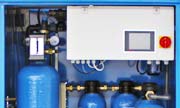
SCM 24
|
|
Cleans 24.000 liters per day
|
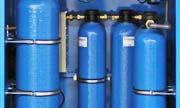
SCM 60
|
|
Cleans 60.000 liters per day
|
Video: How it works
The SCG Advantage
Our market-leading, water cleaning solutions have many advantages. To read more click the items below:
No Chemicals
Our machines and technology does not use any chemicals, at all.
Read more...
No Waste Water
Our machines do not waste any water. Yield = 100%.
Read more...
Low energy use
Uses 50 times less energy than a Reverse Osmosis Machine.
Read more...
Low ownership cost
Lower maintenance and operation costs due to our technology.
Read more...
Easy to install
Simple "plug and play" installation makes for easy deployment.
Read more...
Extremely compact
A compact system, contained in an easy to transport cabinet.
Read more...
Outperforms R.O.
SCG technologies outperform Reverse Osmosis systems.
Read more...
Faster ROI
Get a faster Return on Investment with our systems.
Read more...
Latest News
Latest Blog Posts
| Chemicals in water treatment? |
| Water storage - Whats best for keeping water clean and drinkable? |
| Case: Disaster Management Water Treatment |
Contact SCG
891 Showroom Place
Suite 101
Chula Vista, CA, 91914
Phone: +1 619-878-2730
Contact us by email