







Removing bacteria from rainwater harvesting tanks with catalytic filtration
Rainwater harvesting is common across Australia, from suburban homes in Brisbane and Sydney to rural properties outside Adelaide, Perth and regional Queensland. Stored roof runoff can supply toilets, irrigation, livestock and, with suitable treatment, household drinking water. The tank itself, however, does not make collected water safe.
Leaves, bird droppings, dust, insects and roof debris can introduce Escherichia coli, coliform bacteria and other microorganisms. Warm weather can accelerate biological growth, especially when tanks are exposed to sunlight or receive irregular maintenance. Effective treatment therefore needs to address both the incoming contamination and the conditions inside the storage system.
Catalytic filtration can form part of a low-chemical water purification train. A catalytic filter provides a highly active surface that supports oxidation and contaminant removal, while correctly selected pre-filtration can capture suspended solids that shield microorganisms. For potable use, filtration should be combined with a validated disinfection stage rather than treated as a complete substitute for microbial control.
The best design depends on the roof catchment, tank size, intended use and local water quality. A system supplying garden taps has different requirements from one supplying a house, dairy, abattoir, school or remote community. Australian operators should also consider drought, bushfire ash, intense storm events and the requirements of local health authorities.
How bacteria enter a rainwater tank
Rainwater is exposed to contamination before it reaches the tank. Bird and possum faeces on a roof can wash through gutters during the first minutes of a storm. Organic matter, pollen and dust provide nutrients for microbial growth, while cracks, unsealed access covers and damaged screens can allow insects and vermin to enter directly.
The first-flush diverter is therefore an important first barrier. It redirects the dirtiest portion of runoff away from the tank, although it must be correctly sized and emptied or reset after rainfall. Leaf guards, insect-proof screens and sealed lids reduce the amount of organic material entering the water. An overflow should also prevent backflow from drains or contaminated ground.
Tank hygiene affects treatment performance. Sediment accumulates at the bottom of many tanks and can become a reservoir for microorganisms. Sludge removal, inspection of internal surfaces and cleaning after a long dry period help prevent a sudden deterioration in water quality. In areas affected by bushfires, ash and damaged roofing materials should be assessed before the tank is returned to service.
What catalytic filtration can achieve
Catalytic filtration uses media with a chemically active or biologically supportive surface to promote the conversion and capture of specific contaminants. Depending on the media, the process can assist with iron, manganese, turbidity, dissolved organic compounds or other impurities. It operates with limited chemical input and can reduce the waste associated with some conventional treatment methods.
A catalytic bed can improve the physical and chemical conditions of stored water, but bacterial removal must be defined carefully. Some microorganisms may be retained as water passes through a fine or biologically active medium, yet a filter can become contaminated if it is overloaded or poorly maintained. Bacteria can also pass through if the pore size, flow rate and contact conditions are unsuitable.
For that reason, catalytic filtration is best used as one part of a treatment train. A typical arrangement may include a screened inlet, first-flush diversion, sediment filtration, catalytic media and ultraviolet or membrane disinfection. Where manganese is present in roof runoff or groundwater blending, operators can review manganese removal methods that avoid hazardous waste while selecting compatible downstream equipment.
Building a reliable treatment train
Pre-filtration protects the catalytic stage from leaves, grit and suspended solids. Coarse screening can be followed by a washable sediment filter or a finer cartridge, depending on the water quality and pump arrangement. Reducing turbidity is especially important before ultraviolet treatment because particles can create shaded areas where microorganisms are protected from the UV dose.
The catalytic filter needs an appropriate empty bed contact time, flow rate and backwashing schedule. If water moves too quickly, the media may not have enough contact with the contaminants. If the bed is allowed to foul, pressure loss increases and performance declines. Automatic valves can simplify backwashing for larger installations, while smaller rural systems may use manual servicing procedures.
Ultraviolet disinfection is commonly selected where treated rainwater is intended for drinking, food preparation or personal hygiene. It requires clear water, reliable electrical power and a lamp that is replaced according to the manufacturer’s service interval. Membrane filtration can provide another microbial barrier, while chlorination may be appropriate for systems that need a residual disinfectant throughout long pipe runs.
Each stage should be monitored rather than installed and forgotten. Useful checks include turbidity, flow, pressure differential, UV intensity, bacterial indicators and the condition of the tank. Testing after heavy rainfall, flooding, prolonged heat or maintenance work provides a clearer picture than relying on taste or appearance.
Australian design and operating considerations
Australian conditions can be demanding for rainwater systems. In Perth and Adelaide, long dry periods can concentrate dust and organic residue on roofs before a major storm flushes it into the tank. In tropical Queensland and the Northern Territory, high temperatures and humidity can support rapid biological activity. Melbourne and Hobart operators may face cooler conditions but still need protection from bird contamination and leaf fall.
Water demand also varies by property. A Sydney household may use harvested water for toilets, laundry and garden irrigation, while a farm near Toowoomba may need dependable supply for livestock during dry months. Rural users should prevent animals from accessing tank outlets and should use separate treatment and plumbing arrangements when potable and non-potable water are both present.
Bushfire risk deserves special attention. Ash, soot and fire retardants can enter a catchment after an emergency, and roofing may be damaged or chemically altered. The tank should be isolated until the catchment and water have been assessed. During severe weather, an overflow and secure foundation help protect the system from inundation, movement and cross-contamination.
Space and access are practical concerns in Australian installations. A compact unit may be valuable in a Melbourne townhouse, a remote telecommunications site or a mobile treatment plant. For locations with limited plant-room space, compact treatment systems can help fit filtration and disinfection into a manageable footprint without removing access for maintenance.
Maintenance, verification and safe use
A bacterial-control system is effective only when its barriers remain functional. Gutters and leaf screens should be inspected before the wet season and after major storms. First-flush devices need cleaning, tank covers must remain sealed, and sediment should be removed when accumulation affects storage or water quality. Filters require replacement or washing at intervals based on pressure loss and actual loading.
Testing should match the intended use. For drinking water, periodic laboratory analysis for E. coli and other indicator organisms is more dependable than visual inspection. Operators may also test pH, turbidity, colour, conductivity and metals where the catchment or plumbing creates additional risks. A sudden change in odour, taste, flow or pressure warrants investigation before the water is used.
Treatment records are valuable for farms, schools, commercial buildings and government projects. A simple log can record rainfall events, filter changes, UV lamp service, tank cleaning, test results and any periods when the supply was taken offline. This documentation helps identify recurring problems and demonstrates that the system is being managed rather than operated passively.
Catalytic filtration can provide an efficient, low-waste component in a broader rainwater purification system, especially where operators want to limit chemical dosing and energy consumption. Its performance depends on correct media selection, pretreatment, hydraulic design and maintenance. When the water is intended for human consumption, a validated disinfection barrier and regular microbial testing remain essential.
Swiss Cleanwater Group can help assess a rainwater application, identify relevant contaminants and match treatment equipment to the available space and flow demand. Contact the company to discuss a tailored system for a home, farm, municipality, industrial site or remote Australian operation, and move from untreated tank water to a controlled, dependable supply.
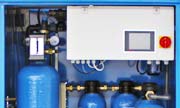
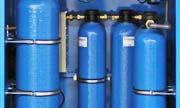
SCM 24
|
|
Cleans 24.000 liters per day
|
SCM 60
|
|
Cleans 60.000 liters per day
|
Video: How it works
The SCG Advantage
Our market-leading, water cleaning solutions have many advantages. To read more click the items below:
No Chemicals
Our machines and technology does not use any chemicals, at all.
Read more...
No Waste Water
Our machines do not waste any water. Yield = 100%.
Read more...
Low energy use
Uses 50 times less energy than a Reverse Osmosis Machine.
Read more...
Low ownership cost
Lower maintenance and operation costs due to our technology.
Read more...
Easy to install
Simple "plug and play" installation makes for easy deployment.
Read more...
Extremely compact
A compact system, contained in an easy to transport cabinet.
Read more...
Outperforms R.O.
SCG technologies outperform Reverse Osmosis systems.
Read more...
Faster ROI
Get a faster Return on Investment with our systems.
Read more...
Latest News
Latest Blog Posts
| Chemicals in water treatment? |
| Water storage - Whats best for keeping water clean and drinkable? |
| Case: Disaster Management Water Treatment |
Contact SCG
891 Showroom Place
Suite 101
Chula Vista, CA, 91914
Phone: +1 619-878-2730
Contact us by email