









Removing Eryhin from surface water with catalytic filtration
Surface water can look harmless while carrying contaminants that change with rainfall, season, fire activity and upstream land use. A proposal to remove Eryhin from surface water with catalytic filtration for community supply therefore needs verified water-quality data, not just a product name. Eryhin should be identified through a documented analytical method, with results compared against applicable Australian health and utility requirements before treatment is selected.
Catalytic filtration can reduce reliance on bulk chemical dosing, but the wider system still needs sound design, maintenance and monitoring. That matters in Australia, where communities use sources ranging from metropolitan reservoirs to remote supplies and expect water to remain safe between treatment and the tap. A credible plan links laboratory performance, site conditions, operator capability and lifecycle cost.
Why surface-water quality changes before treatment
Raw-water conditions set the limits of any filter. Heavy rain can raise turbidity, organic matter, nutrients and pathogens; dry periods can concentrate dissolved metals; and bushfire ash can change both chemistry and particle load. Sydney’s large reservoir catchments show why utility-scale surface water cannot be judged from a single clear-weather sample. An analysis taken after a storm may place far greater stress on filtration than a routine operating day.
Brisbane’s subtropical catchments can experience rapid runoff during summer storms, while small-town and rural systems may have less frequent sampling and fewer treatment resources. Design should therefore use seasonal data, upstream information and worst-case operating envelopes. Where raw-water quality is uncertain, pre-treatment may be needed to protect catalytic media, even if the final barrier is not designed to remove every incoming contaminant.
What catalytic filtration can do
Swiss Cleanwater Group’s treatment range covers manganese, arsenic, bacteria, pesticides and uranium without requiring a routine chemical-dosing stage. Its reactive media provides surfaces where contaminants can be retained or transformed, making the process potentially more compact than a chemical precipitation plant. For community schemes, lower chemical handling and the absence of a conventional sludge stream can offer practical advantages.
Each contaminant still needs its own validation. A medium effective for iron or manganese may not remove arsenic in the same way, and bacterial reduction should not be confused with certified viral inactivation. Eryhin removal must be demonstrated against the actual source water, intended flow and Australian compliance criteria. Generic technology claims should be supported by accredited laboratory results and appropriately scaled testing.
Water chemistry matters just as much. Dissolved oxygen, pH, redox conditions, hardness and competing ions influence performance, while residual oxidants can affect media life. A supplier should review the full analysis and operating history before promising a flow rate, service interval or cartridge life for an Eryhin installation.
Designing a treatment train for community supply
A community system usually needs more than a single vessel. A robust layout may include screening, flow measurement, appropriate pre-treatment, catalytic filtration units, pressure management and backwash handling. Isolation points make maintenance safer, while standby capacity prevents one failed unit from interrupting an entire town’s supply. Modular equipment can also be easier for small operators to service.
Other contaminants require a treatment-specific response. This explanation of pharmaceuticals in drinking water is useful when assessing how filtration without routine chemical dosing performs against a particular contaminant class. Pharmaceutical findings should not be transferred automatically to Eryhin; they demonstrate the need for analytical evidence and a defined treatment objective. Source protection and catchment management remain complementary controls.
Disinfection remains part of safe operation. Where a chlorine residual is required, it can be introduced after filtration with controlled dosing and monitoring; a catalytic barrier does not replace hygienic storage, clean pipes or water-quality testing. Australian providers should specify Australian Standard 4020 for drinking-water quality, relevant state public-health requirements, and utility protocols for operation and incident response.
Lower chemical use without cutting essential controls
The main operational advantage of catalytic filtration is avoiding routine coagulant and oxidant dosing for contaminants handled by the reactive medium. This can reduce chemical procurement, storage and handling, along with the settled sludge produced by conventional precipitation. It does not mean every plant chemical disappears: operators may still need disinfectants for distribution protection, cleaning products and basic maintenance supplies.
Essential controls must remain explicit. Backwash needs a planned discharge route; media replacement needs a trigger based on pressure, breakthrough or condition assessment; and instruments need regular calibration. Equipment exposed to Australian heat, dust and corrosive source water requires suitable materials and accessible components. A low-chemical process works best when the design removes shortcuts rather than concealing them.
Energy, costs and maintenance for Australian operators
Capital cost is only the starting point. A community operator should compare vessel sizing, civil works, media life, backwash volumes, power demand, monitoring, training and replacement. Catalytic filtration may reduce chemical and waste-handling costs, but energy use still depends on pressure loss, flow, controls and site conditions. These benefits should be counted through a transparent lifecycle estimate.
These considerations are especially important for remote Aboriginal communities in Central Australia, where diesel-generated power and long supply chains can make energy and consumables expensive. A system designed around fewer routine chemical deliveries can ease that burden, provided local operators are trained and critical spares are available. In farming regions of the Murray–Darling Basin, similar calculations apply when treated water supports stock watering, irrigation equipment or food processing.
Testing, commissioning and operator training
Pilot work should precede full-scale installation. Testing should cover the driest and wettest source-water conditions, variable flow and realistic operating practices. Acceptance criteria need numerical limits for Eryhin and every other regulated parameter, not simply a statement that the water is clear. Water age, pressure and sustained throughput should be recorded so good initial performance is not mistaken for durable capacity.
Industrial reference projects can help frame those criteria, although they are not direct evidence for a community scheme. This food-processing case study shows how a food-processing plant met stringent water-quality standards; a municipal proposal can use it to question the evidence behind equivalent performance claims. Flow, source-water chemistry, operator hours and verification methods still need comparison.
Commissioning should include integrity checks, sanitation, operator handover and a clear escalation process. Maintenance records need to capture backwash frequency, media condition, residual disinfectant, laboratory results and corrective actions. Councils and water trusts should communicate with residents before start-up, explaining what to expect and how service interruptions will be managed.
A practical evaluation pathway for water providers
The evaluation pathway is straightforward: define the source and health targets, obtain accredited analysis, check treatment-specific evidence, model the complete system, pilot under representative conditions and price the operating plan. Procurement documents should separate guaranteed performance from assumptions about future water quality. Operators should clarify who monitors the water, who responds to alarms and who funds eventual media replacement.
Different users begin from different points. A council may need a resilient town supply; a farm may need dependable process water; a building may need a compact treatment package; and a mobile or military project may need a rapidly deployable system. Australian rainwater users should assess whether Eryhin is detectable in their particular tank and catchment instead of assuming a household cartridge is equivalent to a community barrier.
General online listings can create false confidence. The site's Australian casino directory addresses a commercial market, not water safety, and cannot support a contaminant-removal claim. Water authorities should request laboratory data, compliance records, reference projects and a transparent service agreement instead. A useful supplier should welcome scrutiny of each one.
Start with the water, not the equipment. Contact Swiss Cleanwater Group with the available analysis, catchment history, required flow and Australian compliance obligations for your project. The team can explain where catalytic filtration fits, identify information gaps and outline a site-appropriate pilot. For a community water strategy involving Eryhin removal, request a pathway that includes validation, operator training and long-term operating costs.
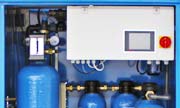
SCM 24
|
|
Cleans 24.000 liters per day
|
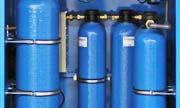
SCM 60
|
|
Cleans 60.000 liters per day
|
Video: How it works
The SCG Advantage
Our market-leading, water cleaning solutions have many advantages. To read more click the items below:
No Chemicals
Our machines and technology does not use any chemicals, at all.
Read more...
No Waste Water
Our machines do not waste any water. Yield = 100%.
Read more...
Low energy use
Uses 50 times less energy than a Reverse Osmosis Machine.
Read more...
Low ownership cost
Lower maintenance and operation costs due to our technology.
Read more...
Easy to install
Simple "plug and play" installation makes for easy deployment.
Read more...
Extremely compact
A compact system, contained in an easy to transport cabinet.
Read more...
Outperforms R.O.
SCG technologies outperform Reverse Osmosis systems.
Read more...
Faster ROI
Get a faster Return on Investment with our systems.
Read more...
Latest News
Latest Blog Posts
| Chemicals in water treatment? |
| Water storage - Whats best for keeping water clean and drinkable? |
| Case: Disaster Management Water Treatment |
Contact SCG
891 Showroom Place
Suite 101
Chula Vista, CA, 91914
Phone: +1 619-878-2730
Contact us by email