


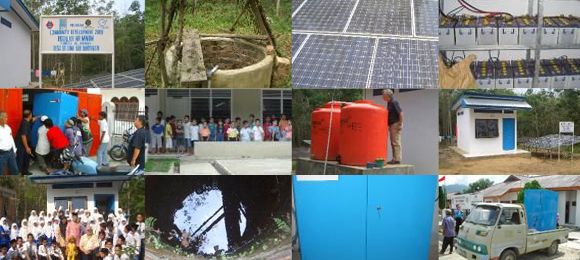







Chemical-Free Water Treatment for Turbid Surface Water
Assessing the feasibility of chemical-free treatment for surface water with high turbidity starts with the source, not the product label. After drought, Australian catchments can deliver heavy sediment loads when intense rain mobilises clay, silt and organic matter. At other times, the same intake may be comparatively clear. A system that performs during a storm may therefore behave very differently during dry weather, and any credible assessment must test the full range of operating conditions.
Turbidity is the cloudiness caused by suspended particles, while total suspended solids describes the broader mass of material in the water. The two measurements are related but not interchangeable. High turbidity can clog filters, obscure contaminants and shield microorganisms from ultraviolet light. It can also make it harder to verify whether treatment has removed pathogens or reduced chemical concentrations to safe levels.
Australia adds several practical dimensions. Melbourne and Adelaide can draw water from catchments affected by urban runoff, while Sydney’s reservoir quality varies with rainfall, bushfire ash and catchment activity. Across the Murray-Darling Basin, irrigation, drought and intense storms can produce substantial sediment movement. Rainwater tanks, swimming pools, livestock watering and remote facilities also create demand for treatment that can be maintained without a large municipal workforce.
Chemical-free generally means avoiding added coagulants, oxidants and other treatment chemicals, rather than avoiding treatment altogether. Physical separation, filtration, controlled settling and other non-chemical processes still require equipment, water testing and maintenance. The right question is whether these processes can meet the required water quality reliably, economically and within the available space and operating skills.
Understanding the Turbidity Challenge
Suspended clay can remain dispersed for long periods because its fine particles carry electrical charges and repel one another. Coagulation is commonly used to gather these particles into larger flocs that settle or can be filtered. A system designed for moderate turbidity may therefore struggle when fine clay approaches it at a high concentration, particularly if the water also contains algae, dissolved organics or changing pH.
Flow rate matters as much as particle concentration. A treatment unit tested at a low flow may create short contact times, uneven filter beds and excessive pressure losses. At higher flows, particles may pass through, or the equipment may consume more energy to maintain its designed rate. Storm-period testing should therefore include both hydraulic load and turbidity rather than relying on turbidity measurements alone.
Chemical-free treatment has credible uses, but the term requires careful interpretation. Avoiding chemical dosing can simplify storage and handling, reduce chemical handling risks and suit remote sites. It does not remove the need for sediment management, cleaning cycles, replacement components and water-quality monitoring. If a filter produces backwash, that stream must be considered during the feasibility assessment.
Testing the Water Before Choosing Equipment
A representative sampling plan should cover dry weather, ordinary rainfall and the highest turbidity events the site may reasonably encounter. Samples should be analysed for turbidity, total suspended solids, pH, temperature, conductivity, dissolved oxygen, organic carbon and nutrients. Testing should also address the contaminants relevant to the intended use, including pathogens, metals, pesticides and other industrial or agricultural pollutants.
Turbidity is normally measured in nephelometric turbidity units, or NTU, but laboratory testing is needed to identify what is causing the cloudiness. Clay responds differently from algae, and both behave differently from iron or manganese particles. If a surface source contains dissolved arsenic or uranium, the oxidation state and competing water chemistry must also be established before selecting an adsorption or filtration process.
For drinking water, performance should be compared with the Australian Drinking Water Guidelines and the requirements of the relevant state or territory regulator. Public health risk cannot be inferred from appearance alone. E. coli testing, disinfectant performance checks and verification of filter integrity are particularly important when fine sediment could shield bacteria or when particles have created a false impression of effective treatment.
Comparing Physical Treatment Options
Passive sedimentation and slow sand filtration are useful where land is available and flows are predictable. They can reduce suspended solids without chemical dosing, although they need substantial space, careful inlet design and regular maintenance. Coarse media filters, cloth filters and modular strainers may be more compact, but their capacity during peak turbidity must be demonstrated rather than inferred from clear-water performance.
Membrane systems offer finer particle separation and greater control when properly designed. Ultrafiltration can remove suspended solids and many microorganisms, while reverse osmosis can address a wider range of dissolved contaminants. Both approaches require energy and involve concentrate, cleaning or backwash management. The maintenance burden is especially significant for remote operations where specialist technicians are not nearby.
A treatment train may be more reliable than a single process. Settling, prefiltration and final polishing can distribute the workload, while redundancy protects water production when one unit needs servicing. Swiss Cleanwater Group’s approach is relevant to projects seeking contaminant removal without routine chemical dosing, but each proposed configuration should be matched to the actual source-water analysis and required flow.
Designing for Australian Site Conditions
The physical footprint of a system depends on peak demand, pretreatment requirements and redundancy. Remote communities, farms and mobile installations may have limited space, intermittent power and difficult road access. Equipment that performs well in a purpose-built facility may be less suitable where modules must be transported by road or maintained by general site personnel.
Power reliability and water quality can influence each other. Pumps and control systems need stable operation, while warm water, stagnant storage and nutrient-rich inflows can encourage biological growth within tanks and filters. Corrosion, scaling and mineral precipitation should be considered where bore or surface water has high salinity or metals content. An Australian deployment should include a realistic maintenance schedule, spare parts plan and operator training before installation.
Technical information on a groundwater treatment system provides a useful reference for understanding Swiss Cleanwater Group’s equipment approach. It should not be treated as direct proof of performance on turbid surface water. Groundwater generally has less suspended sediment, so source-water differences may require additional pretreatment, different flow settings or a revised maintenance interval.
Regulation and Local Market Requirements
Drinking-water responsibilities in Australia are divided among local governments, water utilities, public health authorities and state or territory regulators. The Australian Drinking Water Guidelines provide national guidance, while legislation and regulatory codes vary by jurisdiction. A council scheme, private operator or mobile deployment may therefore face different approval, monitoring and incident-reporting obligations.
Compliance must cover the whole service, not only the treatment unit. If treated water enters a reticulated network, operators may still require residual disinfection, water-quality monitoring and actions following storms or failures. A process without chemical dosing at the treatment stage can fit within this framework, but operators should assess the complete operational and public-health model before committing to it.
The local market includes municipal utilities, farming operations, food processing, mining camps, livestock facilities, commercial buildings, swimming pools and defence projects. Each has a different balance of flow, water quality, space and maintenance constraints. A military base case study illustrates the value of mobile drinking-water units in a desert setting. Its logistical lessons are relevant to remote Australian deployments, although low-turbidity desert water does not remove the need to validate high-turbidity surface-water performance.
Moving From Assessment to Deployment
A feasibility assessment should combine desktop review, source-water analysis and pilot testing. The pilot needs to establish acceptable pressure loss, removal performance, cleaning frequency, energy use, water recovery and operator workload. It should also include verification that the treated water meets the relevant health and aesthetic targets throughout the seasonal range rather than only under ideal conditions.
The commercial assessment should account for capital cost, replacement filters, power, transport, technician visits, downtime and waste disposal. Claims of low chemical use, minimal waste or low energy consumption should be checked against measured operating data for the intended source and flow. This comparison reveals whether a chemical-free process is technically feasible, economically sensible and appropriate for the skills available at the site.
After the pilot, implementation can proceed in stages with defined acceptance criteria, monitoring and contingency arrangements. For a site-specific review, speak with our team to arrange source-water assessment, pilot planning and a treatment proposal suited to Australian conditions.
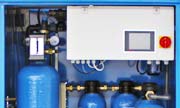
SCM 24
|
|
Cleans 24.000 liters per day
|
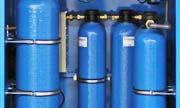
SCM 60
|
|
Cleans 60.000 liters per day
|
Video: How it works
The SCG Advantage
Our market-leading, water cleaning solutions have many advantages. To read more click the items below:
No Chemicals
Our machines and technology does not use any chemicals, at all.
Read more...
No Waste Water
Our machines do not waste any water. Yield = 100%.
Read more...
Low energy use
Uses 50 times less energy than a Reverse Osmosis Machine.
Read more...
Low ownership cost
Lower maintenance and operation costs due to our technology.
Read more...
Easy to install
Simple "plug and play" installation makes for easy deployment.
Read more...
Extremely compact
A compact system, contained in an easy to transport cabinet.
Read more...
Outperforms R.O.
SCG technologies outperform Reverse Osmosis systems.
Read more...
Faster ROI
Get a faster Return on Investment with our systems.
Read more...
Latest News
Latest Blog Posts
| Chemicals in water treatment? |
| Water storage - Whats best for keeping water clean and drinkable? |
| Case: Disaster Management Water Treatment |
Contact SCG
891 Showroom Place
Suite 101
Chula Vista, CA, 91914
Phone: +1 619-878-2730
Contact us by email