


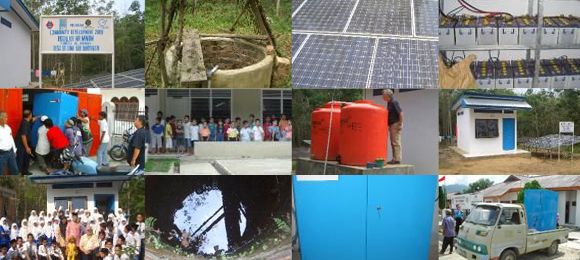







Beverage Manufacturer Removes Chlorine and Organics Without Carbon
A beverage manufacturer removes chlorine and organics without carbon, using a treatment train selected to protect product flavour, simplify operations and avoid the waste associated with spent activated-carbon media. In this context, “without carbon” means without relying on carbon-based filter media, rather than claiming that the entire production site is carbon neutral. The case study examines an Australian producer whose incoming water carried residual chlorine and naturally occurring organic compounds that affected consistency at blending and washing stages.
Residual chlorine serves an important public-health purpose, which means the treatment challenge was not simply to remove it. Chlorine-based disinfection is standard in many Australian urban supplies, including Sydney, Melbourne and Brisbane, and protects water as it travels through extensive distribution networks. Once water reaches the beverage plant, however, chlorine reactions and oxidation by-products can influence water quality, ingredient stability and sensory consistency.
The project combined source-water analysis with a low-waste treatment strategy. Testing established the relevant chlorine and organic levels before equipment selection, while operational requirements such as continuous production, hygienic storage and easy maintenance shaped the final design. The outcome was a dedicated treatment process that delivered more consistent water without routine chemical dosing, cartridge replacement or spent-carbon disposal.
Where Chlorine And Organics Enter
The plant’s incoming supply was connected to a chlorinated municipal network, leaving a measurable residual chlorine level at the point of reception. This was especially relevant for water used in syrup preparation, product dilution and equipment washing. Even when chlorine remained below the level associated with a strong smell, it could affect delicate botanical and fruit flavours or react with other ingredients during storage.
Organic compounds entered through several pathways. Natural colour, decaying vegetation and algae can contribute dissolved carbon to a water source, while runoff from surrounding agricultural land may introduce additional organic material. On a property with a rainwater tank, source variability can be even greater. Tanks are common in Queensland, South Australia and regional Australia, where households and businesses routinely collect rainwater for drinking, irrigation and livestock use.
A sound assessment therefore considered more than a single laboratory result. Chlorine, total organic carbon, turbidity, microbiology and relevant site contaminants were evaluated as a combined picture. This mattered because high turbidity could shield organic material from treatment, while variable source conditions could cause a system sized for average conditions to perform poorly during peak demand or after heavy rainfall.
Designing A Chemical-Free Treatment Train
The chosen approach avoided activated carbon as the primary treatment medium. Instead, the system was configured to address chlorine and organic loading while reducing the need for consumable chemicals and routine filter changes. Technical capability and information about suitable applications are available through Swiss Cleanwater Group, whose systems are designed for sustainable contaminant removal without excessive energy demand.
The design process began with the plant’s water profile and production requirements, not with a predetermined product package. Each stage had a defined purpose: removing suspended material that could interfere with treatment, reducing the target contaminants and providing reliable water suitable for the downstream process. That approach reduced the risk of treating symptoms such as taste variation while leaving the underlying source variability unaddressed.
The installation also had to fit a working beverage environment. Equipment required controlled access, space for routine inspection and a maintenance routine compatible with production schedules. Rather than introducing another chemical store or creating a stream of exhausted media, the operator gained a treatment process that could be monitored through water-quality data and checked through normal site maintenance procedures.
Results At The Beverage Plant
Following commissioning, repeat testing showed that chlorine and organics were being controlled within the limits established for production water. The treated stream no longer carried the incoming residual chlorine profile into sensitive stages of beverage production. This gave operators greater confidence that batches would remain consistent and reduced the risk of chlorine-related flavour variations appearing after release.
The operational benefits extended beyond sensory quality. Removing the need for routine chemical dosing simplified cleaning and staff handling, while avoiding spent activated carbon reduced replacement frequency and associated disposal. The plant could also maintain a tighter link between treatment performance and product quality because changes in source water could be identified through routine monitoring rather than discovered through customer feedback.
The system did not replace the public network’s disinfection role or the plant’s own hygiene controls. Chlorine remained valuable in the municipal distribution system, and beverage equipment still required validated cleaning and sanitisation. The treatment unit addressed the condition of water arriving at production; it did not remove the need for good manufacturing practice, microbial monitoring or properly managed wash-water systems.
Australian Rules, Markets And Operations
Water regulation in Australia operates through a combination of national guidance and state and territory requirements. The Australian Drinking Water Guidelines provide a national reference for drinking-water quality, while public water suppliers and relevant regulators apply requirements through their own schemes and approvals. Beverage manufacturers also operate under state and territory food-safety legislation and the Australia New Zealand Food Standards Code, with customer and retailer specifications often setting stricter operational targets.
Those requirements shaped the project’s acceptance criteria. Microbiological quality, chemical safety and production consistency all had to be documented, while any changes to source conditions required a defined response. This was particularly useful for a business anticipating expansion or greater seasonal variability: a treatment system supported by baseline testing and ongoing measurements could scale with the operation more responsibly than a process based only on occasional spot samples.
Local market conditions reinforced the value of that consistency. Australian supermarkets carry extensive ranges of still, sparkling and flavoured water, while cafés in Melbourne, Sydney and other cities compete heavily on the taste of filtered tap water and iced beverages. Bottled-water brands, private-label suppliers and food-service customers expect a dependable sensory result. Customers also increasingly examine packaging, energy use and waste practices when comparing suppliers.
The same demand for dependable potable water appears in temporary and remote workplaces. Swiss Cleanwater Group describes construction site water solutions for sites where workers need safe drinking and washing water. This broader application illustrates why modular, low-waste treatment can be valuable wherever conventional supply connections are limited or water quality varies.
A Practical Path To Cleaner Water
The beverage plant case demonstrates that chlorine and organics can be addressed without defaulting to chemical dosing or disposable carbon filtration. The essential controls were clear: understand the source, test for the contaminants that matter and configure treatment around the required water quality. For manufacturers, that can mean fewer production holds, more reliable flavour and simpler compliance evidence.
The approach also transfers well to farms, livestock operations, swimming pools, commercial buildings, industrial facilities and mobile or military deployments. Each environment has different flow rates and source-water conditions, but the same discipline applies. Equipment should be sized for actual demand, treatment targets should be established before purchase and operating results should remain visible after commissioning.
Request a source-water assessment, define the required chlorine and organic limits and scope a monitored treatment trial with Swiss Cleanwater Group. The trial should include local water conditions, maintenance access and measurable acceptance criteria, giving the site a clear basis for selecting sustainable treatment that protects product quality and avoids unnecessary waste.
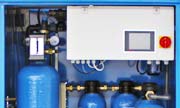
SCM 24
|
|
Cleans 24.000 liters per day
|
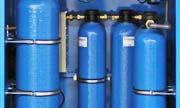
SCM 60
|
|
Cleans 60.000 liters per day
|
Video: How it works
The SCG Advantage
Our market-leading, water cleaning solutions have many advantages. To read more click the items below:
No Chemicals
Our machines and technology does not use any chemicals, at all.
Read more...
No Waste Water
Our machines do not waste any water. Yield = 100%.
Read more...
Low energy use
Uses 50 times less energy than a Reverse Osmosis Machine.
Read more...
Low ownership cost
Lower maintenance and operation costs due to our technology.
Read more...
Easy to install
Simple "plug and play" installation makes for easy deployment.
Read more...
Extremely compact
A compact system, contained in an easy to transport cabinet.
Read more...
Outperforms R.O.
SCG technologies outperform Reverse Osmosis systems.
Read more...
Faster ROI
Get a faster Return on Investment with our systems.
Read more...
Latest News
Latest Blog Posts
| Chemicals in water treatment? |
| Water storage - Whats best for keeping water clean and drinkable? |
| Case: Disaster Management Water Treatment |
Contact SCG
891 Showroom Place
Suite 101
Chula Vista, CA, 91914
Phone: +1 619-878-2730
Contact us by email