





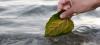
Chemical-Free Radon Removal for Australian Bore Water
Radon is a radioactive gas that dissolves into groundwater as it moves through certain rocks. Chemical-free removal of radon from well water using aeration and filtration is a practical approach: aeration transfers the gas from water into air, while filtration captures it before the treated air is discharged. Neither step requires routine chemical dosing, which makes the process attractive for off-grid homes, farms and small commercial sites.
For many Australian landholders, a groundwater supply is simply the bore. Whether it feeds a kitchen tap, a dairy, a livestock yard or a swimming pool, radon can become a concern when bore water is pumped, stored or used. The right system depends on measured water quality, available flow, site layout and how much maintenance the owner can sustain.
Radon risks in Australian groundwater
The health concern comes mainly from breathing radon and its decay products, which can attach to airborne particles and lodge in the lungs. Radon-222 has a half-life of about 3.8 days, but continual exposure matters more than a single measurement. Australian Drinking Water Guidelines and state and territory health advice should be used to assess results, particularly for children and long-term occupants.
Geology drives the risk. Radon-bearing groundwater is commonly associated with granite and other fractured rock, including the Adelaide Hills and Mount Lofty Ranges in South Australia, parts of Victoria’s Yarra Ranges and the Southern Highlands of New South Wales. A bore can be clear at one address and elevated at the next, so local popularity is not a substitute for testing.
Rainwater does not solve the problem where groundwater supplies the house. Tasmania’s wet climate makes roof tanks commonplace, yet a bore connected to a rural property may still deliver radon into a storage tank. Tank location and ventilation can determine how much gas accumulates around the property.
Starting with a reliable water test
Begin with a sample taken from the raw bore at a representative flow, using the collection instructions supplied by an accredited laboratory. Ask for radon analysis using an appropriate method from the AS/NZS 4659 series. Depending on the geology, gross alpha and beta activity and uranium may also be relevant.
Radon concentrations can vary with groundwater movement, rainfall and pumping. A second test after substantial rain, or during a different operating pattern, can reveal a result that one sample misses. Retesting after commissioning and at scheduled service intervals is equally important, because incomplete capture or exhausted media can allow a breakthrough.
Bore-water analysis should cover more than radon. Manganese, iron, arsenic, pesticides, uranium and microbiological quality may need separate consideration. Boiling can reduce radon in a saucepan, but it does not remove metals or many other contaminants and can concentrate non-volatile substances, so it is not a substitute for a properly engineered treatment train.
How aeration removes dissolved radon
Aeration, also called air stripping or degassing, relies on the greater ability of air to hold radon gas than water. In a spray aerator, venturi or packed contact tower, air and water meet over a large contact area. Flow rate, air-to-water ratio, water temperature and vessel design determine how much of the dissolved gas is transferred.
After contact, the radon-bearing air must pass through an appropriate capture stage rather than being released beside the house. Water then continues to storage or treatment, while the gas is held on dedicated media. An open vent on an aerator without radon capture is not an acceptable complete system.
Aeration also affects other chemistry. Dissolved iron can oxidise and form particles, and some systems use that reaction to reduce iron loading. Manganese often behaves differently and may foul media or require separate filtration. These side effects must be included in design so carbon performance does not decline because of untreated solids.
Selecting filters that capture released gas
Activated carbon is commonly used because it adsorbs radon on its large internal surface, but not every carbon product or undersized filter is suitable. The selected media should be specified for radon service, with an expected working flow and a replacement interval calculated from the measured radon load. Fine sediment filtration normally comes first.
Carbon also captures radon progeny and airborne particles released during aeration. This is important because the gas is not the only part of the hazard. A well-designed arrangement uses a prefilter to protect the adsorption bed, a radon-rated carbon stage and any required polishing stage, rather than relying on a single general-purpose cartridge.
Performance claims should be checked under actual operating conditions. A household that uses more water during a wet week can overload a bed sized only for an average flow. Ask for commissioning results, treated-water testing and clear replacement criteria. Chemical-free equipment still needs scheduled maintenance; carbon that has reached its working capacity cannot be assumed to continue removing radon.
Preparing turbid bore water for filtration
Turbid bore water is a warning that sediment, iron or manganese may be reaching the treatment train. Cloudy water can blind fine filters, restrict water flow through the carbon bed and encourage biological growth. A suitable sediment or multimedia prefilter protects the radon stage and makes its performance more predictable.
Swiss Cleanwater Group’s pre-filtration guidance explains why this stage matters for chemical-free systems handling high-turbidity water. This is especially relevant in Australia, where bores near alluvial farming land, weathered rock or disturbed aquifers may deliver changing solids loads. Assess turbidity before selecting filter pore size or backwash frequency.
Backwashing can restore a particulate filter without chemical additives, although it uses water and creates a waste stream. A sustainable design can collect backwash for suitable reuse, but it should not assume unrestricted irrigation of food crops. Where iron or manganese needs dedicated media, specify that requirement separately rather than expecting the radon filter to solve every water-quality problem.
Safe siting and dependable maintenance
Ventilation is a critical safety control. Radon-bearing exhaust air should be discharged outdoors, away from doors, open windows, air intakes and neighbouring occupied areas. It should not be routed into a roof cavity, garage or enclosed courtyard. A tank fed directly from a bore can also act as an unplanned aerator, so any tank-room or under-house installation needs careful siting.
Commissioning should verify flow, pressure, blower performance and radon reduction, with the system running at a realistic demand. Maintenance includes inspecting the prefilter, checking the blower and verifying that the exhaust path remains clear. Media replacement is a planned expense, and spare parts should be available before the working life of the bed ends.
Water-treatment performance and hygiene also need attention. Incorrect carbon preparation, excessive stagnation or poor maintenance can support unwanted biological growth, while damaged seals can allow untreated water to bypass the bed. Houses, childcare centres, food businesses and public facilities should pair any radon assessment with a broader potable-water and disinfection review.
Arrange a site-specific radon treatment plan
In Australia, radon treatment is commonly arranged through specialist suppliers alongside local bore drillers, pump technicians and plumbers. The trade term for a groundwater supply is usually a bore, and quotes often separate bore installation from water-treatment equipment. Regional suppliers should be asked about workshop access, response times, operator training and replacement-media supply, especially for properties several hours from the nearest service centre.
Suppliers such as Swiss Cleanwater Group provide chemical-free water treatment for drinking-water and industrial applications. A comparison should cover the proposed aeration method, radon-rated media, expected reduction at the actual flow, safe exhaust design, installation responsibilities and after-sales support, not simply the purchase price.
Contact Swiss Cleanwater Group with the laboratory report, bore and tank details, average and peak water use, available power and the site address, then request a site-specific aeration and filtration design. Ask for commissioning tests, documented radon-reduction results, a safe exhaust plan and a maintenance schedule that the household, farm or facility can actually keep.
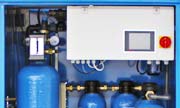
SCM 24
|
|
Cleans 24.000 liters per day
|
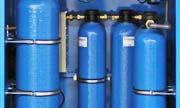
SCM 60
|
|
Cleans 60.000 liters per day
|
Video: How it works
The SCG Advantage
Our market-leading, water cleaning solutions have many advantages. To read more click the items below:
No Chemicals
Our machines and technology does not use any chemicals, at all.
Read more...
No Waste Water
Our machines do not waste any water. Yield = 100%.
Read more...
Low energy use
Uses 50 times less energy than a Reverse Osmosis Machine.
Read more...
Low ownership cost
Lower maintenance and operation costs due to our technology.
Read more...
Easy to install
Simple "plug and play" installation makes for easy deployment.
Read more...
Extremely compact
A compact system, contained in an easy to transport cabinet.
Read more...
Outperforms R.O.
SCG technologies outperform Reverse Osmosis systems.
Read more...
Faster ROI
Get a faster Return on Investment with our systems.
Read more...
Latest News
Latest Blog Posts
| Chemicals in water treatment? |
| Water storage - Whats best for keeping water clean and drinkable? |
| Case: Disaster Management Water Treatment |
Contact SCG
891 Showroom Place
Suite 101
Chula Vista, CA, 91914
Phone: +1 619-878-2730
Contact us by email