








Seasonal raw water quality and catalytic media
Seasonal variability in raw water quality can turn a well-running treatment plant into a troubleshooting exercise. Heavy rain mobilises sediment, organic matter and metals from catchments; extended dry periods concentrate salts and dissolved contaminants; bushfires add ash and altered runoff chemistry. For Australian operators, this pattern is complicated by the country’s size and varied climate. Sydney and Newcastle experience intense stormwater and first-flush events, Melbourne’s expanding urban catchment changes drainage water quality, and northern Queensland can shift between monsoon runoff and strongly stratified reservoirs.
Knowing how to handle seasonal fluctuations in raw water quality with catalytic media requires more than choosing a filter at installation. It means matching treatment capacity, media selection and monitoring to the contaminants most likely to change. Swiss Cleanwater Group develops catalytic systems intended to remove contaminants without chemical dosing, waste streams or excessive energy use, giving operators a stable treatment platform when source conditions are properly understood.
Why source water changes through the year
Wet weather is often the sharpest test. During a short storm, soil, roof runoff, manure and road dust can raise turbidity, total organic carbon and trace metals far above a plant’s normal baseline. After the storm passes, values may fall quickly, yet the initial slug can overwhelm vessels or drive contamination through the works. Operators should know how quickly each source responds, how long recovery takes and where the most vulnerable point in the treatment train is located.
The dry season creates a different challenge. Concentrated flow can increase dissolved manganese and iron in groundwater bores, while reduced dilution in the Murray–Darling Basin raises salinity in irrigation return flows. Warm, slow water can also encourage biological growth in reservoirs. Treatment decisions therefore need to reflect the source, catchment and season rather than only the latest laboratory result.
What catalytic media can do
Catalytic media provide active surfaces that accelerate appropriate oxidation reactions. For dissolved manganese and iron, this commonly converts the metals into filterable particles instead of leaving them dispersed throughout the water. In a correctly selected treatment train, the reactive media and downstream filtration work together, producing more consistent water quality as incoming chemistry moves within a defined operating range.
The media must be matched to the job. Catalytic oxidation is not a universal answer to arsenic, uranium, pesticides or bacteria; each requires an appropriate mechanism, adequate contact time and confirmation of performance. Swiss Cleanwater Group describes its no-chemical systems and operating principles in its chemical-free treatment overview. These systems can suit municipal, agricultural, industrial, swimming pool, building and mobile applications where chemical handling, storage or disposal is undesirable.
Designing a treatment train that tolerates change
Start with a contaminant profile rather than a single worst-case number. Sample at different times of year, including after representative rain, and track turbidity, pH, dissolved oxygen, manganese, iron, organic carbon and target-specific contaminants. This is especially important in Australia because the seasons are opposite those in Europe, and imported equipment assumptions may be based on more predictable source water.
Set clear operating triggers for normal conditions, verified storm flow and emergency operation. Modest turbidity increases may require shorter response times or staged commissioning, while severe events may call for isolation, diversion or an alternative supply. Modular vessels, standby capacity and suitable pretreatment help maintain treatment while equipment is inspected or serviced. Councils, utilities and site owners can incorporate these provisions into local tenders without accepting an inflexible one-size-fits-all package.
Responding to rain, fire and flood conditions
A practical response begins before an event. Maintain weather and catchment alerts, keep rapid-testing capability available, pre-position replacement elements and define who can authorise a temporary operating change. During an event, operators should verify source conditions at the point of use rather than relying solely on a distant rainfall gauge. Samples taken before, during and after the change reveal whether the catalyst remains effective or needs adjustment.
These controls are relevant across Australia. After bushfire rain in New South Wales, ash and sediment may cause a sharp turbidity increase; in Queensland, monsoon flooding can contaminate shallow bores with surface runoff; and in Western Australia, remote communities and mining operations may face long supply chains for replacement parts. A robust design therefore includes local service access as well as treatment performance.
Maintaining public health and supply security
Stable treatment protects more than appearance and taste. Municipal systems must manage dissolved manganese, arsenic and other substances that can make drinking water unacceptable, while farms, food processors and livestock operations need dependable water during production. Manganese removal, for example, uses catalytic oxidation and filtration, but the final design still depends on pH, oxygen, organic content and the concentration of metal to be treated.
For communities facing additional contaminant questions, the technical guidance on cost-effective uranium removal explains why source-specific assessment should precede equipment selection. Where a validated disinfection barrier is required, filtration and catalytic treatment should be integrated with that requirement rather than treated as substitutes. Performance should be checked against the Australian Drinking Water Guidelines and relevant council, utility or workplace requirements.
Verifying performance and planning for maintenance
Reliable operation depends on measurable conditions. Track pressure changes, treated-water quality, backwash or maintenance requirements and contaminant trends against the design envelope. A rising pressure differential can indicate accumulated solids before visible breakthrough occurs. Periodic laboratory testing remains necessary because some changes are not obvious through appearance or basic field instruments.
Procurement should also account for lifetime support. Local installation, spare media, operator training and laboratory analysis are easier to coordinate when the supplier, distributor and service contractor have clearly defined responsibilities. Swiss Cleanwater Group’s technology partner network provides a route to assess project requirements and identify suitable delivery arrangements for Australian councils, utilities, industry and mobile or military deployments.
Request a seasonal raw-water assessment from Swiss Cleanwater Group and obtain a contaminant profile, treatment train, capacity review, monitoring plan and lifecycle cost estimate tailored to the site. Contact the team to discuss municipal, agricultural, industrial, recreational, building, mobile or military applications and prepare a reliable system for the next wet season.
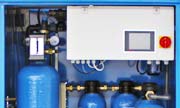
SCM 24
|
|
Cleans 24.000 liters per day
|
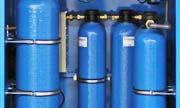
SCM 60
|
|
Cleans 60.000 liters per day
|
Video: How it works
The SCG Advantage
Our market-leading, water cleaning solutions have many advantages. To read more click the items below:
No Chemicals
Our machines and technology does not use any chemicals, at all.
Read more...
No Waste Water
Our machines do not waste any water. Yield = 100%.
Read more...
Low energy use
Uses 50 times less energy than a Reverse Osmosis Machine.
Read more...
Low ownership cost
Lower maintenance and operation costs due to our technology.
Read more...
Easy to install
Simple "plug and play" installation makes for easy deployment.
Read more...
Extremely compact
A compact system, contained in an easy to transport cabinet.
Read more...
Outperforms R.O.
SCG technologies outperform Reverse Osmosis systems.
Read more...
Faster ROI
Get a faster Return on Investment with our systems.
Read more...
Latest News
Latest Blog Posts
| Chemicals in water treatment? |
| Water storage - Whats best for keeping water clean and drinkable? |
| Case: Disaster Management Water Treatment |
Contact SCG
891 Showroom Place
Suite 101
Chula Vista, CA, 91914
Phone: +1 619-878-2730
Contact us by email