








Integrating catalytic filtration into existing sand filters
Many Australian bore, harvested-water and surface-water supplies already rely on sand filters. A catalytic filtration retrofit can improve their treatment capability without replacing the whole plant, but only when the media, hydraulics and water chemistry suit the job.
The term covers several different mechanisms, so it is not a single drop-in upgrade. A catalytic surface may oxidise dissolved manganese, while adsorptive media can take up arsenic or uranium. The right choice depends on what the water actually contains.
Upgrades are attractive for council depots, schools, farms and industrial sites where a working filter, pump set and concrete vessel are already in place. They can reduce capital costs and site disruption, provided operators can manage the altered maintenance routine.
A sound approach starts with testing, not product selection. This guide explains how to integrate catalytic media with an existing sand filter, protect downstream equipment, verify performance and stage the work for Australian conditions.
Start with the water, not the filter
Begin with a full analysis by an accredited Australian laboratory, using water samples taken across normal operating and seasonal conditions. Test the contaminants of concern—dissolved and total manganese, arsenic, iron, microbial indicators, pesticides and uranium where relevant—alongside pH, alkalinity, hardness, turbidity, dissolved oxygen and temperature. This establishes whether the existing sand filter has a genuine treatment gap and provides a baseline against which the retrofit can be judged.
Source identification matters as much as chemistry. Groundwater around Perth can contain dissolved manganese and iron, while tank water in Melbourne may carry sediment from roofs and gutters. Sand can remove suspended particles but generally does not capture dissolved metals. Sampling must also distinguish dissolved metal from particles already held in the sand, because a retrofit may target the former while leaving suspended solids or filter breakthrough unresolved.
Test upstream and downstream of the filter as well as at the raw-water source. A rising manganese result may point to reducing conditions in the aquifer or well, while poor arsenic removal can reflect competing ions, contact time or a change in the raw-water profile. Diagnosing the cause prevents an expensive media change that leaves the underlying problem untouched.
Select media that fits the treatment objective
Decide whether to exchange the sand for catalytic media, use a dedicated catalytic bed, or install a polishing vessel after the existing filter. Each option changes head requirements, bed depth and backwash behaviour. Require test data for the actual water rather than relying on generic capacity figures, and check that replacement media will not foul or chemically interact with the remaining sand.
Some media promote oxidation; others adsorb a particular contaminant, so one blend cannot be assumed to handle every hazard. A manganese catalyst, for example, still depends on suitable oxidation conditions. The equipment offered by Swiss Cleanwater Group, including its catalytic filtration systems, can be evaluated against the treatment objective, available footprint and local utilities.
Ask suppliers for contaminant-specific test data, bed volumes, service-life assumptions and replacement procedures. Clarify whether the media is self-regenerating or requires regeneration chemicals, because that affects waste, running costs and the stated chemical-free operation. This keeps expectations aligned with the operating data and the site’s waste-handling arrangements.
Prepare the vessel and control system
Inspect the vessel before changing its media. Confirm structural condition, underdrain performance, lateral clearance, freeboard, valve integrity and available pump head. The replacement bed must suit the vessel’s design flow and backwash expansion; adding denser or finer media can overload the underdrains and increase head loss.
Plan how fresh media will be loaded, rinsed and displaced safely. Where parallel vessels exist, a staged change can limit shutdowns; otherwise, allow for a temporary bypass or planned outage. Dust control, lifting, confined-space entry and traffic management still need documented methods. Provide drainage so backwash and spent media cannot reach stormwater or groundwater, especially on farms and urban sites with tight trade-waste controls.
Review the control system before installation. Automatic valves, actuators, flow meters and pressure gauges must be correctly sized, with fail-safe positions that protect the pump and media. Where power is unreliable, provide a manual backwash route or generator provision rather than assuming an automatic restart. This is particularly important at remote bores and small livestock facilities.
Rework operations for catalytic media
A catalytic bed changes the operating routine. Establish backwash triggers from measured head loss and turbidity rather than a fixed clock. Confirm that wash water removes accumulated particles without losing useful media, and arrange lawful handling of the waste stream. Track pump energy as well as water use; Australian operators often judge projects by bore yield, pump hours and cost per megalitre.
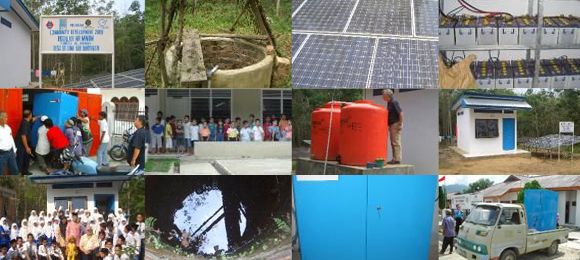
Keep disinfection separate from the retrofit decision. Ask the media supplier whether pre-chlorination affects the selected medium, and have the treatment train reviewed before moving any disinfectant downstream. Filtration alone should not be counted as a validated bacteria barrier without an approved design and monitoring plan. For small community supplies, experience shared in sustainable school water solutions can inform training, maintenance and access to spare parts in remote settings.
Use a simple log for differential head, flow, turbidity, residual disinfectant and the relevant contaminant indicators. Set alert levels and a response plan, and check sensors against laboratory results. Keep an inventory of seals, actuators and media, with local access to common spares. A well-run system in a pump shed should not depend on a technician travelling interstate for a routine adjustment.
Adapt the design to Australian conditions
Local source water should shape the final treatment train. In Perth, oxidation of dissolved manganese may need careful dissolved-oxygen and pH control; in Melbourne, roof-water filtration may need sediment removal before catalytic polishing. A harvested-water system has different debris and biological loading from a rural bore, so copying another council’s specification is a poor shortcut.
Australian agriculture adds another scale of operation. Dairy farms in Gippsland need dependable water for stock and wash-down, often with high seasonal demand. Pesticide-contaminated irrigation water calls for a separate adsorption assessment rather than an assumed manganese treatment. Remote First Nations communities in Central Australia can face high freight costs and limited technical support; for a remote bore, salinity, power and maintenance access may matter more than a sophisticated control panel.
The local market also shapes delivery. Councils and water utilities commonly assess tenders around whole-of-life cost, operator training and measurable service outcomes, while farms and smaller businesses may buy direct through established pump and treatment suppliers. Freight can dominate a remote project, so modular equipment, locally available components and realistic maintenance access should be included in commercial comparisons.
Commission, monitor and prove performance
Pilot before committing to a full changeout. Run the proposed media against representative samples or a temporary test rig, then compare contaminant removal, pressure loss, backwash frequency and energy use with the existing filter. Record baseline results and agree acceptance criteria with the designer, operator and laboratory before installation.
Commission the completed installation with clean-water and dirty-water tests, calibrate instruments and train the people who will keep it running. Where filtered water supplies a building, have the plumbing and backflow provisions checked against the applicable version of AS/NZS 2416.1; assess drinking-water quality against the Australian Drinking Water Guidelines and state or territory requirements. Councils and utilities may also require tender documentation, operator competency and auditable monitoring.
Leave the site with an operations manual recording media type, quantities, backwash settings, test frequencies, isolating valves and emergency steps. Schedule inspections after storms, droughts, source changes and pump maintenance, because seasonal water chemistry can alter treatment performance. Update the log and training records whenever the plant changes, and keep the laboratory contact information close to the control panel.
Start with a representative water sample and a site survey, then request a retrofit proposal based on verified treatment needs. Swiss Cleanwater Group can discuss suitable equipment, pilot testing, Australian deployment and operator handover. Contact the team with your source-water results, filter dimensions, flow rate and operating constraints to build a practical, measurable upgrade.
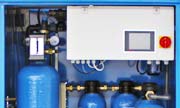
SCM 24
|
|
Cleans 24.000 liters per day
|
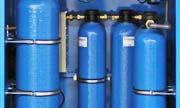
SCM 60
|
|
Cleans 60.000 liters per day
|
Video: How it works
The SCG Advantage
Our market-leading, water cleaning solutions have many advantages. To read more click the items below:
No Chemicals
Our machines and technology does not use any chemicals, at all.
Read more...
No Waste Water
Our machines do not waste any water. Yield = 100%.
Read more...
Low energy use
Uses 50 times less energy than a Reverse Osmosis Machine.
Read more...
Low ownership cost
Lower maintenance and operation costs due to our technology.
Read more...
Easy to install
Simple "plug and play" installation makes for easy deployment.
Read more...
Extremely compact
A compact system, contained in an easy to transport cabinet.
Read more...
Outperforms R.O.
SCG technologies outperform Reverse Osmosis systems.
Read more...
Faster ROI
Get a faster Return on Investment with our systems.
Read more...
Latest News
Latest Blog Posts
| Chemicals in water treatment? |
| Water storage - Whats best for keeping water clean and drinkable? |
| Case: Disaster Management Water Treatment |
Contact SCG
891 Showroom Place
Suite 101
Chula Vista, CA, 91914
Phone: +1 619-878-2730
Contact us by email