







Preventing biofouling in reverse osmosis pretreatment
Reverse osmosis can deliver high-quality water with relatively low energy demand, but its thin polyamide membranes are easily affected by upstream water quality. A pretreatment fault rarely appears as an obvious failure. It usually develops as rising differential pressure, unstable permeate flow, more frequent cleaning and a gradual decline in salt rejection.
Biofouling is the accumulation of microorganisms and the protective substances they produce on filter media, pipework and membrane surfaces. Bacteria attach to particles, multiply and form a gelatinous biofilm that traps minerals. Chlorine-tolerant organisms and dissolved organic nutrients can make the problem harder to control, particularly where feedwater comes from reservoirs, bore wells, rainwater or recycled-water systems.
For Australian operators, the issue is highly practical. Municipal schemes in Sydney and Melbourne, mining projects in Western Australia and remote communities in northern Australia face very different water chemistry. Equipment must also support Australian Drinking Water Guidelines and applicable state requirements without creating a chemical-intensive pretreatment train or an impractical maintenance burden.
Why biofilms form before reverse osmosis
Biofilm growth needs a surface, moisture, nutrients and microorganisms. Once cells settle on a prefilter or membrane, they begin producing extracellular polymeric substances, commonly called EPS. This sticky matrix binds cells together, captures suspended solids and creates a protected layer in which bacteria can continue to reproduce. Precipitated iron and manganese can also provide additional attachment sites.
In an RO feed stream, the consequences extend beyond visible contamination. EPS increases membrane resistance, encourages mineral scaling and holds particles against the membrane surface. Operators may first notice that each clean-in-place cycle restores performance for less time. Interpreting turbidity alone can miss this early warning because a biofilm can develop while bulk water readings remain within normal limits.
How catalytic filtration protects RO membranes
Catalytic filtration uses engineered media to promote reactions that bind or transform selected contaminants while the filter physically captures suspended material. For RO pretreatment, the goal is to lower the microbial and particulate load entering the membrane, reduce organic material and prevent the conditions that let a biofilm establish. The process can add a protective stage without routine chemical dosing or a high-pressure separation step.
The design should be assessed as part of the complete treatment train. Media grade, bed depth, hydraulic loading and backwashing determine how effectively particles and biofilm precursors are removed. Swiss Cleanwater Group also emphasises low ownership costs when evaluating treatment, including media replacement, labour, water used for cleaning and lost production during service.
Catalytic media can address several contaminants that compromise potable and process water, including manganese, iron, arsenic, pesticides and uranium, depending on the selected medium and verified operating conditions. It can also reduce bacteria without the handling and storage requirements of continuous chemical feeding. This does not make the filter a sterilising device: a validated log-reduction target, downstream protection and routine monitoring remain necessary for any regulated application.
Designing pretreatment for Australian water sources
Feedwater analysis should cover more than hardness and pH. A useful Australian specification includes turbidity, silt density index, suspended solids, iron, manganese, colour, organic carbon, bacteria, salinity, sulfate, alkalinity and the oxidation state of relevant metals. Bore water around Adelaide and regional Victoria, for example, may require very different pretreatment from a stabilised municipal supply in Brisbane or a treated industrial stream in Perth.
Source conditions also change. Reservoir turnover can raise organic carbon, warm water in northern Australia supports faster biological growth, and recycled water may carry variable disinfectant residual and nutrients. Sudden rainfall can introduce soil, algae and sediment into rainwater harvesting systems. Each event can alter filter loading and give microorganisms a better opportunity to attach.
A staged approach reduces uncertainty. Collect samples across normal operations and at higher-risk times, run a pilot where the water is variable, and define cleaning triggers before commissioning. For projects that need local engineering, installation or service coverage, the Swiss Cleanwater Group partner network can provide access to appropriately equipped companies without adding another proprietary layer to the project.
Matching filtration to the RO system
Filter capacity must be matched to feed flow, recovery rate, membrane type and operating temperature. Excessive loading creates short filter runs and variable backwash demand, while an undersized unit becomes a bottleneck. Differential-pressure trends, normalised permeate flow and salt-rejection data should be reviewed together so operators can distinguish pretreatment fouling from membrane ageing or a control-system fault.
Compatibility matters as much as capture efficiency. Residual chlorine must be managed correctly because oxidants can damage polyamide RO membranes, and media selected for iron removal may behave differently in highly saline or sulfate-rich water. The wider Swiss Cleanwater Group portfolio is designed to remove contaminants without chemicals, waste or excessive energy use, yet each application still needs an engineered balance between filtration rate, pressure drop and water chemistry.
Imported equipment also needs an Australian delivery plan. Before shipment, a customs broker should confirm tariff classification, duties, insurance and any quarantine requirements for filter media. Local documentation, electrical checks, commissioning support and access to spare parts should be scheduled before the system arrives, especially for mines, farms and remote installations where travel can extend every maintenance visit.
Applications across the Australian market
Municipalities can use catalytic pretreatment to protect high-value RO plants that produce drinking water or process supply. The same approach is relevant to commercial buildings, hotels, hospitals, swimming pools and manufacturing plants where water quality affects equipment, public health or product consistency. Systems intended for drinking water should be designed with the relevant water authority and accredited testing personnel.
Agriculture and livestock operations can face bore water containing salts, iron, manganese, arsenic or uranium. Removing those contaminants before storage or irrigation protects pumps, membranes and crops, while reliable pretreatment supports remote sites with limited chemical handling. Mining and construction crews can package similar systems for mobile or temporary use, and defence or emergency deployments need treatment that can be transported and maintained under changing conditions.
Landscape and recreational-water projects add another Australian use case. Recycled irrigation water must be managed for salinity, pathogens and biofilm growth, particularly in dry regions. The company’s guidance on golf course irrigation explains how source-water treatment can support reliable irrigation while reducing environmental impact, provided turf species, soil and irrigation practices are also considered.
Monitoring performance and sustaining results
A useful monitoring plan combines simple operating indicators with periodic laboratory testing. Record feed flow, pressure drop across each stage, backwash frequency, permeate flow, conductivity and recovery rate. Rising pressure drop with stable feed conditions often indicates accumulated solids or biofilm; falling normalised flow and changing salt rejection can reveal fouling before a complete loss of capacity.
Maintenance should include scheduled inspections, controlled backwashing and sampling from representative filter locations. Filter media should be checked for channeling, compaction, coating or biological growth, and replacement intervals should reflect measured performance rather than a generic calendar assumption. Operators should also verify that any disinfectant used elsewhere in the plant is compatible with both the catalytic medium and the RO membrane.
For drinking-water projects, the final evidence comes from a documented validation plan. This should include influent and effluent testing against agreed Australian criteria, hydraulic calculations, commissioning records, alarm settings and operator training. These measures turn catalytic filtration from a promising concept into a defensible pretreatment barrier that can be audited over the life of the plant.
The fastest route to a reliable outcome is a site review supported by representative water samples. Swiss Cleanwater Group can then help define the contaminants of concern, compare suitable catalytic media, size the pretreatment stage and establish measurable acceptance criteria for the RO installation.
Contact Swiss Cleanwater Group to arrange an Australian project assessment and request a treatment proposal for municipal, industrial, agricultural, building, mobile or defence applications. A properly matched catalytic filter can protect RO membranes, reduce maintenance exposure and deliver dependable water without routine chemical pretreatment.
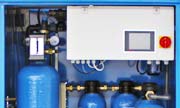
SCM 24
|
|
Cleans 24.000 liters per day
|
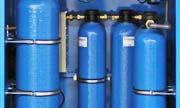
SCM 60
|
|
Cleans 60.000 liters per day
|
Video: How it works
The SCG Advantage
Our market-leading, water cleaning solutions have many advantages. To read more click the items below:
No Chemicals
Our machines and technology does not use any chemicals, at all.
Read more...
No Waste Water
Our machines do not waste any water. Yield = 100%.
Read more...
Low energy use
Uses 50 times less energy than a Reverse Osmosis Machine.
Read more...
Low ownership cost
Lower maintenance and operation costs due to our technology.
Read more...
Easy to install
Simple "plug and play" installation makes for easy deployment.
Read more...
Extremely compact
A compact system, contained in an easy to transport cabinet.
Read more...
Outperforms R.O.
SCG technologies outperform Reverse Osmosis systems.
Read more...
Faster ROI
Get a faster Return on Investment with our systems.
Read more...
Latest News
Latest Blog Posts
| Chemicals in water treatment? |
| Water storage - Whats best for keeping water clean and drinkable? |
| Case: Disaster Management Water Treatment |
Contact SCG
891 Showroom Place
Suite 101
Chula Vista, CA, 91914
Phone: +1 619-878-2730
Contact us by email