







The impact of water hardness on catalytic media performance
Hard water is a widespread operating condition for Australian water users, yet its effect on catalytic media is often overlooked. Total hardness is mainly calcium and magnesium, usually reported as milligrams per litre of calcium carbonate. It is not a contaminant in the same way as arsenic or bacteria, but it can change the surface chemistry, flow behaviour and service requirements of a filter. That makes it especially important when comparing a bench-top test with a real reticulation network or a rural bore.
For an operator, hardness should be treated as a design input rather than a pass/fail label. The same media can perform well in one supply and lose capacity in another because of alkalinity, temperature, iron, suspended solids or simply a different flow rate. Swiss Cleanwater Group's catalytic systems are intended to remove contaminants without routine chemical dosing, waste streams or excessive energy use; those benefits still depend on selecting the right configuration for the source water.
How hardness changes catalytic media behaviour
Catalytic media works by providing active surfaces where contaminants can react, be transformed or be held for later removal. Those surfaces have a finite usable area, and reactions depend on contact time, water chemistry and the rate at which fresh water reaches the media. Calcium and magnesium are usually present as dissolved ions, but increasing concentrations raise the chance of mineral precipitation, particularly where pH and alkalinity also favour scale.
Hardness alone does not “poison” every catalyst. The more common effect is gradual surface covering: precipitated calcium carbonate or magnesium-containing deposits reduce the open pore area, make flow less uniform and slow the reactions that give catalytic filtration its performance. In a new installation this may not be obvious. It becomes clearer as pressure loss rises, contaminant removal becomes less consistent or the expected service interval gets shorter. The effect is particularly relevant where media is expected to manage manganese, arsenic, pesticides or uranium alongside routine service demands.
Scale, fouling and pressure loss
Carbonate hardness, often expressed as calcium carbonate, is the main scale concern. As pressure falls or carbon dioxide escapes, calcium carbonate can settle onto media and pipe surfaces. Magnesium can also form hydroxide deposits at higher pH. The Langelier Saturation Index is one tool used to estimate carbonate scale tendency, although it must be interpreted with temperature, conductivity, alkalinity and pH rather than used alone.
Deposits do more than reduce chemical kinetics. They narrow flow paths, increase backwashing demand and create places where suspended solids collect. A sudden rise in differential pressure should therefore be investigated before a filter is assumed to have reached contaminant breakthrough. When specifying a packaged system, the easy installation options are useful for comparing footprint, connections and commissioning requirements, but the media choice still needs to match the water analysis.
Australian water supplies create different conditions
Australian conditions make the point particularly clear. Sydney's reticulated drinking water is drawn mainly from surface sources and is generally less hard than many inland supplies, while Adelaide's surface-water network is often described as soft to moderately hard. Groundwater bores around Alice Springs and other inland towns can be strongly mineralised, with high calcium, magnesium and sometimes salinity. Local hardness can differ markedly between suburbs, farms and industrial premises.
Northern NSW and Queensland are a different operating environment again. The Great Artesian Basin supplies hot, mineralised bore water to pastoral properties and towns, while irrigation users in the Murray–Darling Basin manage seasonal salinity and source changes during drought. Regional councils and private scheme operators commonly deal with bores, pump stations and tank-and-bore arrangements rather than a single protected surface-water supply. A practical water pollution overview helps separate hardness from salinity, turbidity, metals and microbial risks when comparing options.
Measure hardness before selecting the media
Start with a laboratory analysis of the water at the treatment inlet, not a general statement that the property has “hard water”. Ask for total hardness, calcium, magnesium, alkalinity, pH, conductivity or TDS, turbidity, iron, manganese and silica where relevant. Results are commonly reported as mg/L as CaCO3, so check the units before comparing a laboratory report with a product specification or a figure from another country.
Samples should represent normal operation, including the wettest or highest-flow period if the source is seasonal. A second sample after storage or heating can reveal a different scale tendency. High hardness is a warning to examine the full chemistry, not a reason to assume that catalytic media will fail. The operator can then decide whether the incoming stream needs particulate removal, flow equalisation, blending, softening or another physical pretreatment step before the catalytic stage.
Designing a stable catalytic filtration train
The most dependable arrangement gives every stage a clear job. A suitable upstream barrier removes sediment and protects the fine pores of the catalytic media; the catalytic section then receives water with a predictable flow and enough contact time. Differential-pressure monitoring and an accessible service point make it easier to detect fouling, and the design should allow for media inspection or replacement without disrupting the whole installation.
A chemical-free treatment objective does not mean that source-water problems can be ignored. Iron, manganese, organic matter, chlorine and extreme pH can affect a catalyst differently from hardness, so each needs an engineering response suited to the application. For Australian commercial and public-sector projects, suppliers should be able to provide test data, flow assumptions and compliance information, while site operators should check any required Watermark approval, drinking-water standards and council conditions. Hardness should be included in that commissioning plan, not left for the first breakdown.
Applications where water quality varies most
Municipalities, government projects, farms, livestock operations, swimming pools, buildings and mobile or military installations all face different combinations of pressure, footprint and water chemistry. A bore-fed dairy property in Gippsland may need reliable treatment for equipment and stock, while a remote health facility may value simple maintenance and spare-part availability over a high flow rate. Pool operators also need to account for calcium hardness, temperature and pH when scale starts to affect surfaces and dosing.
Experience outside Australia can still provide useful design evidence. A Maldives hotel case study shows how a property can treat its own water without chemicals, including the importance of matching the system to local source conditions rather than copying a generic specification. In Australia, that principle applies to mining camps in the Pilbara, regional schools, emergency-response vehicles and holiday parks where the inlet may change with rainfall or drought.
Maintaining performance between service visits
A simple operating log can reveal changing water conditions before they become failures. Record inlet and outlet hardness, flow, pressure and differential pressure, along with the results of any contaminant or microbial testing. Rising pressure loss often points to particulate loading, mineral scale or biofilm; a change in hardness after a rain event may indicate a different source blend. Trend the measurements against seasonal demand and pump settings instead of relying on a fixed replacement date alone.
Backwashing or media cleaning should follow the media's design and observed performance. Operators should confirm that drainage, electrical supply and treated-water quality remain within specification after each intervention, and should keep a spare element where continuity matters. If scale is suspected, a fresh sample and a review of alkalinity, pH, temperature and flow can show whether pretreatment, adjustment or a different media specification is the sensible next move.
The most useful next step for a site with hard water is a representative sample and a short process review. Swiss Cleanwater Group can use the analysis to discuss media selection, pretreatment, flow rates, monitoring and expected servicing for municipal, agricultural, commercial, pool or mobile applications. The aim is a system that treats the actual source water while avoiding unnecessary chemical use and avoidable operating costs.
Request a site-specific assessment through the Swiss Cleanwater Group contact options, and include the inlet analysis, peak flow, available footprint and any pressure or temperature constraints. With those details, the team can identify a practical configuration and a maintenance plan suited to Australian conditions. Begin with the sample from the real inlet, then select the catalytic media that is ready for that water.
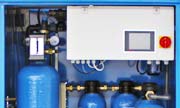
SCM 24
|
|
Cleans 24.000 liters per day
|
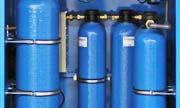
SCM 60
|
|
Cleans 60.000 liters per day
|
Video: How it works

The SCG Advantage
Our market-leading, water cleaning solutions have many advantages. To read more click the items below:
No Chemicals
Our machines and technology does not use any chemicals, at all.
Read more...
No Waste Water
Our machines do not waste any water. Yield = 100%.
Read more...
Low energy use
Uses 50 times less energy than a Reverse Osmosis Machine.
Read more...
Low ownership cost
Lower maintenance and operation costs due to our technology.
Read more...
Easy to install
Simple "plug and play" installation makes for easy deployment.
Read more...
Extremely compact
A compact system, contained in an easy to transport cabinet.
Read more...
Outperforms R.O.
SCG technologies outperform Reverse Osmosis systems.
Read more...
Faster ROI
Get a faster Return on Investment with our systems.
Read more...
Latest News
Latest Blog Posts
| Chemicals in water treatment? |
| Water storage - Whats best for keeping water clean and drinkable? |
| Case: Disaster Management Water Treatment |
Contact SCG
891 Showroom Place
Suite 101
Chula Vista, CA, 91914
Phone: +1 619-878-2730
Contact us by email