









Media Lifespan in High-Arsenic Aquifers
The lifespan of catalytic media in high-arsenic aquifers is rarely one fixed number. It is the period during which a treatment bed continues converting and removing dissolved arsenic to the required standard. Useful life ends at verified breakthrough or when fouling and ageing reduce capacity. Stable bore chemistry may support long intervals, while seasonal changes can shorten them.
Arsenic is a chronic health concern, making reliable treatment evidence essential. The Australian Drinking Water Guidelines set an arsenic guideline value of 0.01 mg/L, while state and territory regulators apply enforceable requirements through drinking-water and water-service laws. A reticulated urban supplier is monitored accordingly; a private bore usually leaves responsibility with its owner. Boiling, a familiar household habit, does not remove arsenic and can concentrate it as water evaporates.
Chemical-free catalytic systems use active metal-oxide surfaces to promote oxidation and capture contaminants, avoiding routine coagulants and regenerants. This reduces chemical handling, sludge production and energy demand, but it does not make the media maintenance-free. Media can age, shed particles, foul or lose capacity. Equipment may last for years while its treatment medium needs planned replacement, so media life and asset life must be tracked separately.
Australian buyers range from municipal teams and remote community operators to farms, mines, livestock businesses and commercial buildings. Their conditions differ widely: regulated urban supplies in Sydney, Melbourne, Perth and Adelaide, groundwater bores on pastoral properties, and off-grid facilities where technicians and replacement stock travel long distances. Any service-life estimate must reflect the water, flow, maintenance access and local supply chain.
What sets the working life of the media
| Operating condition | Effect on catalytic media | Practical response |
|---|---|---|
| High arsenic concentration | Rapid use of active capacity | Size for peak load and set an early-warning limit |
| Predominantly As(III) | Oxidation may be slower | Verify redox conditions and treatment chemistry |
| Phosphate, silica or elevated metals | Competition, coating or fouling | Test the complete ionic profile |
| Turbidity or organic matter | Blocked active surfaces | Protect the bed with suitable filtration |
| Stable pH, oxygen and flow | More predictable performance | Extend intervals only after verification |
| Flow surges or pump cycling | Bed disturbance and particle release | Control flow and retain adequate freeboard |
A service-life figure quoted without source-water chemistry has little value. The same medium can perform well on low-arsenic, oxygenated water and reach breakthrough quickly on a hotter, more concentrated feed. Flow matters because it determines contact time and the rate at which contaminants reach the bed. A duty cycle based on average demand can therefore overstate capacity; peak flows and intermittent operation belong in the calculation.
Physical condition matters as much as chemistry. Catalytic coatings may dissolve or detach, grains may abrade, and iron, manganese or biofilm deposits may seal the surface. Even before regulatory breakthrough, a rise in treated-water turbidity or pressure differential can indicate that the bed is no longer hydraulically stable. Operators should record these signs alongside laboratory arsenic results because they often provide the first warning of changing media condition.
Arsenic loading and the breakthrough curve
Arsenic occurs mainly as arsenite, As(III), and arsenate, As(V) in groundwater. Many adsorbents hold As(V) more strongly, while suitable manganese- and iron-based media can catalyse oxidation of As(III) before adsorption. The route is sensitive to dissolved oxygen, pH and competing ions, so aeration, oxidation or other pretreatment may be required in some waters. A chemical-free approach does not mean every source chemistry can be treated identically.
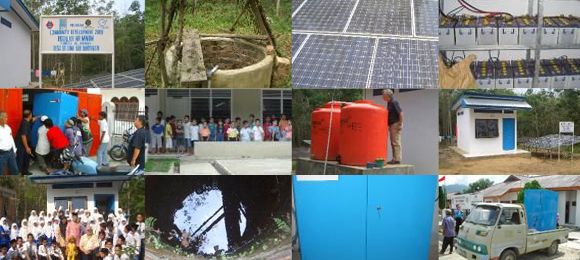
Breakthrough is the practical end of a run. As active sites fill, arsenic in the treated stream rises, often within a transition zone rather than as an instantaneous failure. Operators need a defined action limit below the applicable water-quality standard and a sampling frequency capable of detecting that transition. The Bangladesh groundwater case study provides useful field context for chemical-free arsenic treatment while demonstrating why local source testing and operating records remain indispensable.
Source chemistry that shortens or extends service
pH, alkalinity, dissolved oxygen, salinity and competing ions can reshape both oxidation and adsorption. Phosphate can occupy active sites, while silica and metals can form coatings. Very low pH can also alter surface chemistry. Mineralised groundwater in inland Australia may carry iron and manganese that foul catalytic surfaces. A laboratory panel covering the complete water profile is therefore more useful than an arsenic result alone, particularly where bore strata change with depth.
Seasonal recharge adds another variable in parts of northern Queensland, the Northern Territory and inland New South Wales, where aquifers can shift between reducing and oxygenating conditions. Monsoonal recharge, pumping changes and nearby abstraction may alter source water without changing the pump or treatment unit. Operators should retest after major rainfall, drought or new bore development instead of assuming one sample represents the year.
If a bore also carries uranium, pesticides, bacteria or elevated manganese, each contaminant needs a separate compatibility check. A medium proven for arsenic may not address them all. Persistent turbidity requires suitable upstream filtration, while inadequate oxidising conditions must be identified through pilot evidence. This protects catalytic surfaces and avoids changing operating settings blindly.
Monitoring performance across Australian operating models
Monitoring should begin with baseline samples of raw and treated water, followed by laboratory testing at a frequency matched to loading and regulatory duties. Portable arsenic test kits can support daily or weekly checks, but accredited laboratory analysis should confirm important trends and any action-level result. Keep records of arsenic concentration, pH, oxygen, turbidity, flow, pressure and media volume; these variables reveal why performance changes and when a changeout is justified.
In Sydney, Melbourne, Perth and Adelaide, reticulated water supplies are managed centrally, and household filter cartridges are familiar to consumers. Neither fact guarantees that a domestic unit is suitable for arsenic removal. On rural properties, rainwater tanks, shallow bores and deeper bores may each serve a different purpose, so samples should be tied to the exact tap or stock-water line. A kitchen filter that improves taste should not be presented as an arsenic barrier without test evidence.
Remote community systems, mines, farms and livestock operations need a simpler service model because laboratory turnaround, operator time and freight can be significant. Suppliers should document how media is shipped, stored and changed out, and should confirm local spare-parts arrangements. In remote settings, predictable replacement intervals can be as valuable as nominal treatment capacity.
Designing for planned replacement and resilient service
Treat catalytic media as a planned consumable rather than a permanent component. Size the bed for peak arsenic concentration, peak flow, required contact time and the safety margin between breakthrough and the water-quality limit. Include realistic duty cycles for intermittent pumps, livestock demand and irrigation instead of relying on annual averages. Redundant vessels or staged replacement can keep water available during changeout, especially where an untreated bore cannot be taken offline.
Service agreements and local procurement often decide whether a technically sound design works in practice. Australian buyers should seek clear commissioning criteria, warranties, replacement-media pricing, technical support and delivery arrangements. The WCU 600 specifications should be checked against the site’s flow, footprint, utilities, access and treatment goals, then matched to appropriate pretreatment and monitoring. Compliance documentation and operator training belong in the same package.
Turning field data into a credible replacement interval
A pilot deployment should span enough operating variation to expose fouling, redox changes and hydraulic effects rather than relying on a short test during one stable period. Measure raw and treated arsenic at regular intervals, inspect the medium after cleaning or removal, and compare results with flow and water chemistry. The output is not a universal expiry date; it is a defensible expected run length, an upper operating scenario and the conditions under which replacement should be triggered.
Set action levels before performance declines: an early-warning arsenic value, a treated-water limit, maximum pressure differential and maximum cumulative flow through the bed. Define how spent media will be handled under applicable state waste rules. After each changeout, flush as specified, retest, document the removed volume and restore the operating baseline. This creates an auditable service history rather than relying on calendar reminders.
Secure the service plan before full-scale deployment
A media lifespan is reliable when it is expressed as operating conditions, monitored indicators and a defined response, not as a fixed number of months. This is especially important in high-arsenic aquifers, where source variation and competing contaminants can erase a generic performance estimate. A site-specific plan converts laboratory chemistry into practical decisions for operators, maintenance teams and asset owners.
Give Swiss Cleanwater Group the raw-water analysis, arsenic species where known, daily and peak flow, bore details, available footprint, pretreatment and required water-quality standard. Request a sizing calculation, expected media run, monitoring schedule, commissioning protocol, replacement plan and total-cost comparison. Field evidence and product documentation can support the initial review, while local pilot data should remain part of the final decision.
Use the contact options on the Swiss Cleanwater Group website to arrange a technical review and site-specific pilot before purchasing a full system. Lock in media supply, operator training, changeout procedures and laboratory support at the same time, giving the installation a dependable operating life and a clear response whenever the water changes.
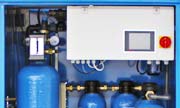
SCM 24
|
|
Cleans 24.000 liters per day
|
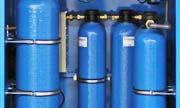
SCM 60
|
|
Cleans 60.000 liters per day
|
Video: How it works
The SCG Advantage
Our market-leading, water cleaning solutions have many advantages. To read more click the items below:
No Chemicals
Our machines and technology does not use any chemicals, at all.
Read more...
No Waste Water
Our machines do not waste any water. Yield = 100%.
Read more...
Low energy use
Uses 50 times less energy than a Reverse Osmosis Machine.
Read more...
Low ownership cost
Lower maintenance and operation costs due to our technology.
Read more...
Easy to install
Simple "plug and play" installation makes for easy deployment.
Read more...
Extremely compact
A compact system, contained in an easy to transport cabinet.
Read more...
Outperforms R.O.
SCG technologies outperform Reverse Osmosis systems.
Read more...
Faster ROI
Get a faster Return on Investment with our systems.
Read more...
Latest News
Latest Blog Posts
| Chemicals in water treatment? |
| Water storage - Whats best for keeping water clean and drinkable? |
| Case: Disaster Management Water Treatment |
Contact SCG
891 Showroom Place
Suite 101
Chula Vista, CA, 91914
Phone: +1 619-878-2730
Contact us by email