









Case study: treating high-iron groundwater for a brewery
A brewery depends on water for every stage of production, from mashing and fermentation to cleaning, rinsing, and cooling. When that water comes from a private well, its mineral profile can change with the season, groundwater level, and local geology. High iron is one of the most common concerns because it can affect taste, colour, equipment, and process consistency.
This case study follows an anonymized brewery using groundwater with elevated iron and related contaminants. The site required a dependable treatment system that could produce brewing-quality water without adding chemicals, generating concentrated waste, or placing a heavy energy burden on daily operations.
Swiss Cleanwater Group assessed the raw-water characteristics, the brewery’s production schedule, and its peak flow requirements. The resulting design combined aeration, media filtration, monitoring, and hygienic storage in a compact installation suitable for continuous commercial use.
The groundwater problem at the brewery
The brewery’s borehole supplied water with approximately 8.6 milligrams of dissolved iron per litre. Manganese was present at a lower concentration, and the raw water occasionally carried fine suspended particles after periods of heavy rain. The water was clear when first drawn, but it developed a yellow-brown tint after exposure to air.
That change was especially disruptive in the brewhouse. Iron can create metallic or astringent notes, interfere with the intended flavour profile, and contribute to deposits inside pipework, tanks, heat exchangers, and spray nozzles. Even when the finished beer passes basic quality checks, variable process water makes recipe control more difficult.
The brewery also wanted to avoid conventional chemical dosing. Oxidants can be effective for converting dissolved iron into filterable particles, but they introduce chemical storage, handling requirements, residual management, and additional points of failure. The preferred approach was a low-maintenance system that used the properties of the water and specialised filtration media.
Defining a brewing-quality treatment target
The treatment objective was broader than simply reducing iron. The brewery needed water with stable colour, low turbidity, no objectionable odour, and a mineral balance suitable for recipe adjustment. The system also had to protect downstream equipment and provide enough treated water during filling, cleaning-in-place cycles, and peak brewing periods.
A laboratory analysis confirmed that iron oxidation and removal would be central to the design. The selected process encouraged dissolved iron to convert into particulate form, which could then be retained by a catalytic filtration medium. Manganese removal was included in the design basis because it can cause dark staining, unpleasant taste, and persistent deposits when conditions are suitable for oxidation.
The assessment also considered other groundwater risks. Brewery operators often focus on iron and overlook contaminants such as arsenic, pesticides, bacteria, or uranium. Where those substances are detected, the media and process sequence must be selected for the specific chemistry. Guidance on uranium removal guidance illustrates why a laboratory report should guide equipment selection rather than relying on a standard iron filter.
Building a chemical-free treatment train
The installed concept began with a protected raw-water intake and a pre-filtration stage to capture larger particles. Air was then introduced to support oxidation. This step increased contact between the dissolved metals and oxygen, creating particles that could be captured in the subsequent pressure vessel.
The main filtration vessel contained media selected for iron and manganese reduction. Its design allowed sufficient contact time and bed depth at the brewery’s operating flow. Automatic backwashing removed accumulated precipitates, while a drain connection directed the wash water to an approved disposal route. Because the process did not rely on continuous chemical injection, the brewery avoided chemical storage and routine replenishment.
A treated-water tank provided a buffer between the filtration system and the production areas. This arrangement helped absorb short-term demand peaks and reduced the risk that a sudden cleaning cycle would draw water faster than the filter could produce it. Sanitary pipework, accessible sampling points, and clear bypass arrangements were included to support inspection and maintenance.
Comparing raw and treated water
The following design values show the change expected from the treatment process. Actual performance depends on raw-water chemistry, temperature, pH, flow rate, media condition, and maintenance frequency, so commissioning tests remain essential.
| Parameter | Raw groundwater | Treated-water target |
|---|---|---|
| Dissolved iron | 8.6 mg/L | Below 0.1 mg/L |
| Manganese | 0.42 mg/L | Below 0.05 mg/L |
| Turbidity | 3.8 NTU | Below 0.5 NTU |
| Visible colour | Yellow-brown after aeration | Clear |
| Chemical dosing | None at source | None in normal operation |
| Main maintenance task | Variable well-water monitoring | Scheduled backwash and inspection |
The results gave the brewery a more predictable water base for recipe formulation. Iron-related staining was reduced, and operators reported fewer deposits around water-contact equipment. The improvement was especially valuable in the cleaning process, where mineral deposits can reduce spray performance and make visual inspection less reliable.
Water treatment also protected the brewery’s wider asset base. Heat exchangers, valves, pumps, bottling equipment, and membrane systems can all be affected by suspended solids and metal precipitates. Removing the problem upstream reduced the amount of cleaning required downstream and helped preserve the performance of equipment that was never designed to handle heavily mineralised water.
Making operation simple for brewery staff
The treatment unit was configured for automatic operation, with controls linked to flow, pressure, and backwash cycles. Operators could see when the system was filtering, regenerating, or requiring attention. A manual sampling point allowed the brewery team to verify water quality without interrupting the full installation.
Routine care centred on inspecting pressure differentials, confirming backwash discharge, checking valves, and collecting periodic laboratory samples. These tasks were easier to integrate into the brewery’s existing maintenance programme than chemical inventory checks or manual oxidant dosing. The system was also designed with service access in mind, allowing media inspection or replacement without dismantling the entire water room.
Commissioning included flushing, flow verification, and treated-water testing during different demand conditions. This was important because a filter can perform well at a laboratory flow rate but produce poorer results if the brewery exceeds its design capacity. The final operating instructions defined peak flow limits and sampling intervals for production and sanitation periods.
Applying the design to changing water needs
Groundwater quality can shift over time, so the brewery retained a monitoring plan rather than treating commissioning as the end of the project. Monthly operational checks covered colour, odour, turbidity, pressure, and visible signs of iron breakthrough. Periodic laboratory testing reviewed iron, manganese, microbiological indicators, and any site-specific contaminants identified in the original survey.
The modular design also allowed future expansion. If the brewery added fermentation vessels or increased bottling capacity, the treated-water tank and filtration capacity could be reviewed without replacing every component. A second vessel, larger storage volume, or upgraded control system could be added according to actual demand rather than an uncertain long-range forecast.
For breweries operating from temporary sites, remote farms, or emergency production facilities, the same treatment principles can be adapted to transportable equipment. A mobile treatment trailer can combine intake, filtration, storage, controls, and distribution in a relocatable format, provided the design reflects the source-water analysis and required flow.
Recommendations for a reliable installation
A brewery considering groundwater treatment should build its project around evidence from the source rather than selecting equipment from iron concentration alone.
- Test raw water for iron, manganese, turbidity, pH, hardness, bacteria, and location-specific contaminants.
- Record hourly and daily water demand, including cleaning, bottling, cooling, and peak production periods.
- Select filtration media and contact time according to the water chemistry and target flow rate.
- Include sampling points before and after treatment, along with accessible pressure and flow indicators.
- Establish a backwash, inspection, and laboratory-monitoring schedule before commissioning.
The most effective design balances water quality, operating simplicity, footprint, and lifecycle cost. For this brewery, chemical-free oxidation and media filtration addressed the immediate iron problem while creating a platform that could be monitored and expanded as production developed.
A dependable water source gives brewers greater control over flavour, hygiene, maintenance, and production planning. Swiss Cleanwater Group can assess your groundwater, define the required treatment stages, and develop a sustainable system for a brewery or other water-intensive facility. Contact the company to begin with a water analysis and a site-specific treatment design.
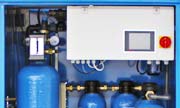
SCM 24
|
|
Cleans 24.000 liters per day
|
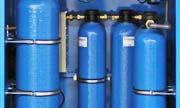
SCM 60
|
|
Cleans 60.000 liters per day
|
Video: How it works
The SCG Advantage
Our market-leading, water cleaning solutions have many advantages. To read more click the items below:
No Chemicals
Our machines and technology does not use any chemicals, at all.
Read more...
No Waste Water
Our machines do not waste any water. Yield = 100%.
Read more...
Low energy use
Uses 50 times less energy than a Reverse Osmosis Machine.
Read more...
Low ownership cost
Lower maintenance and operation costs due to our technology.
Read more...
Easy to install
Simple "plug and play" installation makes for easy deployment.
Read more...
Extremely compact
A compact system, contained in an easy to transport cabinet.
Read more...
Outperforms R.O.
SCG technologies outperform Reverse Osmosis systems.
Read more...
Faster ROI
Get a faster Return on Investment with our systems.
Read more...
Latest News
Latest Blog Posts
| Chemicals in water treatment? |
| Water storage - Whats best for keeping water clean and drinkable? |
| Case: Disaster Management Water Treatment |
Contact SCG
891 Showroom Place
Suite 101
Chula Vista, CA, 91914
Phone: +1 619-878-2730
Contact us by email