


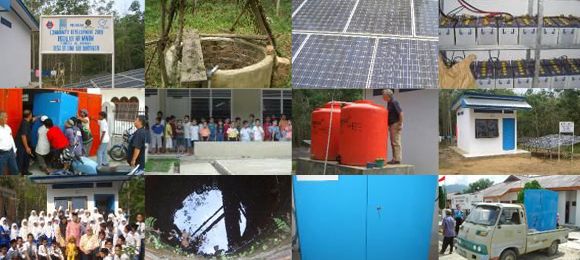







Case Study: Zero-Waste Water Treatment for a Textile Factory
A textile factory depends on water at nearly every stage of production. Fibres may be washed, dyed, rinsed, printed, finished, and cleaned before garments or fabrics leave the facility. Each process can affect water quality, while local regulations increasingly limit abstraction, discharge, and chemical consumption.
This case study examines how a textile manufacturer could reduce its freshwater demand with a zero-waste water treatment system. The project focuses on practical recovery: treating incoming water for reliable production, preparing process water for reuse, and reducing the volume of contaminated liquid sent away for disposal.
The approach reflects a wider shift in industrial water management. Instead of treating water as a single-use input, the factory designs several treatment loops around specific quality requirements. That makes it possible to match treatment intensity with the application and avoid wasting energy on water that does not need the highest level of purification.
The Factory’s Water Management Problem
The facility produces dyed cotton and blended fabrics and operates multiple shifts each day. Its water demand varies according to production schedules, colour changes, cleaning cycles, and seasonal orders. Water enters the site from a municipal supply and a borehole, but testing identifies fluctuating mineral content, manganese, hardness, and occasional microbiological contamination.
These issues affect both production and maintenance. Mineral deposits can block valves, stain fabric, and reduce the life of heating equipment. Bacteria can create hygiene risks in storage tanks and pipework. Water with inconsistent chemistry also makes dyeing less predictable, increasing the number of rejected batches and corrective rinses.
The factory’s previous treatment arrangement relied on chemical dosing and periodic filter replacement. It produced a sludge stream that required handling, while concentrated wastewater was discharged after limited recovery. The operating team wanted a solution with lower chemical dependence, less waste, and stable water quality across the production week.
Designing Separate Treatment Loops
The first design decision was to divide the site into water-quality zones. Drinking water and staff facilities required hygienic purification. Dyeing and rinsing required controlled mineral content and low particle levels. Boiler feed and cooling systems needed protection against scaling and corrosion. Floor washing and toilet flushing could use treated utility water with less stringent specifications.
This separation reduced unnecessary treatment. Every litre no longer had to pass through the same energy-intensive process. Source water was screened and tested, then directed through the appropriate purification stage. Filtration removed suspended solids, while targeted treatment addressed manganese, bacteria, and other contaminants identified during the assessment.
The project team also reviewed the factory’s existing tanks, pipework, pumps, and control systems. Reusing suitable infrastructure reduced installation disruption. Automated monitoring was added at critical points so operators could track conductivity, turbidity, flow, pressure, and disinfection performance without relying entirely on manual sampling.
A modular approach from Swiss Cleanwater Group allowed the treatment concept to be adapted to the factory’s source water and production requirements. The final system was specified around measured contamination levels rather than a generic package, which helped balance capital cost, water quality, and operating efficiency.
Recovering Water From Production
Textile wastewater cannot be treated as a uniform stream. Dye baths, first rinses, final rinses, equipment washdown, and domestic wastewater have different contamination profiles. Separating these flows was essential to the zero-waste objective because relatively clean rinse water could be recovered more easily than concentrated dye liquor.
The factory installed collection points for reusable water and directed them to a recovery tank. Coarse particles and fibres were removed first. Additional filtration and purification then prepared the water for applications such as preliminary washing, floor cleaning, cooling, and selected production steps. Water quality was verified before each reuse route was approved.
Concentrated dye residues were kept out of the recovery circuit. This prevented colourants and auxiliaries from spreading through larger water volumes and reduced the treatment burden. Where process chemistry could not be recovered safely, the factory adjusted recipes and cleaning procedures to minimise the amount generated.
The result was a closed-loop operating model for suitable water streams rather than an unrealistic claim that every drop could immediately return to every process. This distinction matters. Responsible zero-waste treatment means maximising recovery, preventing avoidable losses, and managing unavoidable residues with the lowest practical environmental impact.
Performance Before And After Treatment
The factory measured water use over several production cycles before commissioning the upgraded system. The baseline included incoming water, water used in dyeing and finishing, cleaning water, cooling losses, filter backwash, and wastewater sent for external treatment. The same categories were monitored after commissioning.
| Performance area | Previous arrangement | Upgraded treatment model |
|---|---|---|
| Freshwater supply | Used across most applications | Reserved for drinking, high-grade process use, and make-up water |
| Chemical treatment | Regular dosing and sludge production | Reduced dosing through physical and targeted purification |
| Rinse-water use | Mostly discharged after one cycle | Collected, treated, and reused where quality allowed |
| Filter management | Frequent manual replacement | Monitored filtration with planned maintenance |
| Wastewater volume | High discharge volume | Lower discharge through recovery and process control |
| Water-quality consistency | Variable mineral and microbial levels | Defined quality targets for each operating loop |
| Operator oversight | Manual checks at selected points | Continuous monitoring at key treatment stages |
The most important improvement was operational consistency. Stable water quality reduced unexpected adjustments during dyeing and lowered the frequency of corrective rinses. Fewer production interruptions also meant less water was used for repeated cleaning and batch recovery.
Energy demand was considered alongside water savings. Pumps and treatment stages were selected according to required flow and pressure, while storage was sized to prevent unnecessary cycling. The factory avoided treating water to drinking-water quality when utility-grade water was sufficient, helping keep the energy profile proportionate to the application.
Protecting Product Quality And Worker Safety
Water treatment in a textile plant is closely connected to product quality. Even small amounts of manganese, iron, suspended solids, or biological growth can affect fabric appearance and process reliability. A stable supply gives technicians better control over dyes, auxiliaries, temperature, and rinse conditions.
The upgraded system also improved hygiene around storage and distribution. Tanks were protected from contamination, dead zones in pipework were reduced, and monitoring points made it easier to identify changes before they affected production. Drinking-water outlets remained physically separated from reclaimed process-water lines to prevent cross-connection.
The same principle applies in other facilities where water quality must be tailored to its use. Guidance on chlorine-free pool treatment illustrates how purification strategies can support hygiene while reducing reliance on conventional chemicals. For a textile factory, the exact equipment may differ, but the underlying lesson is similar: treatment should address the actual water-quality risk and intended use.
Worker training formed part of the installation. Operators learned how to read alarms, verify flow rates, isolate a treatment line, and record changes in source-water quality. This made the system easier to manage during shift changes and helped the factory build a reliable maintenance routine.
Measuring The Zero-Waste Outcome
The factory defined success through measurable indicators rather than a single claim. Freshwater intake was tracked per kilogram of finished fabric, while recovered water was recorded separately by application. The team also monitored wastewater volume, chemical consumption, filter replacement, energy use, and the number of production batches requiring corrective rinsing.
A monthly review connected treatment data with manufacturing data. If water recovery increased but fabric quality declined, the reuse route was reassessed. If a treatment stage consumed more energy than expected, flow rates and operating schedules were checked. This continuous review prevented water savings from creating hidden production or maintenance costs.
The project also adopted a hierarchy for recovered water. The cleanest recovered stream was directed toward higher-value reuse. Lower-grade water was assigned to cleaning, toilet flushing, or landscaping where permitted. This approach extended the useful life of every treated stream and avoided using drinking-quality water for tasks that did not require it.
The same planning logic can be applied beyond manufacturing. A livestock water strategy shows why demand mapping, source-water testing, storage, and reuse planning are important in large agricultural operations as well. Industrial sites benefit from the same discipline, even when their contaminants and process demands are different.
Practical Steps For Industrial Water Recovery
A textile factory considering a similar project should begin with data, not equipment selection. The following actions create a stronger foundation for a low-waste treatment system:
- Test every relevant water source for minerals, metals, bacteria, turbidity, hardness, and seasonal variation.
- Map water use by process, including dyeing, rinsing, cooling, cleaning, sanitation, and staff facilities.
- Separate concentrated wastewater from recoverable rinse and utility streams.
- Set a defined water-quality specification for each reuse application.
- Track freshwater intake, recovered volume, discharge, chemical use, energy consumption, and maintenance costs.
A staged installation can reduce production disruption. The factory may begin with source-water purification and rinse-water recovery, then add further reuse loops once performance data is available. This allows operators to learn how the system behaves under different production loads before expanding its role.
Equipment should also be selected for serviceability. Accessible filters, clear alarms, automatic controls, and locally available replacement components help maintain performance over time. A system that saves water during its first months but becomes difficult to maintain will not deliver a durable environmental benefit.
The textile factory’s experience demonstrates that zero-waste water treatment is a management strategy as much as a technical installation. By testing the source, separating water streams, matching quality to use, and measuring performance, manufacturers can reduce freshwater demand without compromising production standards.
To evaluate a water recovery project for your facility, review the source-water analysis, process flow map, and current discharge records with a qualified treatment specialist. Visit Swiss Cleanwater Group to explore sustainable purification technologies and identify a system designed around your factory’s actual water-quality and reuse requirements.
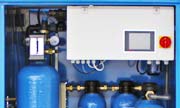
SCM 24
|
|
Cleans 24.000 liters per day
|
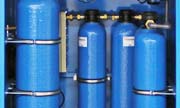
SCM 60
|
|
Cleans 60.000 liters per day
|
Video: How it works
The SCG Advantage
Our market-leading, water cleaning solutions have many advantages. To read more click the items below:
No Chemicals
Our machines and technology does not use any chemicals, at all.
Read more...
No Waste Water
Our machines do not waste any water. Yield = 100%.
Read more...
Low energy use
Uses 50 times less energy than a Reverse Osmosis Machine.
Read more...
Low ownership cost
Lower maintenance and operation costs due to our technology.
Read more...
Easy to install
Simple "plug and play" installation makes for easy deployment.
Read more...
Extremely compact
A compact system, contained in an easy to transport cabinet.
Read more...
Outperforms R.O.
SCG technologies outperform Reverse Osmosis systems.
Read more...
Faster ROI
Get a faster Return on Investment with our systems.
Read more...
Latest News
Latest Blog Posts
| Chemicals in water treatment? |
| Water storage - Whats best for keeping water clean and drinkable? |
| Case: Disaster Management Water Treatment |
Contact SCG
891 Showroom Place
Suite 101
Chula Vista, CA, 91914
Phone: +1 619-878-2730
Contact us by email